
Unbiased headlines. Facts, not spin.
Unbiased Headlines is an independently owned news organization. We bring you the facts, not opinions, written fresh from 110+ named sources. Sources linked so you can verify it yourself.
 energy
Major Story (7/10)
Event date: November 24, 2026 ·
EU Energy Chief Says Russian Gas Ban Stays Even if US-Russia Talks Produce Peace
While US-led talks on ending the Ukraine war continue, the European Union is signaling that its break with Russian energy is not up for negotiation.
EU Energy Commissioner Dan Jørgensen told Euronews' On the Record with Maria Tadeo that the bloc will press ahead with ending Russian energy imports no matter what happens between Washington and Moscow. "We will never again, if it's up to me, import as much as one molecule from Russia. We do not trust Russia," he said. He described Russia as an enemy of Europe.
A ban in law, not just sanctions
Jørgensen's argument is about legal architecture. Sanctions have to be renewed every six months and can be lifted. A ban passed into EU law cannot be undone by a deal struck in another capital.
"We've actually banned [it], which is stronger than sanctions because sanctions have to be renewed every six months," he said. He added that "if there's a peace, then probably the sanctions will fall away," but the legislation will remain.
"No matter what happens in these negotiations, European legislation is made in Brussels, proposed by the Commission, made by the Parliament and the Council co-legislators," he said.
The numbers support that direction. The bloc has cut its dependence on Russian gas from 45% to around 10% and expects to end imports altogether next year, according to Jørgensen.
Washington is heading the other way
The Trump administration eased restrictions on Russian diesel last month, ahead of the November midterms. It has also indicated it could support Moscow's return as a global energy player if a peace deal is reached in Ukraine. Media reports earlier this month said Washington has floated the prospect of Russian energy returning to Europe.
That is a direct clash with Brussels. Jørgensen's line: "Even if there's peace, we will not trust them, and we do not want to repeat the mistakes of the past."
New sanctions on the table
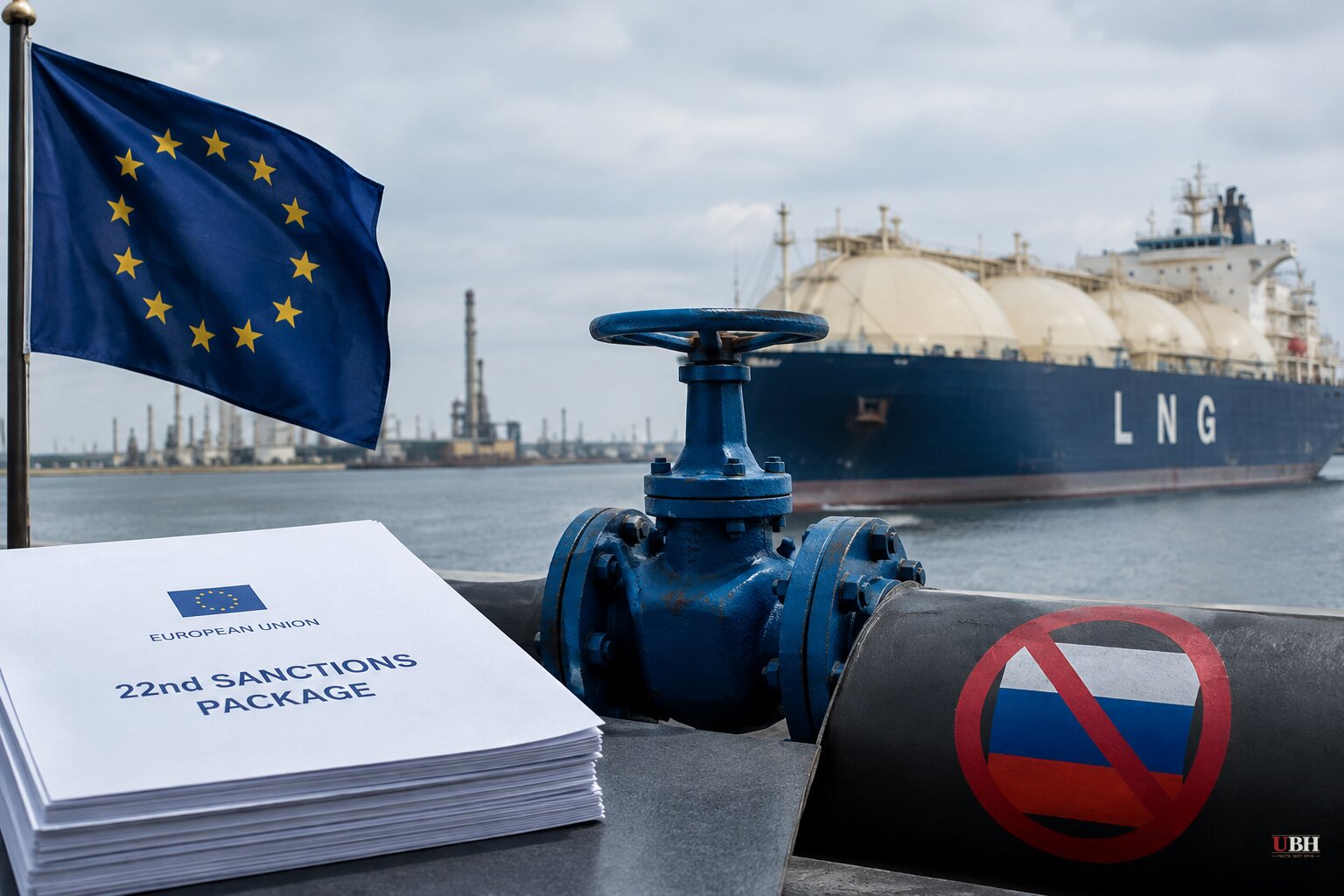
On the same day, the European Commission put forward its 22nd sanctions package against Russia. European Commission President Ursula von der Leyen announced it. It includes a proposed ban on all tanker vessels insured in Russia and the listing of more than 70 additional ships. The stated aim is to keep pressure on Russia to end its war of aggression.
This is a proposal. It has not been adopted.
Calls for troops
The pressure on Europe to act is also coming from inside the Western security establishment. Anders Fogh Rasmussen, NATO Secretary General from 2009 to 2014 and a former Danish prime minister, is urging Britain and France to send troops to Ukraine now.
Rasmussen told Euronews that "Europe is begging for a place at the table, but you cannot beg your way to a seat at the table." He said European delegates have been kept out of the room in the trilateral talks among Ukraine, Russia and the United States. He added that Europe "will not talk its way to the negotiating table. We must force our way there, with action."
Rasmussen also told The Daily Telegraph that the Anglo-French-led Coalition of the Willing should become a "coalition of the doing." That group plans to deploy a reassurance force only after the war ends and a ceasefire is signed, and Rasmussen says it is acting more like a "Coalition of the Waiting."
His proposal, as reported, would place troops in rear-echelon areas defending Ukrainian cities and infrastructure. That would free more Ukrainian troops for the front. He argues Russia will never meaningfully engage with peace efforts and that Europe must change Putin's calculus. Rasmussen also says Trump is siding with Putin. That is his characterization, and he has not offered evidence in the statements cited. No European government has announced it will adopt his plan.
Winter bills
The independence push carries a cost, and Jørgensen says so. He warned consumers to brace for a hard winter despite the recent fall in oil prices. "We are looking into a winter that will be quite difficult at the pump because gasoline, diesel and gas will be more expensive," he said.
Average gas prices in Europe rose 163% year on year in October, according to figures cited in the Euronews report. Colder weather could push bills higher.
Six EU countries, Austria, Germany, Italy, Poland, Portugal and Spain, have called on Brussels to consider a bloc-wide levy on energy companies' excess profits. Jørgensen rejected a single EU-wide windfall tax. "In some member states it probably will be a good idea. I do not think it is a good idea to have an overall European one size does not fit all," he said. He argues national governments should decide.
Two things remain open: whether member states will adopt the 22nd package, and whether governments can hold the line on Russian gas as winter bills climb. Jørgensen expects Russian gas imports to end entirely next year.
Sources used for this briefing
4 links from 4 independent newsrooms (syndicated copies of the same report count once)
These are the sources it draws on, linked so you can verify.


