
Unbiased headlines. Facts, not spin.
Unbiased Headlines is an independently owned news organization. We bring you the facts, not opinions, written fresh from 110+ named sources. Sources linked so you can verify it yourself.
 energy
Major Story (7/10)
Iraqi PM Orders Federal Oil Ministry to Take Over Oilfields and Border Crossings in Kurdish-Controlled Areas
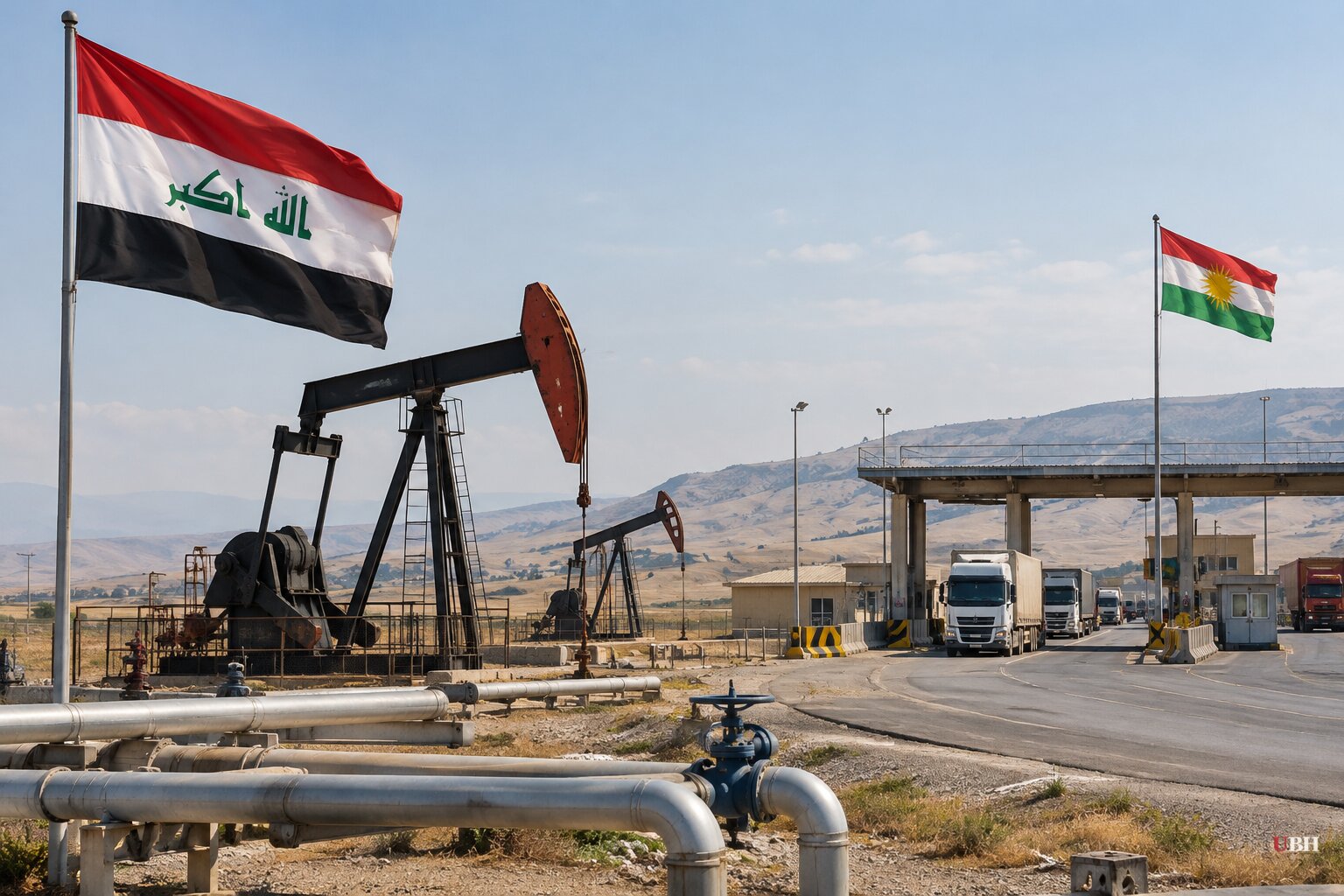
Iraqi Prime Minister Ali al-Zaidi on Tuesday, Nov. 24, ordered the federal Ministry of Oil to manage oilfields under Kurdish security control and told federal authorities to take over every border crossing in the Kurdistan Region. Erbil rejected the move within hours.
The order covers oilfields in Diyala, Kirkuk, Salahuddin and Nineveh provinces, according to a statement from Zaidi's office. Those fields lie outside the Kurdistan Region's administrative borders but have been held by Kurdish security forces.
What Baghdad ordered
Zaidi's office said the federal government will secure and monitor all oilfields with cameras, including fields inside federal administrative boundaries that sit under regional security control. The Energy Police, the Interior Ministry force that guards oil and power sites, is to protect them.
The Kurdistan Regional Government (KRG) may not approve exports of crude oil or petroleum products without authorization from the federal Oil Ministry.
The Border Forces Command was told to close unofficial crossings along Iraq's international borders, including those in the Kurdistan Region. Two Defense Ministry joint coordination brigades are to close unofficial roads between the Region and the four provinces. The Kurdistan Region borders Turkey, Syria and Iran.
Baghdad has not said when or how it will take over the crossings and fields.
The smuggling probe behind it
The orders follow an investigation into suspected oil smuggling at the North Oil Company, the Kirkuk-based state firm that runs northern fields. Iraqi officials say the probe found a network involving senior officials that ran for years and generated hundreds of millions of dollars from stolen oil.
Zaidi removed the head of the Border Ports Authority, Lt. Gen. Omar al-Waeli, and dismissed Kirkuk's operations commander and police chief. He suspended the North Oil Company's director general and his deputies. The findings went to the Federal Commission of Integrity and the judiciary. No charges against the suspended officials have been announced.
A former oil ministry official told Agence France-Presse that unofficial crossings in the Region have been used to smuggle crude, including oil from elsewhere in Iraq, into neighboring countries.
Separately, Iraqi officials have accused Kataib Hezbollah, an Iran-backed armed group, of running an oil smuggling network in its stronghold of Jurf al-Sakhar. Kataib Hezbollah rejected the findings of the official investigation.
Erbil pushes back
Barzani told reporters in Erbil that the decisions were "truly surprising and in no way acceptable." He said federal delegations had visited the Region several times with assurances that disputes would be settled through dialogue and on the basis of Iraq's constitution.
"There have been mixed messages," Barzani said. His government would comply with constitutional decisions, he said, but not measures it considers unconstitutional. He also said "the door is open" to an agreement on outstanding issues.
The Region's two ruling parties, the Kurdistan Democratic Party and the Patriotic Union of Kurdistan, issued a joint statement urging Baghdad to resolve disputes under the constitution. They called violations of the Region's rights and gains a "red line."
The timing stung. Zaidi and Barzani met in Baghdad on Nov. 9 to discuss the Region's share of the 2027 federal budget, oil field management, revenue, public-sector salaries and the long-stalled oil and gas law. Zaidi's office said both sides agreed to work toward settling disputes under the constitution.
Baghdad's case
Oil Minister Basim Khudair said in an interview published late Monday that the ministry "believes that these fields should be managed federally by the Ministry, similar to the fields it manages in the central and southern regions." He accused the KRG of taking control of fields belonging to the federally owned North Oil Company.
An oil company official and a government source told AFP that Kurdish forces took control of several wells and facilities outside the Region after the 2003 U.S.-led invasion. They include the Khurmala field, which Kurdish authorities seized in 2008. Three people familiar with the matter told Reuters that Khurmala, the main field under Kurdish security control, appears to be covered by the order. One of them said Kurdish authorities would likely resist a federal takeover.
On Saturday, according to four sources in Baghdad and Kurdistan familiar with the discussions, Zaidi conveyed four demands through Popular Mobilisation Forces chairman Falih al-Fayyadh in Erbil. They included deploying Iraqi army units along the Region's borders, putting its Iran and Turkey crossings under a neutral international company, and returning to federal control oilfields not held by the KRG before 2003. Those sources said the aim is to place the Region's entire oil sector under exclusive federal control.
Why the history matters
Control over oil has been among the most contentious issues between Baghdad and Erbil since 2003. A dispute over Kurdish authorities selling oil without Baghdad's approval halted pipeline shipments to Turkey for more than two years, until the sides agreed in September 2025 to restart them. Erbil was left struggling to pay public-sector salaries during the halt.
Chatham House's Renad Mansour said the government's actions reflect a concerted effort to "get our house in order" as the region transforms. Reuters described the 41-year-old Zaidi as heading toward direct confrontation with two entrenched powers: Iran-aligned militias and Kurdish leaders. When one of his predecessors tried to rein in pro-Iranian militias, a drone struck his home in what officials called an assassination attempt.
What happens next depends on whether Kurdish forces yield positions they have held for years. Barzani says talks continue, and the 2027 budget negotiations give both sides a deadline-driven reason to keep them going.
Sources used for this briefing
8 links from 8 independent newsrooms (syndicated copies of the same report count once)
These are the sources it draws on, linked so you can verify.


