
Unbiased headlines. Facts, not spin.
Unbiased Headlines is an independently owned news organization. We bring you the facts, not opinions, written fresh from 110+ named sources. Sources linked so you can verify it yourself.
 energy
Major Story (7/10)
Event date: November 20, 2026 ·
Meta Reviews 2030 Net-Zero Deadline After 2025 Emissions Rise 45%
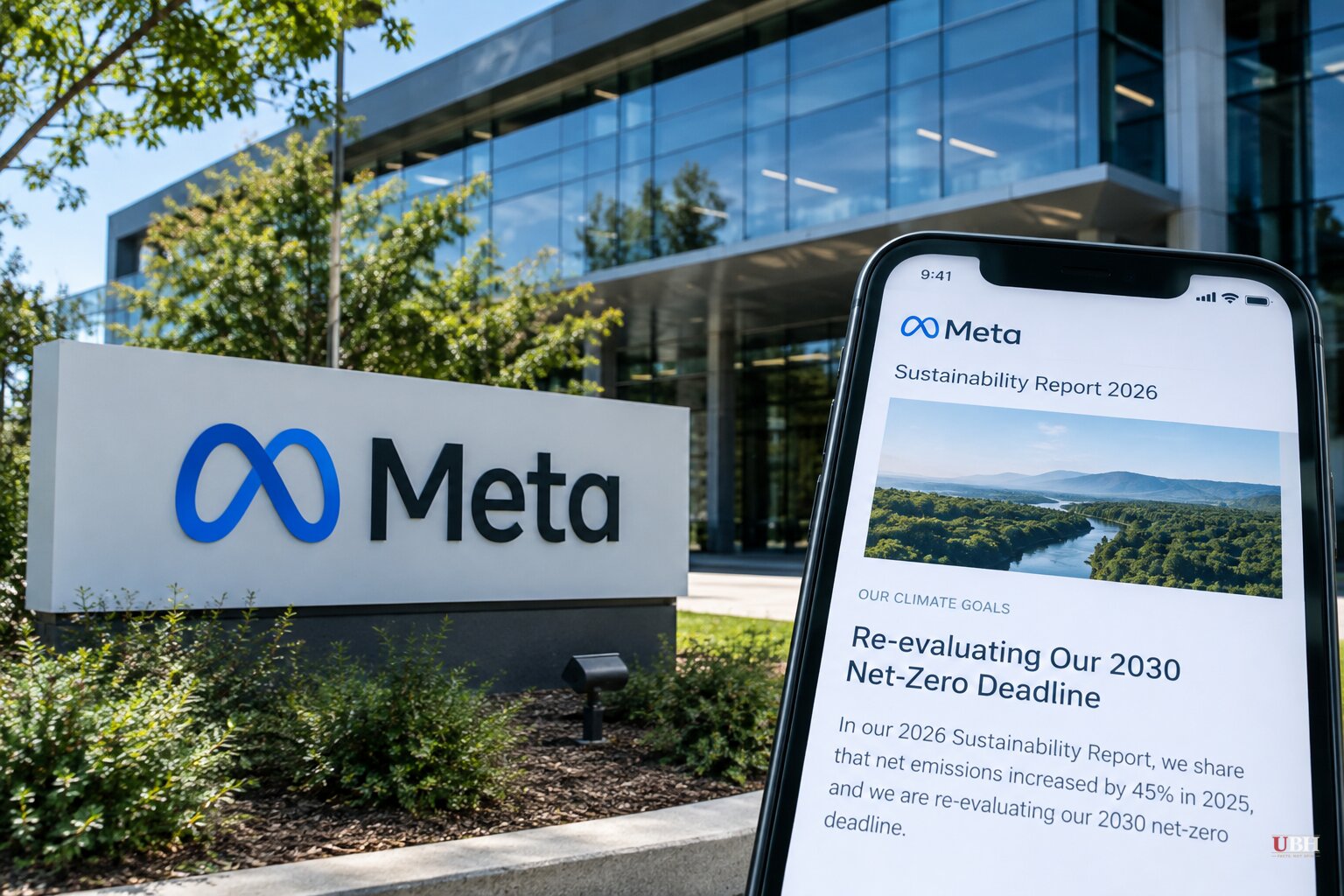
Meta is reconsidering the 2030 deadline for its net-zero pledge. Its 2026 sustainability report, published Nov. 19, says net emissions rose 45% in 2025. Most outlets put the net figure at 11.8 million metric tons of carbon dioxide equivalent; Trellis and TechRadar report 11.9 million.
The company has not named a new date. The report still lists the 2030 goal while the review runs.
What Meta said
The report's opening note is signed by Rachel Peterson, Meta's vice president of data centers, and Blair Swedeen, its global head of net zero and sustainability. They wrote that Meta is "re-evaluating our timelines, sequencing, and interim milestones," including the 2030 net-zero timeframe and its near-term emissions-intensity targets.
"When we set our net zero emissions goal, we anticipated steady growth, falling clean energy costs, and changes in the broader system that would enable progress at the pace we envisioned," they wrote. "The reality has been far more complex."
They blamed AI demand arriving faster than almost anyone projected, plus interconnection queues that run for years, permitting timelines that have not meaningfully shortened, transmission that lags demand and immature supply chains for low-carbon fuels, materials and hardware. They said Meta will share where this work lands. No date was given.
A Meta spokesperson put it this way: "We remain committed to net zero, but are re-evaluating the 2030 timeline." The company set the goal in 2020, when it was still called Facebook, pledging to align with the Paris Agreement's 1.5C target across its whole value chain.
Where the emissions came from
Most of the increase came from what Meta buys and builds, not from the power running its buildings. The report points to Scope 3 categories: purchased goods and services, and capital goods such as servers, chips and construction.
Electricity use rose 35% as new data centers came online. Total emissions in the report's data tables reached 21.7 million tons, up from 15.6 million in 2024. The gap between that figure and the net number reflects the difference between location-based and market-based accounting, which counts the clean-power contracts Meta has signed.
Meta's rise outpaces its rivals. Google's emissions rose 18% over the same period, Amazon's 16% and Microsoft's 25%.
The gas question
The report says Meta may run its own on-site generation, including natural gas, when utilities can't deliver power fast enough. Some of those projects already exist.
In Louisiana, Entergy is pursuing seven gas-fired units totaling more than 5,200 megawatts for Meta's data centers. Ohio regulators have approved a 200 MW gas plant built to serve Meta facilities. Louisiana regulators are scheduled to vote in December on gas plants for Meta's Hyperion campus.
The 45% figure does not yet capture the full effect of some of the biggest planned gas projects, so the footprint could grow further. Meta says it is buying certificates for low-methane gas to offset some upstream methane releases.
Gas plants also use a lot of water for cooling. Meta's own water numbers show the trend. Consumption at its facilities fell to about 2.99 billion liters from 3.12 billion, but use in high-stress areas rose to about 931 million liters from 750 million, a 24% jump. Water used to generate the electricity Meta buys climbed to about 98.8 billion liters from 72.2 billion.
Meta's defense and its critics
Meta says it has contracted more than 30 gigawatts of clean and renewable energy across seven countries and 28 U.S. states, including nuclear, solar and geothermal. Nearly 12 GW of that is already producing power. Earlier this month it signed long-term purchase agreements for low-carbon cement, electric trucking, recycled plastics and near-zero-emission steel from Sweden's Stegra.
The report also covers a $1 billion community fund for the U.S. towns that host its data centers. Alex de Vries-Gao, a researcher at Vrije Universiteit Amsterdam who studies AI's environmental footprint, gave Meta high marks for transparency. Meta is the only major tech company to disclose the water consumed in generating its electricity.
Critics are not impressed by the clean-energy tally. In July, Meta left RE100, the global group of companies committed to 100% renewable electricity. TechCrunch climate reporter Tim De Chant argued in an analysis on Nov. 23 that Meta's competitors should be furious about the move to re-evaluate its net-zero deadline.
The tradeoff
A corporate climate target set in 2020 collided with a spending boom no one planned for. Meta chose the build-out and is now reviewing the deadline instead of slowing the build-out. That is a business decision, and the report is plain about it.
For Louisiana ratepayers and communities near these sites, the stakes are concrete: new gas generation, rising water use and the power infrastructure behind it. The December vote on the Hyperion gas plants is the next scheduled decision. Meta has promised only to share where its review lands, with no date attached.
Sources used for this briefing
7 links from 7 independent newsrooms (syndicated copies of the same report count once)
These are the sources it draws on, linked so you can verify.


