
Unbiased headlines. Facts, not spin.
Unbiased Headlines is an independently owned news organization. We bring you the facts, not opinions, written fresh from 110+ named sources. Sources linked so you can verify it yourself.
 energy
Major Story (7/10)
Harvard Study Finds 403 Big U.S. Data Centers Emit CO2 on Par With Denmark as COP31 Struggles Without a Pact
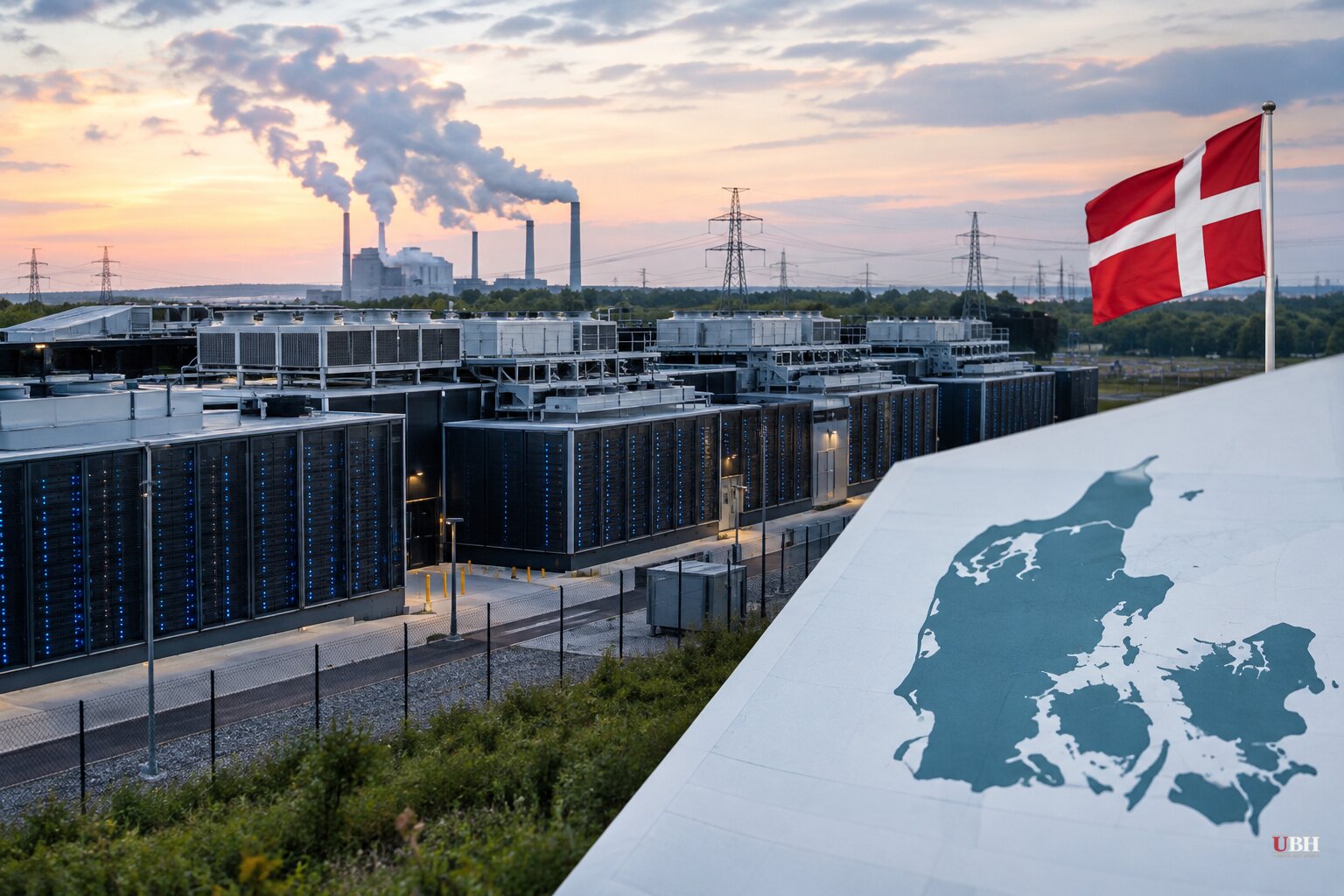
The 400-odd biggest data centers in the United States emit as much heat-trapping gas in a year as the nation of Denmark. That is the finding of a Harvard University study published Monday, Nov. 23, in Nature Sustainability.
The same day, negotiators at the UN's COP31 climate conference in Antalya, Turkey, launched a voluntary pledge on data center power. The summit itself had closed the day before with no adopted agreement.
What the Harvard numbers say
Researchers examined 403 of the largest U.S. data centers from May 2024 through April 2025. They estimated the facilities used 82 terawatt-hours of electricity, enough to power nearly 7 million homes for a year.
More than half of that power came from fossil fuels. The team put the resulting emissions at about 28.3 million tons of carbon dioxide, or 25.7 million metric tons.
That is two to three times what earlier studies estimated, according to senior author Francesca Dominici, a Harvard biostatistics professor. And the study period predates the heaviest stretch of the AI buildout.
"It is the equivalent to the CO2 emission of an entire state like Michigan or a small European country," Dominici said. She pointed to plans for 2,000 more data centers. "We are going backwards toward the goal of controlling CO2 emissions."
The researchers relied on available data and modeling because the companies do not publish detailed power and pollution figures. Several outside experts in climate, energy and AI told the Associated Press the approach was reasonable and the conclusions realistic.
"We cannot manage environmental impacts effectively without reliable measurements and disclosure," said Fengqi You, a Cornell University energy systems scientist who was not part of the study.
Outside academics had to estimate the footprint of some of the most heavily capitalized buildings in America because the owners will not say.
A summit that ended without a deal
COP31 ran two days past its scheduled close and became the longest climate conference on record. It still ended Sunday, Nov. 22, with no consensus.
The EU, the UK and several small nations most vulnerable to climate change rejected the draft pact as too weak. The text left out the term "fossil fuels," even though many delegations wanted firmer commitments to phase out oil, coal and gas.
Turkey's COP31 president, Murat Kurum, acknowledged negotiators could not agree on final text. UN Secretary-General António Guterres called the outcome deeply disappointing but said the science is unchanged.
The United States was absent. The Trump administration has pulled the country out of the Paris accord twice, even though the U.S. is the center of the data center buildout.
Some environmental and humanitarian groups have called this year's summit the worst COP ever.
Where data centers fit
One of the summit's most anticipated items was a goal to raise electricity's share of global energy use to 35 percent by 2035, from about 20 percent today. Electrifying cars, heating and industry only cuts emissions if the added power is clean enough.
Data centers complicate that math. The International Energy Agency's projections, cited in summit discussions, have data center electricity demand roughly doubling by 2030.
Chris Bowen, Australia's climate and energy minister and a leading figure at the talks, told Politico at the start of the summit: "Every climate minister in the world is thinking about this, and it will inevitably come up in the discussions. It's part of the broader energy transformation."
Bruce Douglas, CEO of the Global Renewables Alliance, told The Verge by email that rising data center demand is not yet sustainable and that an AI boom cannot become a fossil-fuel boom.
The pledge and its limits
The pledge launched Monday asks companies and countries to run data centers on clean energy and to disclose their power use, water use and emissions. It also calls for pointing AI at climate problems. It is voluntary.
UN climate chief Simon Stiell took aim at the argument that AI's future benefits justify today's pollution. "We cannot ask people to accept higher bills, more planet heating pollution and deeper inequality today in exchange for promises of a better tomorrow," he said. "Claims about future emissions savings cannot excuse rising pollution now, making climate disasters even worse."
The tech companies' own climate records are part of that argument. A new report by the advocacy group Climate Action Against Disinformation says the biggest tech companies' electricity consumption rose 240 percent between 2022 and 2025. The group says that has left them failing to meet their climate goals. Google, Microsoft and Meta have all made emissions commitments in recent years.
The group is an advocacy organization, and its figures are its own.
The political fallout is already visible in the U.S., where the backlash over data centers has played out in elections and in local fights over new sites.
What comes next
Stiell's mention of higher bills is the point that reaches ordinary households. Data centers pull power from the same grids that serve homes, and who pays for new generation and transmission is a live local fight.
The Harvard figures and the pledge both turn on measurement. Without company-reported numbers, the best available figures are academic estimates built from models.
The pledge is voluntary, and no source lists which companies or governments have signed it. Dominici's count of 2,000 planned data centers puts the stakes on whether that disclosure ever becomes routine.
Sources used for this briefing
7 links from 5 independent newsrooms (syndicated copies of the same report count once)
These are the sources it draws on, linked so you can verify.


