
Unbiased headlines. Facts, not spin.
Unbiased Headlines is an independently owned news organization. We bring you the facts, not opinions, written fresh from 110+ named sources. Sources linked so you can verify it yourself.
 energy
Major Story (8/10)
Event date: November 10, 2026 ·
Trump Launches Task Force Iron Gate to Cut Iran's Land Trade Routes as the War Drags On
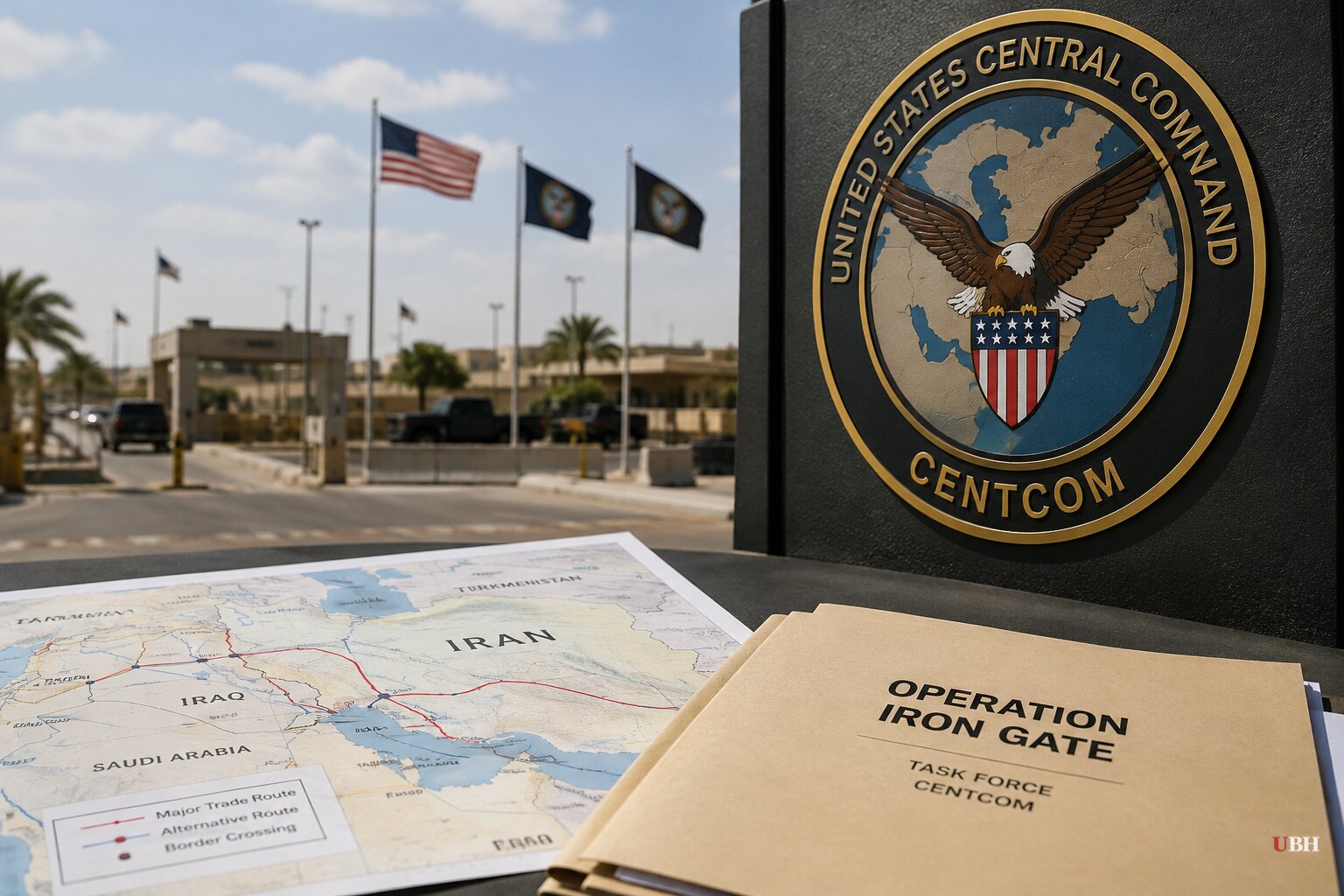
The Iran war, now in its ninth month, has a new front: the roads, rails and Caspian Sea routes that bypass the U.S. naval blockade.
President Trump has dubbed the effort Task Force Iron Gate. "We have Operation Iron Gate that just went into effect," he said. "That means nothing comes in by land."
The reality is smaller than the slogan. Farzin Nadimi, a senior fellow at the Washington Institute for Near East Policy, says the roughly 20-person task force sits at U.S. Central Command headquarters in Tampa. "This is not a deployable special operation task force," he told Fox News Digital. He describes it as a "fusion cell" coordinating military, civilian and intelligence work.
Nadimi expects its early job to be gathering intelligence on Iran's borders and building regional cooperation that could support sanctions and other efforts to disrupt the flow of goods. Sealing the routes, he says, is a "mid- to long-term project."
What Iron Gate is meant to close
The target is a gap the blockade has not covered. Iran can still bring in goods, dual-use technology and military supplies by land and across the Caspian, beyond the reach of American warships, as it tries to rebuild its military during the war.
Secretary of State Marco Rubio frames this as the alternative to more bombing. "We don't need to conduct military strikes if we're achieving the same objective through economic means and economic pressure," he told reporters. He rejects the idea that the two sides are at a stalemate. "They're bleeding. They're bleeding economically," Rubio said.
Iran's Foreign Ministry spokesman, Esmail Baghaei, says Tehran "will not tolerate" the sanctions and naval blockade and will use "all means" to fight what he calls U.S. aggression. He cited Article 51 of the UN Charter. He also called reports that Iran is preparing a "dirty bomb" attack on Washington "baseless" and said they are meant to "lay the groundwork or justify aggressive actions."
Neighbors in the blast radius
The land routes run through countries that want no part of this. Lynn Farma, cited in an OilPrice.com analysis, says Turkmenistan is the Central Asian republic most at risk. Its roughly 1,148-kilometer border with Iran hosts two key rail links, and it sits on the International North-South Transport Corridor.
A prolonged conflict could also interrupt the Kazakhstan-Turkmenistan-Iran railway and Uzbekistan-Turkmenistan-Iran routes, raising insurance and transit costs and delaying port investments. The analysis also warns that a weakened Iranian state could push Afghan refugees back into Afghanistan and open room for arms trafficking and Islamic State-Khorasan Province networks.
Politics at home
Iron Gate follows Republican losses in the midterms. Trump acknowledged in a call with Fox News that the war was partly to blame, and said war-driven price hikes played a role. Vance was blunter in a long post on X: "the reason we lost is the war."
Tehran is reading it as a verdict. Parliament speaker Mohammad Bagher Ghalibaf, who has led talks with Washington, wrote that if the U.S. government "betrays their public will to serve international paymasters and blackmailers, it will learn our NO comes with a Nightmare." Supreme Leader Mojtaba Khamenei said anyone who thinks the results will shift U.S. policy is "deeply mistaken."
Ali Vaez of the International Crisis Group sees a narrow set of choices for Trump. "The Iran war has become a political albatross around his neck, leaving (Trump) with a stark choice: cut a face-saving deal and declare victory, or double down militarily to reclaim the initiative," he told CNN.
Trump's own signals conflict. He has told some journalists he is considering striking Iran hard and told others he has no immediate plans to escalate.
The strategic and material ledger
Michael Schmitt, a professor emeritus of the Naval War College, argued on Nov. 20 in Just Security that the U.S. "has prevailed in nearly every military engagement, yet it is losing the war." He called his assessment provisional because the conflict is not over.
The Government Accountability Office added a hard number to the readiness concern in a Nov. 19 report. It found the Defense Department has no overarching plan linking munitions production and funding to its total requirements, and has not designated an office to lead the effort.
The U.S. has fired more than 1,000 Tomahawk cruise missiles in the war, according to Center for Strategic and International Studies estimates. CSIS estimated in April that restocking seven major munitions to prewar levels could take one to four years, and warned that current levels "will constrain U.S. operations should a future conflict arise." Michael Horowitz of the Council on Foreign Relations says the shortage's roots "date back decades."
The other powers
A Nov. 18 Harvard Belfer Center paper by Maureen Page says Russia and China have dialed up political and military support to Iran. It also asks whether the cooperation among China, Russia, North Korea and Iran amounts to durable partnership or posturing. Page's paper does not settle that.
Baghaei said Iran has stayed in contact with both Moscow and Beijing, describing relations as "very good" and insisting "decisions concerning Iran will not be made anywhere other than Tehran."
Which Trump shows up next is the open question: the one who says economic pressure is working, or the one weighing strikes. Iran says its response to the latter would be much wider than in earlier rounds.
Sources used for this briefing
7 links from 7 independent newsrooms (syndicated copies of the same report count once)
These are the sources it draws on, linked so you can verify.
More coverage: Donald Trump and Iran


