
Unbiased headlines. Facts, not spin.
Unbiased Headlines is an independently owned news organization. We bring you the facts, not opinions, written fresh from 110+ named sources. Sources linked so you can verify it yourself.
 energy
Major Story (7/10)
Event date: November 20, 2026 ·
Gas Turbine Orders Top 100 GW Against 60-70 GW of Annual Output as AI Data Centers Push Waits Toward 2030
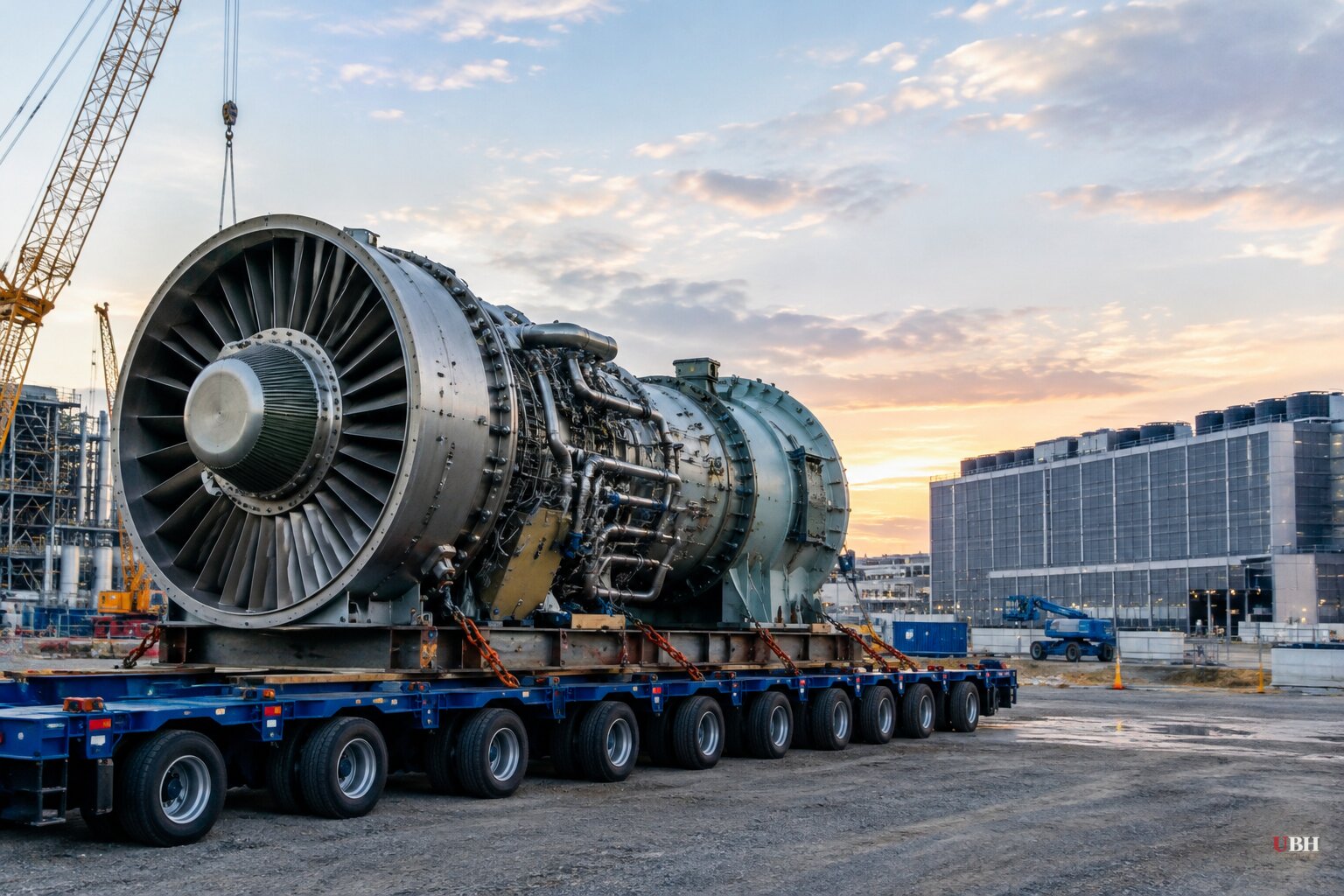
The AI boom has hit a hard physical limit: there are not enough gas turbines to go around.
Worldwide orders for the machines top 100 gigawatts, according to Wood Mackenzie. Estimated global production capacity is 60 to 70 GW a year. Analysts at Jefferies estimate that U.S. data centers alone account for nearly 17 GW of turbine demand this year.
A queue measured in years
Siemens Energy told investors on its third-quarter earnings call on Nov. 11 that its gas turbine orders and reservations totaled 104 GW at the end of September. Confirmed backlog was 65 GW. The other 39 GW were slot reservations, which are production-line placeholders buyers pay for in advance.
Those deposits are non-refundable, according to industry accounts, and they are getting more expensive. GE Vernova disclosed in January that slot reservation prices had risen 10 to 20 percentage points from prior levels.
Aurora Tenorio, a senior analyst at Wood Mackenzie, said U.S. "delivery conversations (are) firmly focused on the 2030 to 2031 window." Some buyers face waits of up to six years.
Jefferies expects 87 GW of capacity to fall short of 129 GW of demand even in 2028.
The workarounds
Buyers aren't waiting. Reuters reported on Nov. 9 that utilities and developers are scouring the world for second-hand turbines, reviving mothballed units and converting retired jet engines. The report drew on more than a dozen brokers, service firms and suppliers.
"That secondary market is very, very hot right now," said Ana Amicarella, CEO of equipment services provider EthosEnergy. "We also have seen an escalation on the prices of what people are demanding."
AI infrastructure firm Crusoe ordered 13 aeroderivative turbines from U.S.-based ProEnergy in April. They are built on GE Aerospace jet engines and have a combined capacity of 650 megawatts. HD Hyundai Heavy Industries has won 1,684 MW of U.S. orders for land-based power built on its marine engine technology.
Anthropic took a different route. Reports citing the Financial Times, Reuters and CNBC say it agreed in late September to a $3.4 billion deal to take over Caterpillar generator orders originally placed by Texas company OnePwr two years earlier. Delivery is expected within two years, which would avoid the six-year queue for large turbines. Neither company's own account of the deal appears in the reporting.
Limits on the workarounds
Noor Qureshi, an associate at Enverus Intelligence Research, was blunt about how much the used market can help. "The market is already constrained, with limited excess supply, so it is unlikely to offset a meaningful share of the delays," she said.
Turbines are also only one obstacle. Qureshi pointed to air permits and grid access as additional causes of delay. No reliable estimate exists of how much the secondary market contributes to a global turbine market worth about $25 billion a year.
The mismatch in timing is stark. An AI data center can be finished in one to two years. Building the substations and transmission lines to feed it, and clearing the grid-connection process, takes longer.
The ripple effects
The squeeze reaches well beyond power plants. Bloomberg columnist David Fickling traced it through jet engines, container ships, a promised supersonic airliner, pipeline compressors and power station construction on two continents. Gas turbines and jet engines share suppliers, and some of the shared parts are bottlenecks.
One is single-crystal nickel-alloy blades. Roughly 80% of that market is controlled by Berkshire Hathaway's Precision Castparts and Howmet Aerospace, Fickling wrote. GE announced in September that it would spend $11.8 billion to buy Consolidated Precision Products, one of the few alternative suppliers. Fickling called it the second-biggest takeover in GE's history. UK castings producer DPC Holdings, founded in 1778, raised $1 billion in an IPO in June.
The demand side
The International Energy Agency projects global data center electricity use will reach roughly 945 to 950 terawatt-hours in 2030, double the 2025 level of about 485 TWh. Insurance broker Howden found U.S. data center power demand has grown 19% a year while grid capacity has grown 2% a year.
A study in Nature Sustainability, led by Harvard's Francesca Dominici, looked at 403 U.S. hyperscale data centers. It estimated they used 68 to 99 TWh between May 2024 and April 2025, with more than half of the electricity coming from fossil fuels, mainly natural gas and coal. The researchers estimated 25.7 million metric tons of carbon dioxide emissions, about what Denmark emits in a year.
Voters have noticed. In 40 of 41 local ballot initiatives in this month's midterm elections, citizens voted to limit or prevent data center development, with many citing economic and environmental concerns, according to TIME's reporting on the study.
The companies building the data centers say the demand is real, and the order books back them up. Whether it is durable is another matter. A selloff in AI-related stocks preceded the Reuters report, and the turbine makers' orders assume the build-out continues.
Howden expects new hardware supply chains to ease constraints by late 2027 or early 2028. Jefferies, on turbines specifically, still sees a 42 GW shortfall in 2028.
Sources used for this briefing
7 links from 7 independent newsrooms (syndicated copies of the same report count once)
These are the sources it draws on, linked so you can verify.


