
Unbiased headlines. Facts, not spin.
Unbiased Headlines is an independently owned news organization. We bring you the facts, not opinions, written fresh from 110+ named sources. Sources linked so you can verify it yourself.
 energy
Notable (5/10)
Event date: November 16, 2026 ·
Himalayan Winter Outlook Warns Strong El Niño Could Bring Floods, Landslides and Avalanches to Nepal and Western Himalaya
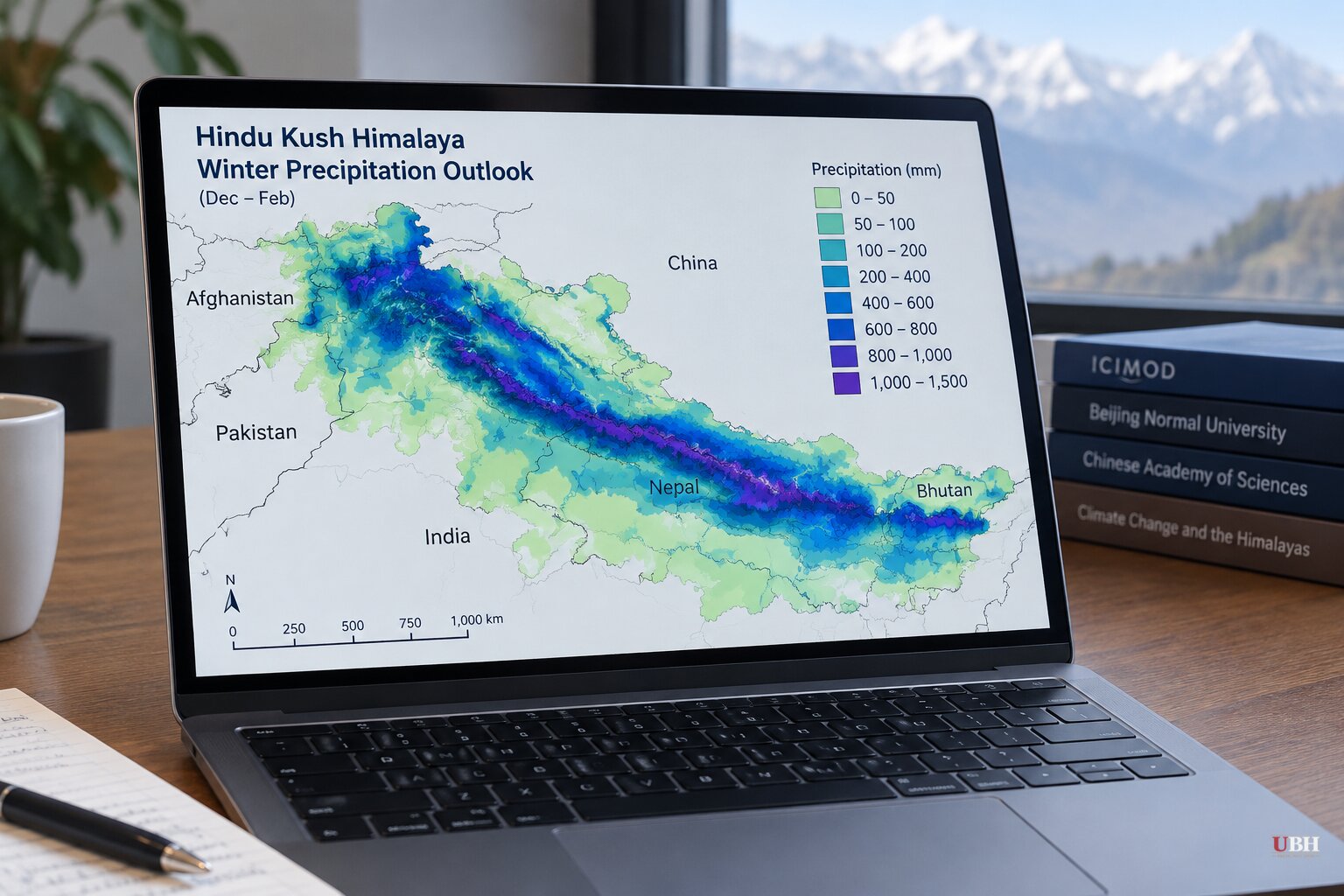
Since NOAA's winter outlook last week flagged an El Niño nearing record strength, the forecasting has moved from North America to the Himalaya. The HKH Winter Outlook 2026, published today, Nov. 23, projects a wetter, riskier winter for the mountain belt that feeds South Asia's rivers.
The report comes from the Kathmandu-based International Centre for Integrated Mountain Development (ICIMOD), Beijing Normal University and the Institute of Atmospheric Physics of the Chinese Academy of Sciences. It covers all eight Hindu Kush Himalaya countries.
What the outlook forecasts
The authors expect normal to above-normal precipitation across much of the region. That includes parts of Afghanistan, Pakistan, northern India, Nepal and China's Xizang Autonomous Region. Bangladesh and northern Myanmar are also forecast to be wetter than normal.
The outlook says the El Niño has intensified sharply. Sea surface temperatures in the central-eastern equatorial Pacific reached 2.6°C above normal by mid-August 2026. The report puts the likelihood of El Niño conditions lasting through February 2027 as very high.
NOAA reports a strong-to-very-strong El Niño, with roughly a 60% chance it becomes the strongest since records began in 1950.
ICIMOD scientists say that could mean more rain in the foothills and more snow at higher elevations.
Snow, water and fire
Snow depth is forecast to run deeper than normal in parts of Afghanistan, Pakistan, northern India and Nepal. Shallower-than-normal snow is expected in parts of Bhutan and eastern Xizang.
Snow depth matters because it helps set river flows and the region's water budget for the coming year. The report says low snow could hurt irrigation and hydropower and reduce flow in springs.
Wet doesn't mean fire-free. The outlook warns that dry spells in other parts of the region will leave grass and vegetation dry enough to burn. It identifies a high to very high risk of forest and grassland fires in southeastern Xizang and parts of Myanmar.
Nepal's exposure
For Nepal, the strongest signal for above-normal precipitation is in the central areas. Hills are forecast to run warmer than normal, while higher elevations may be cooler. Snow depth is projected above normal in the north.
The report warns that heavy precipitation could cause localised floods, landslides and avalanches in the western Himalaya.
The forecast lands after a brutal monsoon in Nepal and Bhutan, marked by disasters tied to changes in high-mountain glaciers and permafrost. ICIMOD says a rock-ice avalanche in Nepal's Rasuwa district in August 2026 cost the country an estimated $4.7 billion in relief and reconstruction, a figure from Nepal's National Disaster Risk Reduction and Management Authority.
PTI, the Indian wire service, describes the August disaster as the Bhotekoshi floods. It reports at least 1,500 people killed and more than 5,000 missing.
What the scientists are asking for
Sarthak Shrestha, the report's lead author, framed the document as a coordination tool. "Weather systems and rivers do not stop at national borders, and neither should the knowledge we use to understand them," he said. He added that the outlook gives all eight countries "a common picture of the season ahead."
Manish Shrestha, an ICIMOD hydrologist, said, "Preparedness cannot end with the monsoon." He said rainfall is becoming more erratic and intense. Local authorities, he said, need seasonal outlooks to plan ahead and short-range local forecasts to time their responses.
Limits of a seasonal forecast
This is a seasonal outlook, built on probabilities. The report's own language is conditional: precipitation "could" trigger hazards, and impacts "will vary across the region." It does not predict a specific flood, slide or avalanche, or where one would hit.
The El Niño effects are expected to last into February 2027. Nepal's disaster authority has put a $4.7 billion price tag on the last disaster. It remains unclear whether local authorities will turn a regional seasonal outlook into concrete winter preparations before the heavy precipitation arrives.
Sources used for this briefing
8 links from 8 independent newsrooms (syndicated copies of the same report count once)
These are the sources it draws on, linked so you can verify.


