
Unbiased headlines. Facts, not spin.
Unbiased Headlines is an independently owned news organization. We bring you the facts, not opinions, written fresh from 110+ named sources. Sources linked so you can verify it yourself.
 energy
Major Story (7/10)
Event date: November 20, 2026 ·
Trump Backs Senate-Passed Permitting Bill '100%' but Says He Won't Approve Wind Turbines
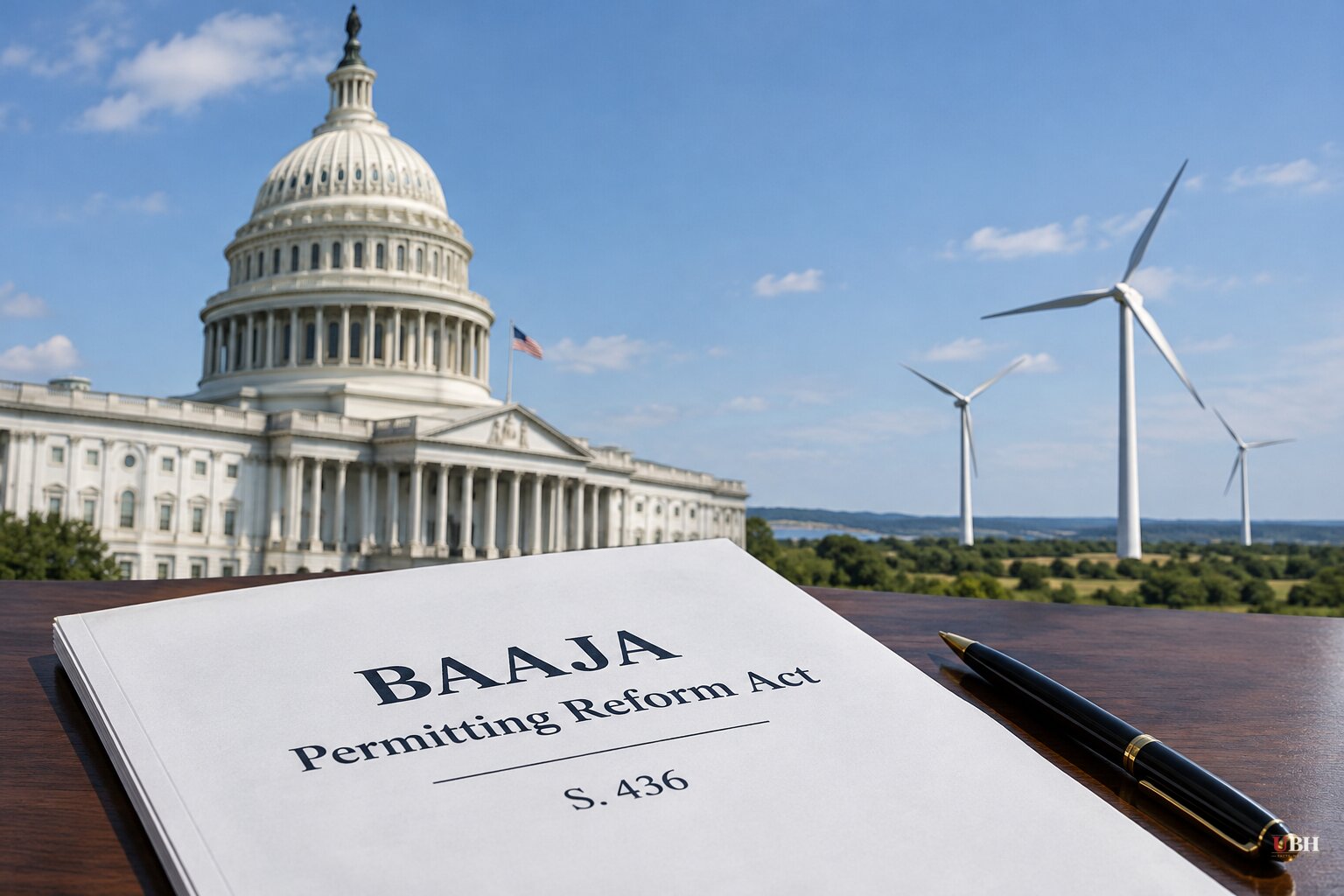
Since the Senate passed the Bipartisan American Affordability and Jobs Act 62-33 on Thursday, the argument has moved to the House and to a contradiction in the president's own comments about what the bill covers.
Trump says he is all in. He also says he will not approve wind. Those two positions now sit on opposite sides of the same bill.
Trump's two statements
On Monday, Nov. 9, the day the Senate voted 73-25 to open debate, Trump told reporters: "The permitting bill is a great bill that's supposed to be bipartisan. We are behind it 100 percent."
A reporter then noted that wind provisions are part of it. Trump answered: "I know, but I won't approve it. Well, the bill hasn't been fully negotiated. I will not approve wind turbines because wind turbines are a major loser."
Asked whether he would help whip House votes, he said, "Well, we may see."
A White House official told Newsweek that Trump "stands 100% behind" the bill and that the White House "has been working in good faith with Senate Democrats for months." On Friday, after passage, Trump said of the Senate vote: "They had to get it through."
On Truth Social he had earlier urged senators to back the bill, calling it a "BIG WIN for U.S. ENERGY INDEPENDENCE and DOMINANCE" that will let the country "build Pipelines, Mines, and Power Plants faster than ever before."
What wind developers say the bill does
The administration has already slowed wind projects. Court documents show the Pentagon stopped reviewing proposed wind projects last year. At Interior, every project must now clear an extra layer of review in Secretary Doug Burgum's office.
Frank Macchiarola, chief advocacy officer at the American Clean Power Association, said the pipeline for renewable projects is slowing because "the Trump administration has put a lot of roadblocks in the way." He added that the elimination of renewable energy tax credits in Trump's One Big Beautiful Bill Act is also a factor.
His group points to specific provisions. Agencies would have 45 days to decide on a project after an environmental review and 120 days to issue other authorizations. Gene Grace, the association's chief in-house legal officer, said that under the bill agencies must "move on timelines from one stage to another and importantly, there's judicial enforcement if those timelines aren't met."
Grace acknowledged the administration could still deny a wind permit. But a denial would need a certain level of evidence behind it, he said, "so it can't just be some type of arbitrary denial." Under current law, he said, administrations have discretion to deprioritize a technology "for whatever reason they want."
The bill also limits the president's ability to discriminate among energy sources. As AFP noted, that could bar the Trump administration from blocking renewables and also stop a future Democratic president from revoking oil and gas pipelines.
Data centers, lawsuits and the opposition
Large data center operators would have to cover more of the transmission and grid upgrade costs needed to serve them, with protections meant to keep other ratepayers from absorbing the bill if projects fail. Nationwide, the cost of a kilowatt-hour has risen more than 6% in the past year and 39% in five years.
Senate Majority Leader John Thune said the bill would "cut through decades of red tape" and "save the average household hundreds of dollars each year." Sen. Shelley Moore Capito, a co-author, said it was "a major step towards addressing the affordability concerns of the American people." Sen. Sheldon Whitehouse, a Democratic co-author, said Americans would "quickly begin getting some relief on their energy bills if the House follows suit."
Opponents say the cost is too high. The bill limits challenges under the National Environmental Policy Act, the Clean Water Act, the National Historic Preservation Act and the Endangered Species Act. The Guardian reports it sets a 150-day limit on lawsuits.
Sen. Jeff Merkley, D-Ore., called it "a bad deal" that "opens the gates to a flood of natural gas for data centers while leaving expanded transmission of renewable energy subject to Trump's obstruction." Al Gore told the Guardian the bill was a "serious mistake" that Trump would use to "lock in a lot of new pipelines and fossil fuel facilities."
The Sierra Club and National Wildlife Federation oppose it. The Union of Concerned Scientists said the shortcuts "will mean more pollution and less transparency for already overburdened communities." Sandy Wynn-Stelt of the Great Lakes PFAS Action Network warned the bill could make it harder to set limits on PFAS discharges.
Green groups are split. Evergreen Action said the bill would help build clean energy "faster and at scale." Josh Freed of the center-left think tank Third Way said the permitting environment was causing "an enormous amount of delays and increasing costs, so we weren't building things."
Sens. Maria Cantwell and Alex Padilla, both Democrats, voiced concern over tribal sovereignty. Fourteen Democrats and one independent voted yes alongside most Republicans.
What comes next
The House has to pass the bill before it can reach Trump. AFP reports the narrow Senate margin could make passage fraught in a chamber where Republicans hold only a slim majority.
It is unclear whether Trump's wind position survives contact with the text. If the House passes the bill and it becomes law, the 45-day and 120-day clocks and the judicial enforcement Grace describes would apply to wind permits, whatever Trump has said about approving turbines.
Trump's own answer on House whipping remains "we may see."
Sources used for this briefing
7 links from 7 independent newsrooms (syndicated copies of the same report count once)
These are the sources it draws on, linked so you can verify.


