
Unbiased headlines. Facts, not spin.
Unbiased Headlines is an independently owned news organization. We bring you the facts, not opinions, written fresh from 110+ named sources. Sources linked so you can verify it yourself.
 energy
Notable (6/10)
Seven New U.S. Microreactors Reached Criticality in 2026, Four by Trump's July 4 Deadline
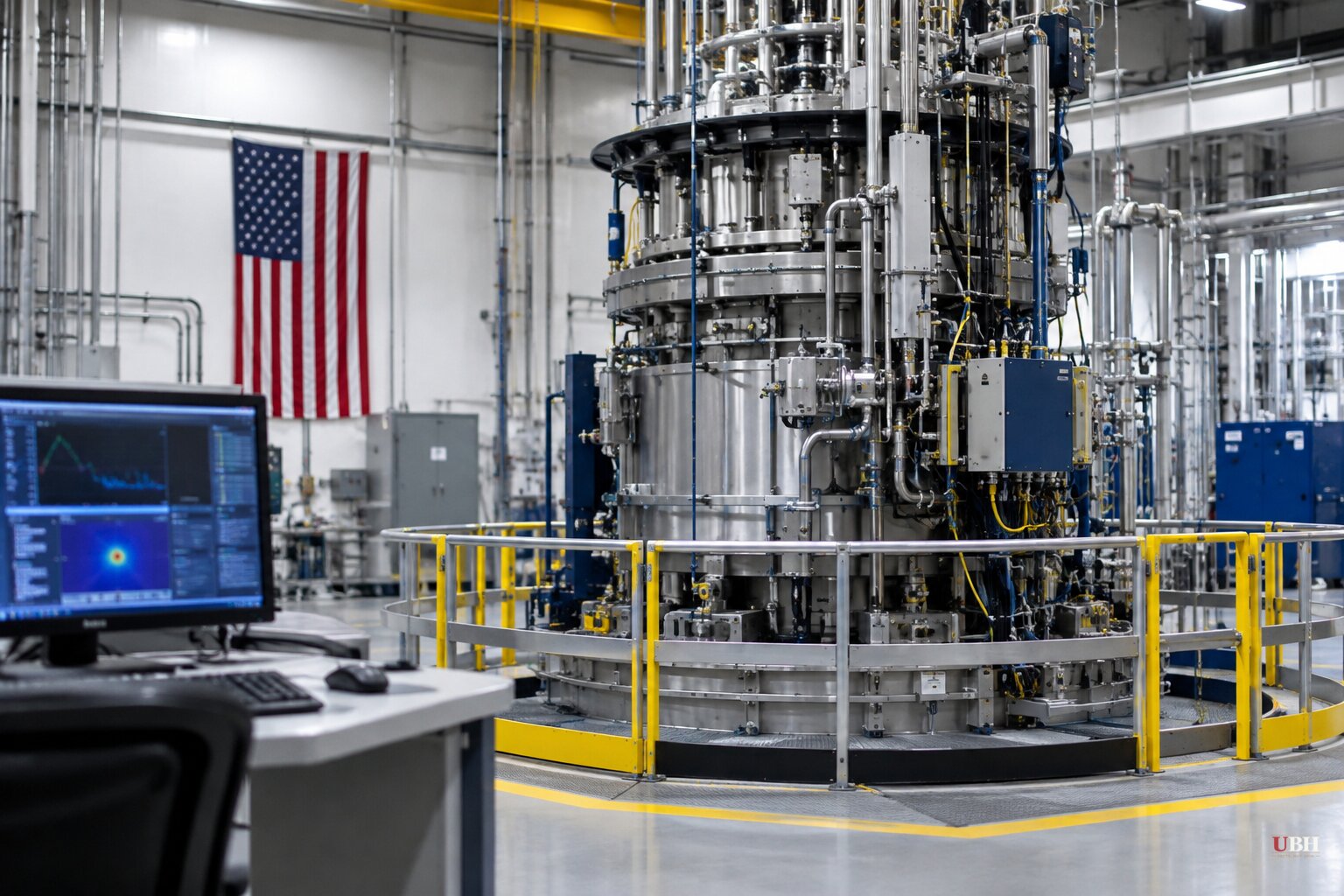
The goal looked like a stretch in May 2025. Executive order 14301 told the Energy Department to approve at least three test reactors outside the national labs and aim for criticality in each by July 4, 2026.
The target was met with days to spare. By that date four reactors had gone critical, and the 2026 count now stands at seven new microreactor designs, according to a ZeroHedge tally of the announcements.
The skepticism was loud. Most people called the July goal a fantasy, ZeroHedge noted.
How the timeline played out
DOE picked 11 projects from 10 companies for its Reactor Pilot Program on Aug. 12, 2025. The companies agreed to pay for everything themselves and to test under DOE authorization rather than a Nuclear Regulatory Commission license.
That is a meaningful detail for taxpayers. The developers carry the cost of their own test reactors.
The milestones, in order:
- Antares Nuclear's Mark-0 went critical at Idaho National Laboratory on June 4. Energy Secretary Chris Wright called it the first new privately developed non-light-water reactor to reach criticality in America in more than four decades.
- Valar Atomics' Ward 250 went critical in Utah on June 18. "Nine months ago, this was an empty site," CEO Isaiah Taylor said.
- Deployable Energy's Unity reached criticality on June 30. DOE had selected the company only in April, for the Nuclear Energy Launch Pad, the pilot program's successor.
- Aalo Atomics went critical at 12:19 a.m. on July 4, about ten months after breaking ground.
- Oklo's Groves-1 isotope test reactor in Lockhart, Texas, followed on Aug. 5, less than a year after construction began.
Two more came from the National Criticality Experiments Research Center in Nevada. Los Alamos National Laboratory ran its ZiaCore microreactor experiment to criticality over four weeks in April and May, ahead of Antares, but did not announce it until July 30.
Westinghouse took a one-fifth-scale eVinci test reactor critical at the same facility on Aug. 24. It repeated the test at 663°C on Sept. 3.
Criticality is not electricity
These were physics tests. Sustained power is the harder test.
Antares has already taken Mark-0 apart to make way for Mark-1. The company plans to run Mark-1 at full electrical power for six months in 2027.
The skeptical case is easy to find among investors. One StockTwits user, writing about Oklo on Nov. 11, put it this way: "small reactors for ai power get priced like the plants are already running... a design and a permit path is not electricity, and ai halls need power now, not on a rendering timeline." That user is an online commenter, not an analyst, but the point matches the facts. A reactor that reaches criticality has not yet delivered a megawatt-hour to a customer.
Oklo's own Groves-1 is an isotope test reactor, not a power plant.
The authorization process
For private developers, DOE authorization runs through five gates: a partnership agreement, a nuclear safety design agreement, a preliminary documented safety analysis, the final documented safety analysis, and a readiness review.
That is a real process with real paperwork. It is also considerably faster than the traditional licensing route.
The pace matters because the previous decades produced almost nothing. Wright's own description of Antares' result, the first of its kind in more than four decades, shows how long the gap ran.
What's still pending
Three more microreactors could push this year's count to ten. Among the candidates is MARVEL, Idaho National Laboratory's own sodium-potassium-cooled microreactor, built inside the lab's Transient Reactor Test Facility.
DOE approved MARVEL's final documented safety analysis for a dry criticality test with no coolant. That came just before the primary coolant system arrived in mid-September. INL says criticality is anticipated.
The open question is whether any of these designs can move from short physics runs to months of steady power. Antares' six-month Mark-1 run in 2027 is the first scheduled test of that.
Sources used for this briefing
4 links from 2 independent newsrooms (syndicated copies of the same report count once)
These are the sources it draws on, linked so you can verify.


