
Unbiased headlines. Facts, not spin.
Unbiased Headlines is an independently owned news organization. We bring you the facts, not opinions, written fresh from 110+ named sources. Sources linked so you can verify it yourself.
 energy
Notable (6/10)
India's Venezuelan Crude Imports Jump to 1.05 Million Tonnes a Month as US Energy Ties Tighten
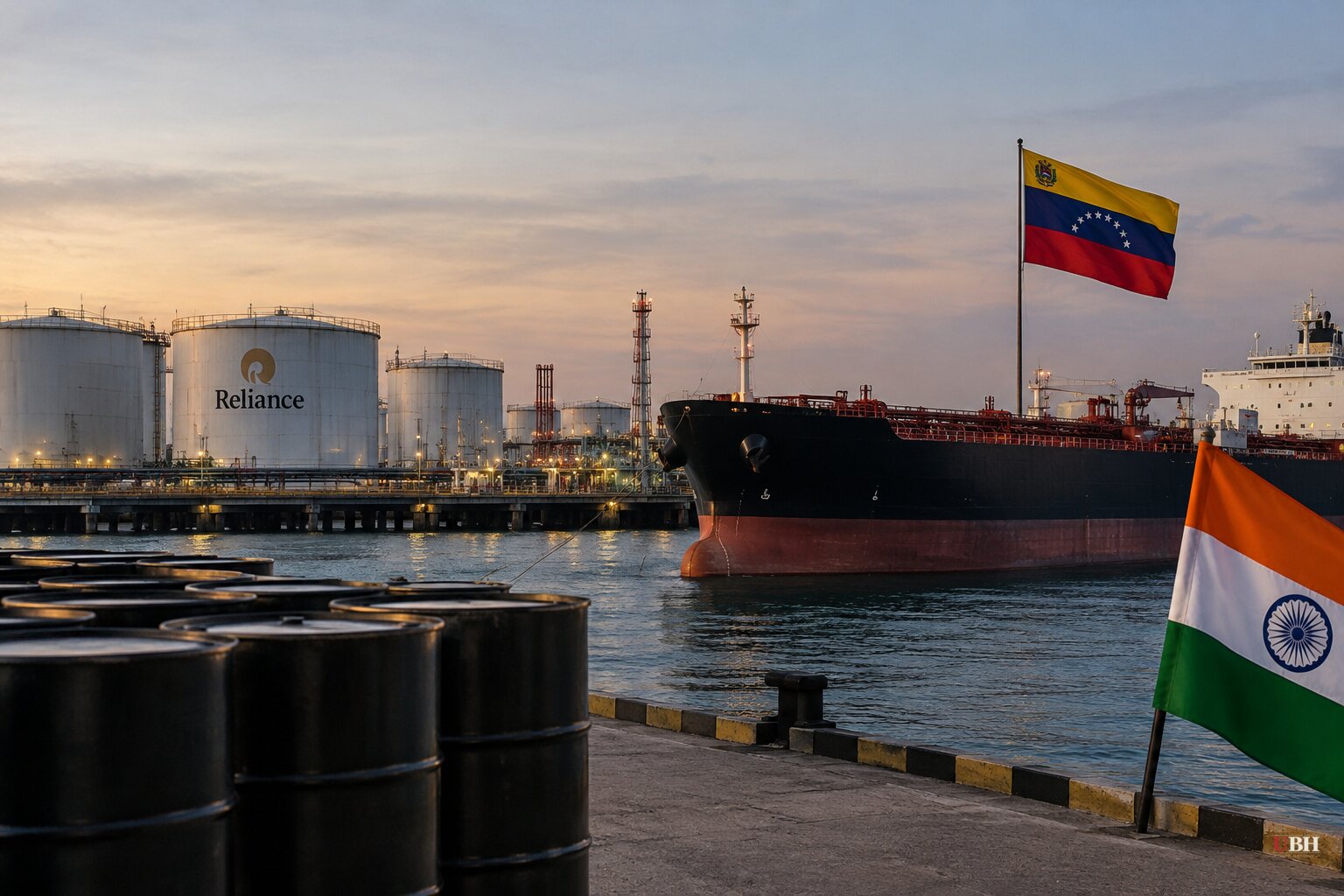
More than a year after a standoff between Washington and New Delhi over India's Russian crude purchases, India has pivoted hard toward Venezuelan oil and American gas. Nikkei Asia reported on Nov. 23 that both have surged even as the two governments keep negotiating a contentious, long-delayed trade deal.
The numbers are large. India's monthly imports of Venezuelan crude averaged 64,027 tonnes in fiscal year 2025-26. In recent months they have reached 1.05 million tonnes.
Reliance does the heavy lifting
Nikkei reports that Reliance Industries' Jamnagar refinery in Gujarat is driving most of the purchases. That fits the chemistry. Venezuelan crude is thick and high in sulfur, and only advanced refineries like Jamnagar can process it at scale.
Venezuelan barrels accounted for 5.7% of India's crude imports in October, according to NewsBytes. The same report says Indian refiners can handle up to 550,000 barrels a day of the grade.
Price is part of the picture. Venezuelan crude is going for about $51 a barrel, a competitive alternative to Saudi supply, per market reports. Those reports say price may be contributing to the shift, so treat it as a plausible factor, not a proven cause.
Washington's role
The NewsBytes report says Secretary of State Marco Rubio met Reliance Industries during a visit to discuss the possibilities for Venezuelan supply. It describes the US as encouraging India to buy more Venezuelan oil to reduce its dependence on Russian barrels.
The broader energy relationship is widening. Market reports describe expanded US-India cooperation in oil, gas and civil nuclear power. Nikkei adds that Indian purchases of American liquefied petroleum gas are up, with the trade deal looming in the background.
The demand behind it
India's appetite is not shrinking. The International Energy Agency said Thursday, Nov. 19, in its World Energy Outlook 2026 that India will account for more energy demand growth over the next decade than any other country or region.
Under the agency's Stated Policies Scenario, India's energy demand grows 2.5% a year through 2035, three times the global rate. Oil demand rises by 1.3 million barrels per day over that span, about half the increase across emerging market and developing economies.
Under the IEA's Current Policies Scenario, oil demand goes from 5.6 million barrels per day in 2025 to 7.5 million in 2035. Natural gas demand nearly doubles, from 69 billion cubic metres to 137 billion.
Supply is moving the other way. The IEA projects domestic crude production falling nearly 20% by 2035 while refining capacity grows by 1 million barrels per day. India had nearly 6 million barrels per day of refining capacity in 2025, fourth-largest in the world, with another 840,000 barrels per day under construction.
The agency says India imported about half its refinery feedstock from West Asia in 2025 and has also become a major buyer of discounted Russian crude. It notes that Venezuelan imports rose in 2026, supported by complex refineries able to run heavier grades. It also expects India's structural LPG deficit to widen.
Limits on how far this goes
More Venezuelan crude is not a simple dial to turn up. Price and shipping are among the factors that make boosting imports a real challenge, according to the NewsBytes report, and scaling up is not simple. Only advanced refineries like Jamnagar can manage heavy, sulfur-rich crude.
That makes Jamnagar the choke point. Reliance is already carrying most of the load, and the 550,000 barrels per day refiners can handle is the ceiling cited for the grade. Venezuela's 5.7% share in October is the most recent monthly figure reported.
The trade deal is still being negotiated. Washington and New Delhi continue to talk, and Nikkei describes it as contentious and long-delayed. Whether Venezuelan and American barrels keep displacing Russian ones will depend on that outcome and on whether Indian refiners beyond Reliance can run the heavier crude.
Sources used for this briefing
6 links from 4 independent newsrooms (syndicated copies of the same report count once)
These are the sources it draws on, linked so you can verify.


