
Unbiased headlines. Facts, not spin.
Unbiased Headlines is an independently owned news organization. We bring you the facts, not opinions, written fresh from 110+ named sources. Sources linked so you can verify it yourself.
 energy
Major Story (7/10)
South Korea Asks Qatar for Priority LNG Once Hormuz Shipping and Ras Laffan Output Normalize
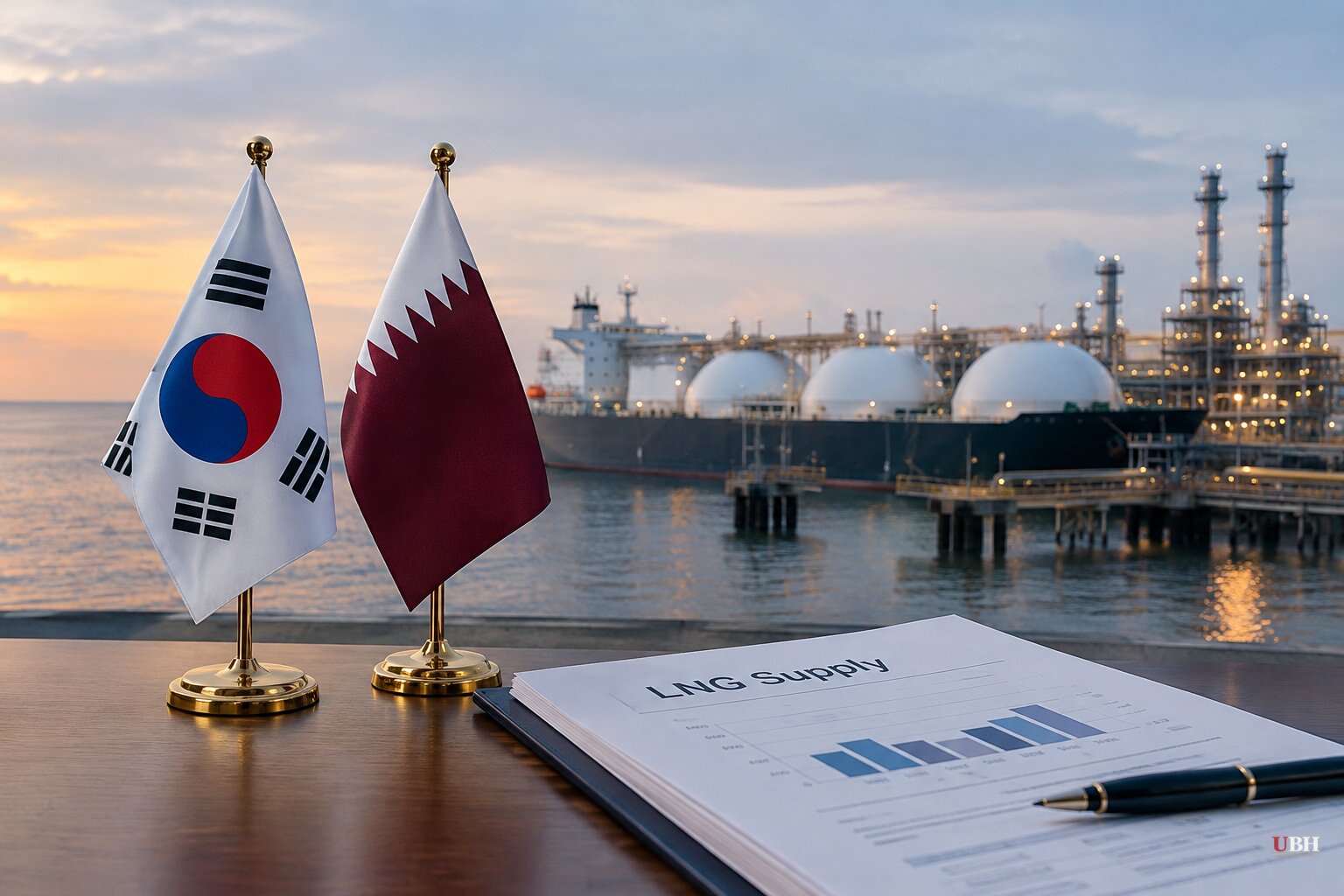
Since Qatar declared force majeure and suspended LNG shipments in March, after missile strikes damaged its Ras Laffan export terminal, South Korea has been scrambling for replacement cargoes. On Monday, Nov. 23, Seoul asked for a place at the front of the line when Qatari gas flows again.
What Seoul asked for
Industry Minister Kim Jung-kwan met Qatari Minister of State for Energy Affairs Saad Sherida al-Kaabi in Seoul. Kim asked Qatar to give South Korea priority in LNG supply once Qatari production and navigation through the Strait of Hormuz return to normal, according to the Ministry of Trade, Industry and Resources.
Kim called Qatar a key LNG partner and said cooperation between the two countries is crucial to a stable energy supply. He also told al-Kaabi that South Korea has kept securing alternative cargoes since force majeure was declared, according to the ministry's account of the meeting.
Al-Kaabi also runs QatarEnergy. He met Climate, Energy and Environment Minister Kim Sung-hwan during the visit as well. The two sides discussed Samsung C&T's 2-gigawatt Dukhan solar project and the exchange of energy-efficiency technology.
No Qatari answer on the priority request has been made public.
The numbers
Before the U.S.-Iran war began in late February, Qatar was the world's second-largest LNG exporter, behind the United States. Ras Laffan is the world's largest LNG export terminal.
South Korea imported 1.7 million metric tons of Qatari LNG from January through September this year. That ranked Qatar sixth among source countries and came to 5.2% of South Korea's total LNG imports. Last year the country took nearly 7 million tons from Qatar.
Qatari crude was a smaller piece. South Korea imported 17.98 million barrels from January through September, 2.5% of the total, ranking eighth.
Beyond gas
The ministers also talked about energy plants and shipbuilding. Kim asked Qatar to back Korean companies pursuing new projects.
Korean engineering firms won a combined $11 billion in plant-building contracts in Qatar over the five years through 2025. Korean shipbuilders won orders for 98 vessels from Qatar between 2022 and 2024.
The ministry said it will keep high-level consultation channels with Qatar open so the cooperation produces tangible results.
Qatar is also shopping in America
Seoul is not the only buyer positioning for Qatari volumes, and Qatar is not only a seller. QatarEnergy signed two purchase agreements for American LNG in late October and is reportedly negotiating a third with U.S. supplier Venture Global, according to Natalie Ecanow, a Middle East research analyst at the Foundation for the Defense of Democracies, writing in National Review. She adds that a deal with Houston-based NextDecade may also be coming.
QatarEnergy already owns 70% of Golden Pass LNG, a joint venture with ExxonMobil. The project shipped its first cargo from Sabine Pass, Texas, in April, Ecanow writes. She cites an early November Financial Times report that Qatar could become the biggest U.S. LNG buyer by 2033.
Ecanow argues that this gives Washington a chance to affirm its market leadership and drive a wedge between Doha and Tehran. That is her argument and her organization's, not an established outcome. No U.S. official is cited as adopting it.
What is unresolved
The request is conditional on two events that have no announced date: Ras Laffan returning to normal output and Hormuz transit normalizing. Seoul's ministry has not said how much Qatari gas it hopes to secure or on what terms. Qatar has not said whether it will honor a priority arrangement for one Asian buyer when other customers are also waiting for volumes to return.
The next marker is whether QatarEnergy lifts force majeure. Until it does, South Korea keeps buying replacement cargoes on the open market.
Sources used for this briefing
7 links from 7 independent newsrooms (syndicated copies of the same report count once)
These are the sources it draws on, linked so you can verify.


