
Unbiased headlines. Facts, not spin.
Unbiased Headlines is an independently owned news organization. We bring you the facts, not opinions, written fresh from 110+ named sources. Sources linked so you can verify it yourself.
 energy
Notable (6/10)
Event date: November 20, 2026 ·
Storms and Drone Alerts Delay Russian Oil Loadings at Baltic and Black Sea Ports, Traders Say
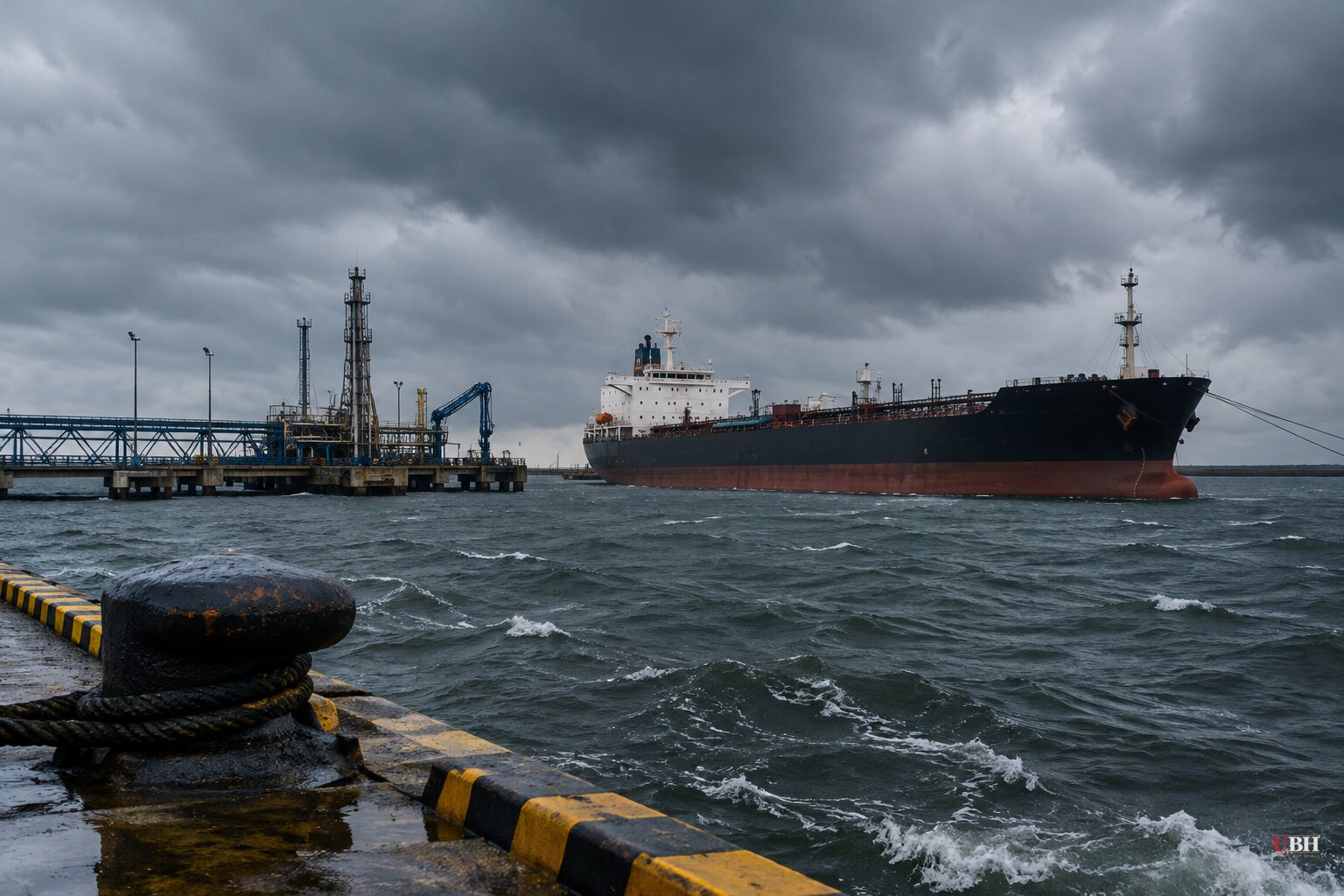
Since Ukraine's weeks-long campaign against Russian energy infrastructure began piling up hits, the latest picture from the export side is less about fire than weather. Russia's main oil terminals on the Baltic and Black Seas are facing growing delays, traders and people with knowledge of loading schedules told Reuters on Nov. 23. Storms are the main driver. Ukrainian drones are a compounding one.
What traders say is delayed
Storms have disrupted exports from Russia's main Baltic ports for more than a week, according to the traders. Loadings of more than 10 tankers in the first half of November were pushed back, forcing revisions to the export schedule. Lengthy customs checks and bunkering delays left ships waiting at sea.
The Baltic has since improved. Two traders said conditions are better than last week, and many delayed vessels left over the weekend.
The Black Sea is not there yet. Winter storms suspended loadings at Novorossiysk, Russia's largest Black Sea terminal, where operations were already constrained by frequent drone alerts. The city's mayor said on social media Friday that a storm warning remained in place. One trader said the storms there have continued.
Weather delays are routine in late autumn. The traders' point is that this year they stack on top of Ukrainian strikes that have raised the risk of output cuts.
Freight rates and tanker supply
Rates for moving Urals crude from Russia's western ports to Asia have already fallen from record highs set in early November, the traders said. That followed a sharp drop in global oil prices and tanker costs.
The delays could push rates back up. "In winter we face more delays in ports due to bad weather than during summer months normally, so altogether this doesn't promise a cheap freight," one trader said.
Tanker supply in the Baltic is set to tighten over the winter. Ice restrictions require vessels to carry ice-class certification, which few shipowners can provide, the traders said.
The strikes behind the drone alerts
Ukraine's strikes are hitting the supply side of the same system. On Thursday, Nov. 19, drones struck the Kaleykino oil pumping station in Tatarstan, a trunk-pipeline hub about 1,300 kilometers (808 miles) from the Ukrainian border.
The two sides describe the damage differently. The press office of Tatarstan head Rustam Minnikhanov said oil storage tanks near Almetyevsk were struck, that debris damaged several civilian structures, and that there were no deaths or injuries. It said an automatic fire-extinguishing system and security crews contained the blaze and "prevented a major fire."
Ukraine's General Staff said three RVSPA-50000 tanks at Kaleykino-1 were hit, describing them as among the largest oil storage tanks built in Russia. One caught fire and the other two were damaged, it said. Each tank holds up to 50,000 cubic meters of oil.
A day earlier, Ukraine's General Staff said overnight strikes on Nov. 17 to 18 damaged storage tanks at the Ilsky refinery and processing infrastructure at Afipsky, both in Krasnodar region. Ukrainian authorities put Ilsky's annual capacity at about 6.6 million metric tons and Afipsky's at about 6.25 million. The Defense Ministry estimated each plant produces petroleum products with a gross daily value of about $11 million.
"Every fire at (these refineries) means less diesel and gasoline for the Russian army and fewer oil rubles, with which the Russian aggressor buys missiles and rockets," the General Staff said.
Krasnodar's regional operational headquarters reported nine people injured in the Seversky district. One was hospitalized and eight received outpatient treatment. Debris also damaged private homes and commercial buildings. The Ukrainian military did not say what weapons it used.
Baltic exposure
The Baltic export hubs have been targets too. On Nov. 11, a drone attack on Ust-Luga started a fire, injured three workers and knocked out a power facility, according to Leningrad region Governor Aleksandr Drozdenko. He said air defenses intercepted 150 drones over the region.
Russian authorities have not published an assessment of which port installations were damaged or how much loading capacity went offline. Ust-Luga has multiple terminals handling different cargo, so a fire inside the port does not by itself mean exports stopped.
The attack came while Russian and Ukrainian representatives were meeting in Abu Dhabi for US-mediated talks.
What to watch
It is not yet clear how much of the loading backlog is weather and how much is strike risk, and the traders have not put a number on either. Baltic ports are clearing, but Novorossiysk storms are continuing and Baltic ice-class rules are about to shrink the pool of tankers able to haul Russian crude.
Sources used for this briefing
7 links from 7 independent newsrooms (syndicated copies of the same report count once)
These are the sources it draws on, linked so you can verify.


