
Unbiased headlines. Facts, not spin.
Unbiased Headlines is an independently owned news organization. We bring you the facts, not opinions, written fresh from 110+ named sources. Sources linked so you can verify it yourself.
 energy
Notable (6/10)
Event date: November 19, 2026 ·
Ohio Approves Two Gas Plants for Data Centers as Senate Moves Permitting Bill
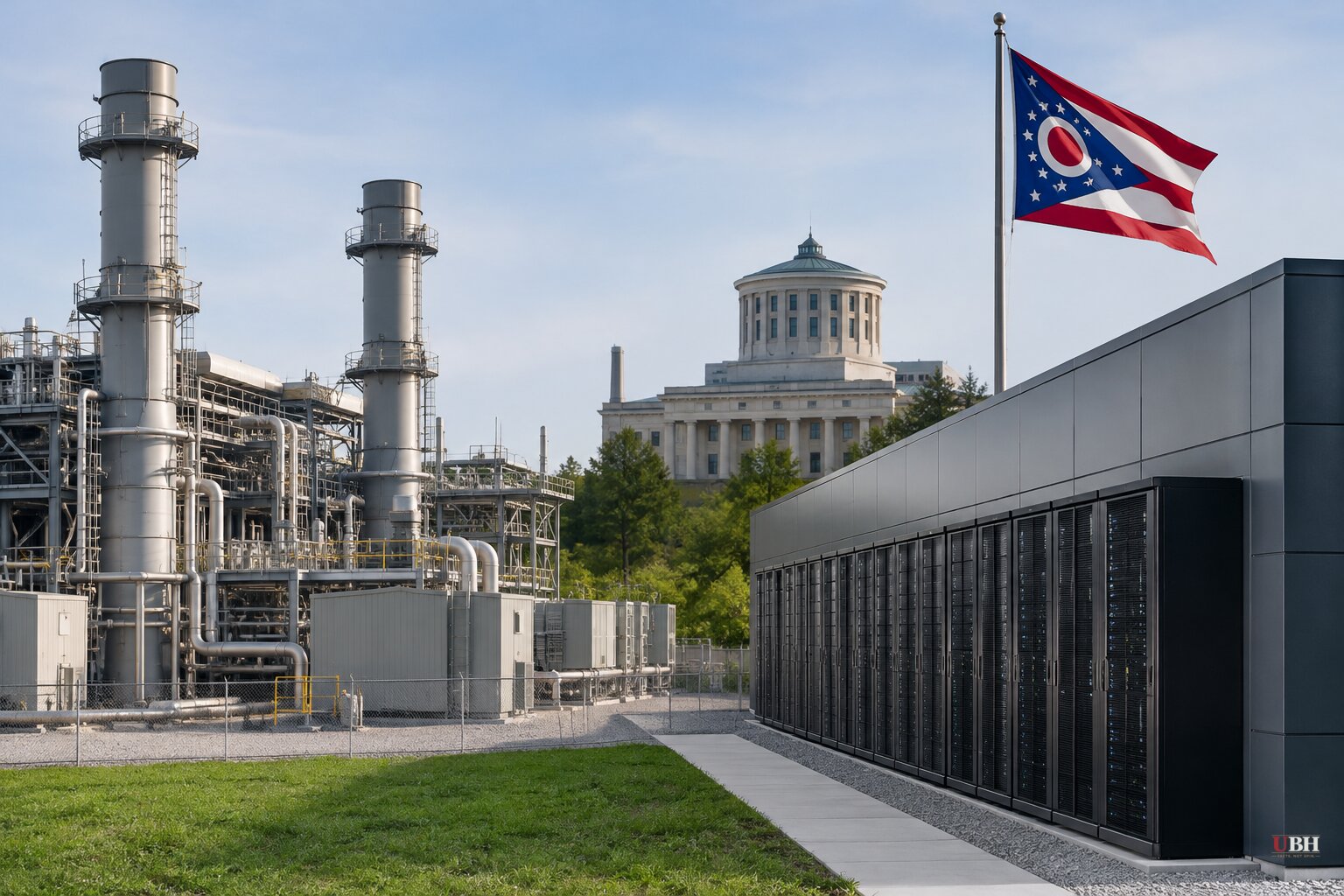
State regulators in Ohio approved permits this month for two natural gas plants whose only job is to power data centers. One is 800 megawatts and the other is 1,350 megawatts, each large enough to fuel entire cities.
The Ohio Power Siting Board approved an 800-megawatt plant in Ashville, near Columbus, for PowerConneX. It will serve two data center buildings owned by its parent company, EdgeConneX, a Virginia-based developer. The board also approved the 1,350-megawatt Fairfield Energy Center in Millersport, from Massachusetts-based Advanced Power. That plant will feed four data centers on a $2.1 billion campus owned by Denver-based Vantage Data Centers.
The approvals came over broad opposition in public comment. They also followed this month's election, when Ohio voters approved nearly 20 data center bans in communities across the state.
The Ashville vote
In Ashville, residents put a referendum on the general election ballot to repeal an emergency resolution that memorialized the village's development agreement with EdgeConneX. More than 80% voted to overturn it.
What that means in practice is unclear. Media reports show construction continuing at the site, and the company says in regulatory filings that the vote did not have "any effect" on either the gas plant or the data center. Signal Ohio asked Vantage and EdgeConneX for comment.
Local officials and economic development staff backed both projects, pointing to tax revenue and economic benefits. Unionized tradesmen who build the plants also support them, citing thousands of construction jobs.
OPSB approval does not make the projects done deals. Some still need separate environmental permits for water discharges or backup diesel generators.
Why build behind the meter
Central Ohio's data center boom has drawn heavily on the 13-state grid and helped push energy prices up. The developers' answer is "behind the meter" generation that ties directly into the facility. The theory is that AI growth can proceed without raising everyone else's electric bills.
The model is spreading. The Natural Resources Defense Council says the number of behind-the-meter gas projects in the U.S. doubled in the first half of 2026 alone. It cites experts tracking 90 to 177 gigawatts of proposed projects.
NRDC argues the shortcut is driven by speed. Grid interconnection backlogs run five to seven years in some regions. The group also says many behind-the-meter projects use less efficient equipment, such as reciprocating internal combustion engines and repurposed jet engines. In its view that makes them more polluting than drawing the same power from the grid, even a grid that leans on gas.
Many of these sites still connect to the grid for supplemental power, according to NRDC.
The Senate bill
On Nov. 9 the Senate voted 73-25 to begin debate on the Bipartisan American Affordability and Jobs Act of 2026, S. 5653. The threshold was 60. The bill was written by Republican Sens. Mike Lee and Shelley Moore Capito and Democratic Sens. Martin Heinrich and Sheldon Whitehouse.
It would ease federal permitting for energy projects, including traditional sources and mines, a GOP demand. It would also expand the power grid and clean energy infrastructure, a key Democratic goal.
President Trump urged senators to vote for it on Truth Social, calling it a "BIG WIN for U.S. ENERGY INDEPENDENCE and DOMINANCE." He also pointed to provisions requiring builders of new data centers to pay for their own power and "help invest in their local communities."
Sen. Jeff Merkley, D-Ore., said he would vote against it. He objected that it would speed natural gas pipelines and LNG export facilities, weaken environmental protections and limit tools for challenging projects. He praised its transmission and data center provisions and said he looks forward to working with colleagues "to get permitting reform right."
Health advocates have also condemned the bill, according to Public Health Watch. They say it would further weaken review requirements so data centers and their energy sources can be built faster.
The emissions argument
The Sierra Club's Nov. 16 report puts numbers on that concern. It says carbon dioxide emissions from power plants serving the grid fell 22% between 2015 and 2025, and that fifteen years of progress could be wiped out within three years.
The report counts more than 550 gas plants planned or under construction, a nearly 40% increase in generating capacity. At least a third of it is expected to serve data centers. It says a dozen data center projects with on-site gas could release nearly 180 million tons of carbon dioxide a year.
The Environmental Protection Network polled U.S. adults and found 88% support equal pollution safeguards for AI data centers. The Sierra Club also says many data centers operate under permits that limit public review and require little pollution reporting.
Will the economics send them back to the grid?
Mitsubishi Heavy Industries CEO Eisaku Ito told analysts on Nov. 6 that off-grid plans rely on smaller gas plants that cost more to run than the larger plants utilities and independent power producers are pursuing. Over the long term, he said, that gap will push data centers onto the grid.
Ito noted that data centers account for only around 10% of U.S. electricity demand. Utilities and independent power producers made up 94% of MHI's new gas turbine orders in 2024 and 2025.
MHI booked 8 GW of large gas turbine orders in the first half of its 2026 fiscal year, against 16 GW in all of fiscal 2025. It expects global turbine demand across all manufacturers to average about 70 GW a year over the next five years, down from the 100 GW it expects to sell this year.
One alternative is on the table. A Nov. 23 report from the think tank Energy Innovation proposes "hybrid thermal power": large heat batteries fueled by solar and wind. Author Eric Gimon says it can be cost-competitive with gas in many parts of the country and deliver power within a year or two where renewable energy is under development. He says he is unaware of a U.S. data center taking this approach today.
The open question in Ohio is whether the Ashville referendum, with more than 80% against the village's deal, has any legal bearing on a gas plant already approved and under construction.
The company says it has none.
Sources used for this briefing
6 links from 6 independent newsrooms (syndicated copies of the same report count once)
These are the sources it draws on, linked so you can verify.


