
Unbiased headlines. Facts, not spin.
Unbiased Headlines is an independently owned news organization. We bring you the facts, not opinions, written fresh from 110+ named sources. Sources linked so you can verify it yourself.
 energy
Major Story (7/10)
Event date: November 16, 2026 ·
Senate Advances Permitting Bill as Data Center Hookups and $3.8 Billion in SPP Transmission Projects Land Before FERC
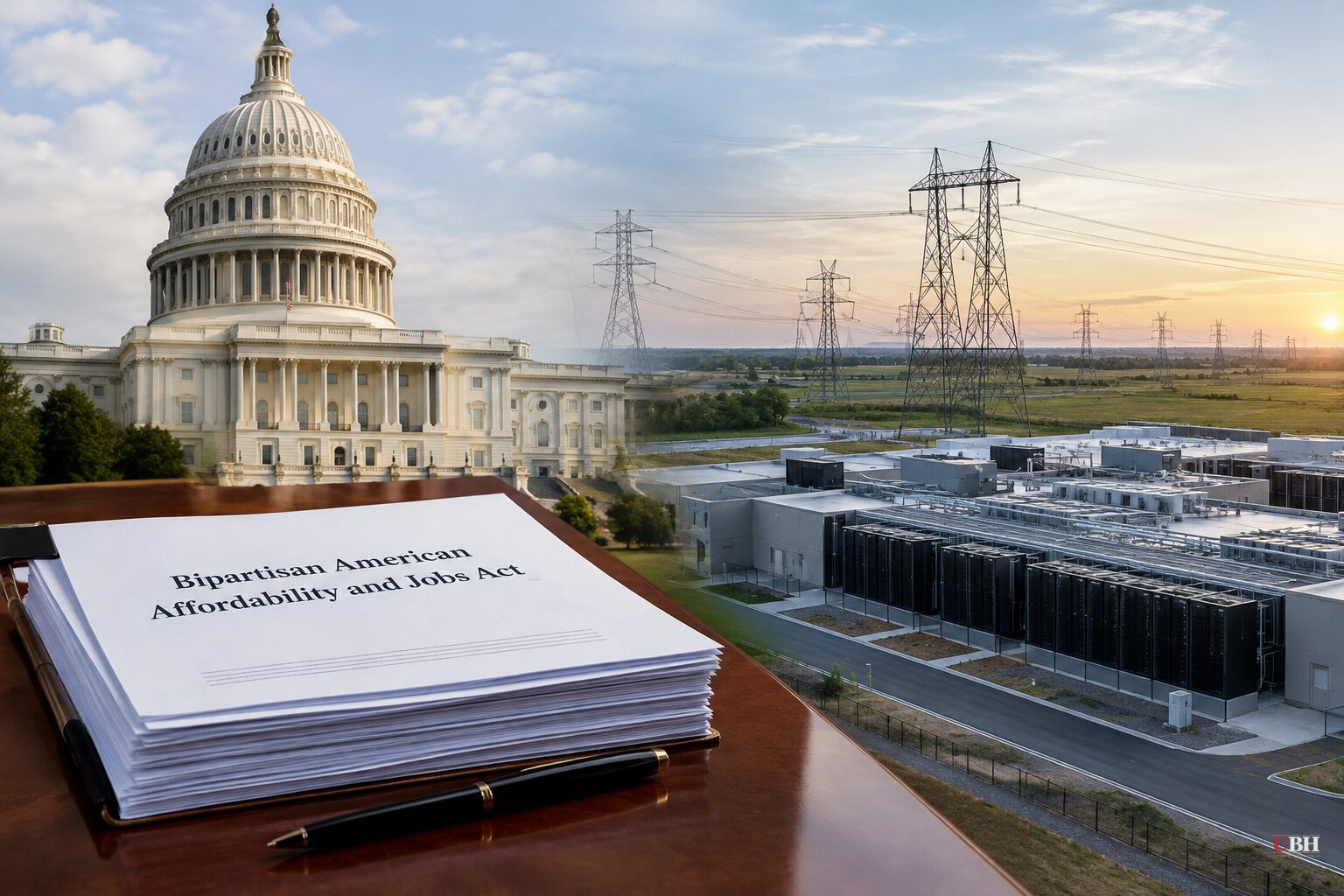
Since FERC's June 18 show-cause orders told six regional grid operators to justify or rewrite their rules for connecting data centers and other big power users, the fight over who pays for the grid has moved on three fronts at once: Congress, FERC dockets, and a complaint over Southwest Power Pool transmission projects.
The Senate bill
The Senate advanced the Bipartisan American Affordability and Jobs Act of 2026, known as BAAJA, in a bipartisan cloture vote on a Thursday night. It is not law. An amendment process is still expected, and it is not clear which tweaks will make it into the final text.
The package would speed environmental review, limit legal challenges, protect approved projects, expand the electric grid and streamline development of oil, gas and renewables. The White House backed the final version after months of fits and starts.
Sen. Shelley Moore Capito, R-W.Va., who chairs the Environment and Public Works Committee, said when the bill was introduced in September that it would make building infrastructure "faster and more efficient and easier" "without giving up any of the strong protections for our environment."
The data center language is where the political pressure sits. Sen. Martin Heinrich, D-N.M., the lead Democrat on the bill, pushed for stronger ratepayer protections. The provision covers facilities drawing at least 20 megawatts. It would require them to cover the cost of the additional power they need and to post financial guarantees for the cost of building or upgrading facilities.
"It will mean that we actually require big load centers, whether that's a factory or a data center, to not pass those costs on to the American consumer by statute, not a suggestion, an actual law," Heinrich said. Democrats had earlier argued that a similar bill from Sen. Jon Husted, R-Ohio, lacked real enforcement teeth.
Not everyone is satisfied. In a letter to The Washington Post, a reader described the bill as setting deadlines for environmental reviews and giving opponents 150 days to sue, rather than six years. The letter also says it would let FERC hand developers the power to condemn land and would assign costs to ratepayers by formula. That is the letter writer's reading of the bill. Some senators have also pressed for changes because tribes say the bill's changes to historic preservation law do not give them adequate input on projects that affect them.
FERC's large-load deadline
FERC set a November 16 deadline for the six operators to respond. They are PJM, NYISO, MISO, CAISO, ISO New England and SPP. As of that deadline, ISO New England was the only one with a clearly confirmed tariff filing. It filed November 13 under docket ER27-484-000. SPP had until November 20.
The ISO New England proposal creates three new transmission services for large loads and sets operating requirements covering load forecasting, telemetry, ramp rates and outage coordination. It includes a price-based redispatch mechanism for non-firm service with a proposed $250-per-megawatt-hour trigger, a bring-your-own-new-capacity requirement, and a Cost Recovery Agreement meant to keep transmission costs from shifting to other customers. The proposed schedule starts the application and study process June 1, 2027, and the new services June 1, 2028.
CAISO's Board of Governors approved its own package October 28. It includes an interim connection pathway that lets eligible large users take service while required transmission upgrades are still being built. FERC has yet to decide whether any of these proposals answers its June order.
The SPP complaint
The third front is a complaint filed at FERC by the Electricity Transmission Competition Coalition and the Industrial Energy Consumers of America. Paul Cicio, who chairs the coalition and runs the consumer group, wrote that SPP exempted four projects expected to cost $3.8 billion from competitive bidding by labeling them short-term reliability projects in its 2025 Integrated Transmission Planning portfolio.
SPP's tariff, as Cicio describes it, requires competition for large new lines unless a project must be in service in three years or less. The four projects are not expected to enter service until 2029 or 2030. Cicio argues SPP therefore violated its FERC-approved tariff and that ratepayers across the 17-state region could pay an estimated $750 million more. That figure is the complainants' estimate.
This is not the first use of the exemption. In 2024, SPP directly assigned $3.2 billion in projects to incumbent utilities on the same short-term reliability basis, without bidding. The 2025 projects include new 765-kV lines. The coalition asked SPP's board in January to put them out for competitive bids, and SPP proceeded without doing so. The complaint asks FERC to order competitive bidding.
The data gap
A separate problem is that nobody can easily check the spending. RMI, a clean-energy nonprofit, said in a November 10 brief that the U.S. spends $35 billion a year on transmission, up from $6 billion (inflation-adjusted) at the turn of the century. RMI authors Claire Wayner and Tyler Farrell say the national data on where that money goes is highly incomplete or sits behind an expensive paywall.
The next concrete steps are FERC's rulings on the large-load filings, including whatever SPP submitted by its November 20 deadline, a decision on the competitive-bidding complaint, and the Senate's handling of amendments to BAAJA.
Sources used for this briefing
7 links from 7 independent newsrooms (syndicated copies of the same report count once)
These are the sources it draws on, linked so you can verify.


