
Unbiased headlines. Facts, not spin.
Unbiased Headlines is an independently owned news organization. We bring you the facts, not opinions, written fresh from 110+ named sources. Sources linked so you can verify it yourself.
 energy
Major Story (7/10)
Event date: November 22, 2026 ·
Brent Trades Near $89 Tuesday, About 24% Below Its Oct. 30 Close, Five Days Before OPEC+ Sets 2027 Policy
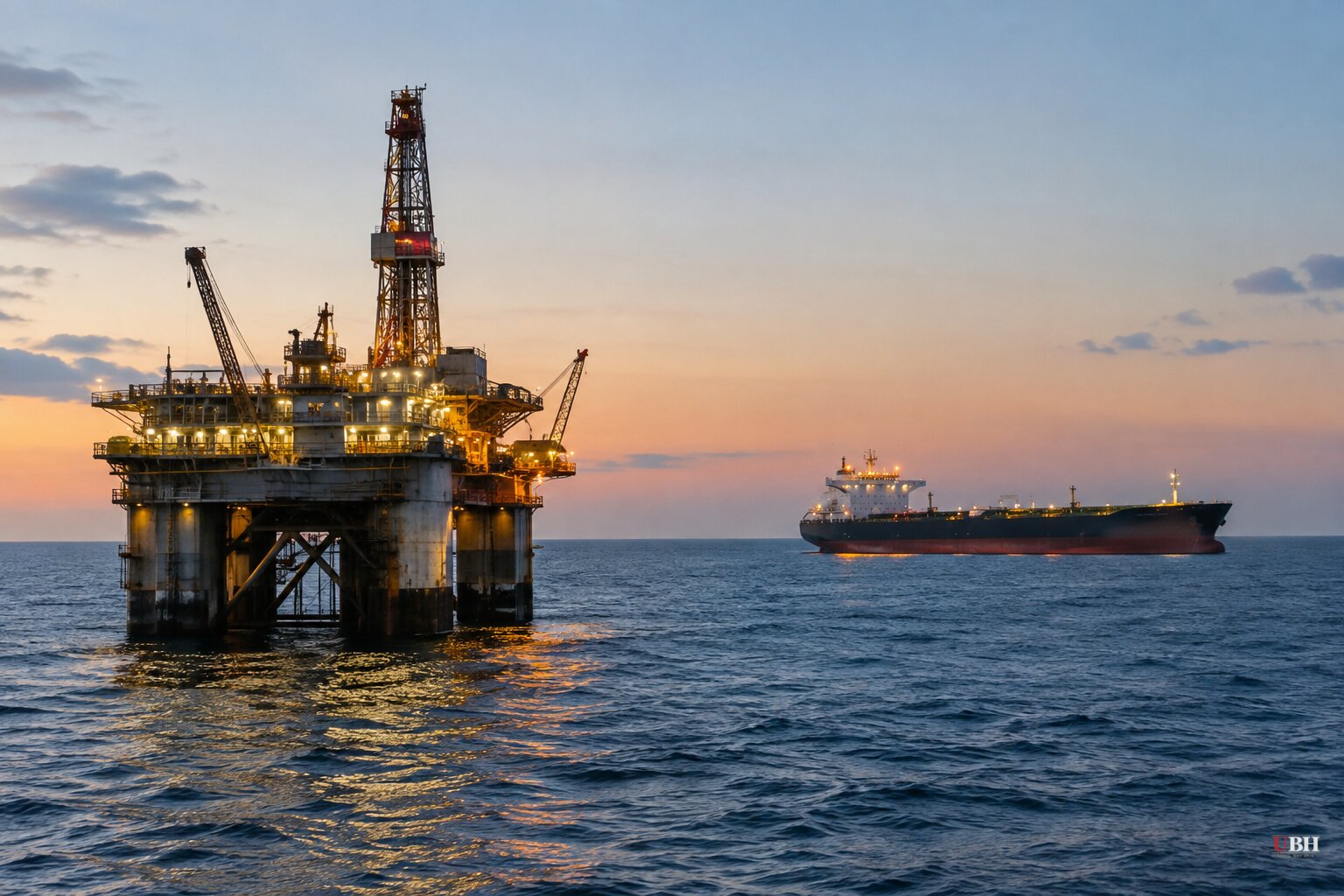
Brent crude for January delivery traded at $89.08 a barrel at 15:58 GMT on Tuesday, Nov. 24, down 0.32% from Monday's $89.37 settle, in a session range of $88.11 to $90.96. That is about 24% below the $117.64 close on Oct. 30.
The slide has continued through a stretch of headlines that once would have lifted prices. Iran's Revolutionary Guards claimed two supertankers hit mines in the Strait of Hormuz. That claim has not been independently confirmed. The Houthis claimed an attack on Saudi Arabia's Rabigh refinery, and Saudi officials had not confirmed any damage.
The week behind the price
Brent's January contract fell $3.27, or 3.41%, over the week ending Friday to close at $92.57, its third straight weekly loss. West Texas Intermediate dropped $3.88, or 4.44%, to $83.41 over the same week, according to figures cited by Indian brokerages Choice Broking and Religare.
The supply picture is the main weight. The International Energy Agency reports global supply rose 5.3 million barrels per day between August and October, despite reports of attacks on energy infrastructure and tankers. OPEC's own estimates show OPEC+ members adding approximately 2 million barrels per day in October alone.
Surplus estimates vary. The IEA projects a supply surplus of around 2 million barrels per day this quarter, according to the NDTV Profit report on Religare's analysis. A separate summary of the agency's revision puts the fourth-quarter 2026 surplus at 1.7 million. An IEA estimate of a 3.8 million barrel-per-day surplus for 2027, via S&P Global, is cited by the broker Admirals.
A market report from House of Saud attributes Monday's 3.5% drop to three factors: a repricing of U.S.-Iran risk after the U.S. midterm elections, a market that now treats Hormuz as partly reopened, and thin trading in Thanksgiving week. The drop took Brent below $89 for the first time since late August.
Diplomacy still unresolved
US Vice-President JD Vance held talks with Qatar's prime minister on an agreement with Iran, Kotak Neo reported on Tuesday. The key disputes remain unresolved. Iran wants sanctions lifted, frozen assets released and the U.S. naval blockade removed. Washington is pressing on the nuclear program.
Forecasters were already below today's price for next year. Goldman Sachs sees Brent averaging $88 in 2027, according to its Nov. 15 note. The EIA's Nov. 10 outlook says $86. Morgan Stanley's Nov. 16 forecast is $86.30.
What OPEC+ has to decide
The 42nd OPEC and non-OPEC ministerial meeting is set for Sunday, Nov. 29. Ministers are due to set the 2027 output framework and new production baselines, based on an independent review of each member's maximum sustainable capacity, according to OPEC. OPEC had not published a start time as of Nov. 20.
The group-wide production level agreed on June 7 expires Dec. 31, 2026. On Nov. 1, the seven countries still adding barrels kept December output at September's level, OPEC said. It was their third pause in a row. The 1.65 million barrel-per-day voluntary cut from 2023 was fully unwound by September, and most Gulf producers still pump below their targets after the disruption.
The options range from extending the pause into 2027 to returning more output or delaying the new baselines. Bloomberg reports the meeting is the alliance's most consequential decision of the year, with strains inside the group. The United Arab Emirates has already quit after years of frustration with its production limits, and Iraq has pushed for room to pump more.
The case that prices could turn
Not everyone reads the slide as settled. Ajit Mishra, senior vice president of research at Religare Broking, expects Brent to stay volatile in a range of $89 to $96 and called the OPEC+ meeting "an important trigger." He said any escalation around Hormuz could push prices higher.
Energy analyst Daniel Lacalle argues the opposite risk is being underpriced by producers. An oil executive told him he worries more about oversupply than the geopolitical risk in prices, Lacalle wrote. He warns investors may mistake "the price of geopolitical insecurity for evidence of lasting scarcity." He also notes that crude is getting delivered at high cost, with Middle East-to-Asia freight rates near multiyear highs and tight refining capacity.
Lacalle puts the Pentagon's estimated cost of the broader Iran campaign at $47.1 billion, though he says that spending is not entirely attributable to protecting oil shipments.
Timing detail
The January Brent contract stops trading Monday, Nov. 30, the first session after the meeting. Whatever ministers decide Sunday will land on a contract roll. FinanceFeeds lists $92.57 as the upside reference level and $86 as the downside reference.
The unresolved question is whether OPEC+ extends its pause into 2027 with a surplus already forecast, or tries to reclaim market share with the UAE gone.
Sources used for this briefing
6 links from 6 independent newsrooms (syndicated copies of the same report count once)
These are the sources it draws on, linked so you can verify.


