
Unbiased headlines. Facts, not spin.
Unbiased Headlines is an independently owned news organization. We bring you the facts, not opinions, written fresh from 110+ named sources. Sources linked so you can verify it yourself.
 energy
Major Story (7/10)
Event date: November 19, 2026 ·
Middle East Crude Exports Fell to 13.96 Million Barrels a Day From an Oct. 12 Peak of 20.86 Million While Brent Sits Near $89
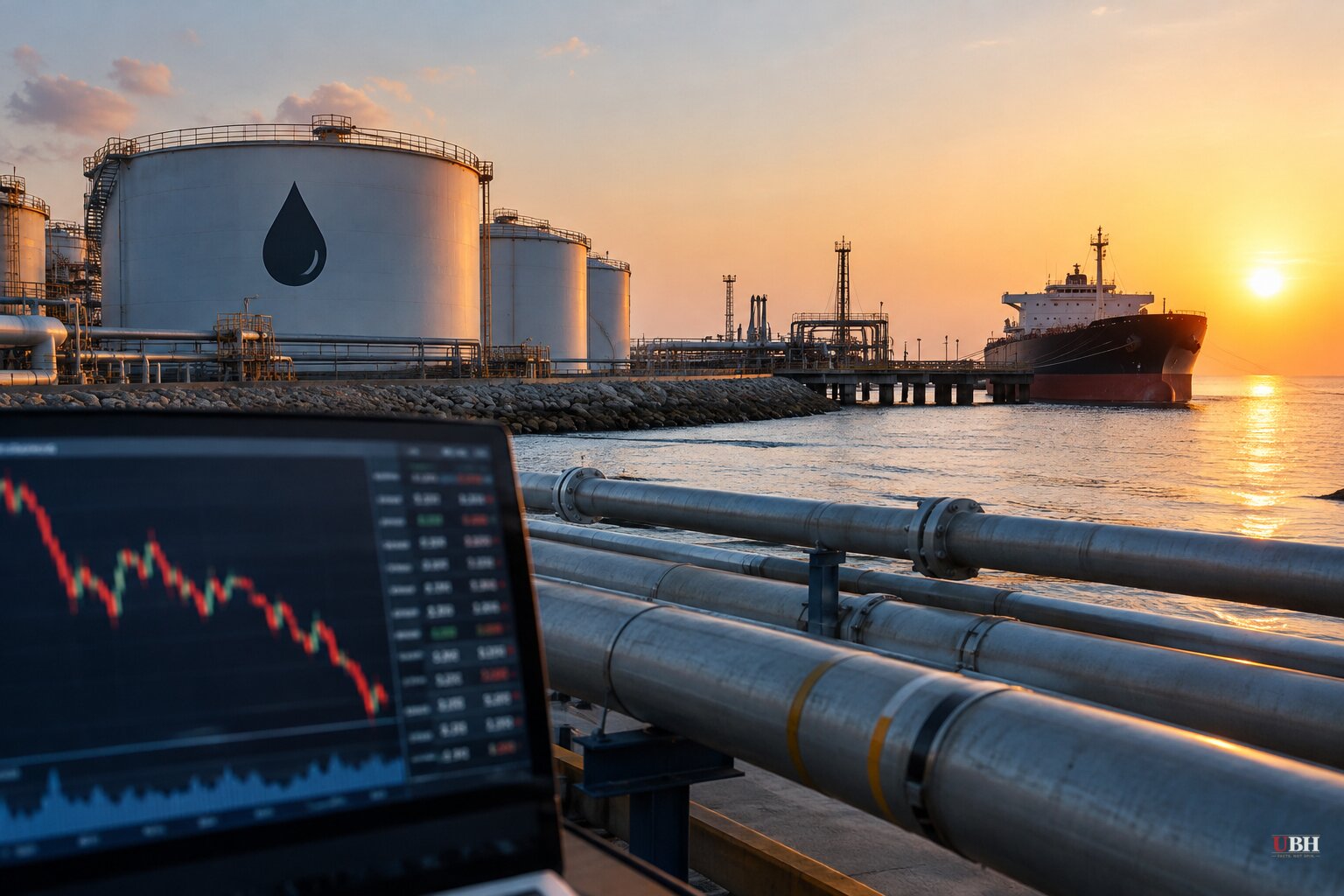
Oil has swung from a closing price of roughly $72 a barrel on Feb. 27, the day before the U.S.-Iran war began, to $118 on Oct. 30, and has since fallen back to about $89. The latest data complicates the story behind that drop.
A Reuters analysis published Nov. 24 shows Middle East crude exports peaked at 20.86 million barrels a day in the week of Oct. 12. By the week beginning Nov. 16, they had fallen to 13.96 million barrels a day.
Brent, meanwhile, was at $89.33 a barrel as of Nov. 23, per Reuters, after hitting $118 on Oct. 30. Even after that decline, prices remain above the roughly $72 closing price on Feb. 27.
Exports down, prices down
The two numbers are moving in the same direction, which is unusual. Falling exports normally support prices.
The Reuters analysis does not claim Iranian attacks explain the entire decline. Shipping schedules, stockpiles, buyer orders and broader market conditions may also have played a role.
The Joint Maritime Information Centre counted at least 12 vessels attacked in regional waterways in November, against 17 in October. About 80% of Middle Eastern crude goes to Asian refineries, so China, India, Japan and South Korea are the buyers most exposed if flows stay low.
The glut forecast
Earlier this month, the prevailing view was that Tehran's grip on the Strait of Hormuz was loosening. The International Energy Agency attributed falling prices to recovered Gulf exports. It expects supply to exceed demand in the fourth quarter for the first time since the war began.
David Oxley, chief climate and commodities economist at Capital Economics, told CNN that "it certainly seems that Iran is either unwilling or unable to prevent the flow of crude oil at present." He added that navigability in the strait is still far short of pre-crisis norms.
Danny Citrinowicz, a senior fellow at Israel's Institute for National Security Studies, told CNN that Iran has long tried to "internationalize" the cost of the war. If prices keep falling despite Iranian attacks, he said, an important part of that strategy loses force. He and other experts warned that a cornered Tehran has tended to choose escalation over capitulation.
Iranian officials say the strategy has worked. Mohsen Rezaei, head of Iran's Supreme National Security Council, said: "We want to impose a cost on the Americans that makes attacking Iran too expensive, and that serves as a deterrent." Iran also says it is prepared to withstand the U.S. blockade.
Gulf front stays hot
The shooting has not stopped. Saudi Civil Defense said 11 people were wounded when Houthi forces hit Riyadh's tallest tower. Houthi leaders have threatened Jeddah and other Saudi Red Sea ports, and a Saudi-led coalition has issued an evacuation warning for Yemen's Hodeidah port. Yemeni government forces say the Houthis will not seize Aden.
Oil still slipped more than 1% on one recent session as the prospect of a supply glut outweighed disruption fears. Analysts at ING, Warren Patterson and Ewa Manthey, wrote on Nov. 5 that absent escalation the market was likely to keep giving back its risk premium. June Goh, senior oil analyst at Sparta Commodities, said more volatility was likely because global strategic reserves have been drawn very thin.
Diplomacy and the politics
On the diplomatic track, Secretary of State Marco Rubio said that he would not "say we're on the verge of a breakthrough." He called Iran's demands unrealistic. Iranian President Masoud Pezeshkian said Tehran favors dialogue but will not yield to coercion.
Mediators have discussed a two-day framework, per Axios on Nov. 9. The U.S. would lift its naval blockade and release some frozen Iranian funds. Iran would then move toward renewed nuclear inspections and reopen the strait before broader talks. The proposal had not been accepted by Washington. Trump has since said Iran wants a deal.
The pump price drove the politics. Democrats flipped the House and Senate on Nov. 3. Vice President JD Vance blamed the war for the losses, and Trump told reporters that assessment was largely true because the war drove up gasoline prices. The national average was $4.10 on Nov. 5, against almost $3.08 a year earlier. GasBuddy's Patrick De Haan said it could fall to $3.65 in the weeks ahead as wholesale losses pass through.
The new Congress does not take office until January. House Minority Leader Hakeem Jeffries wrote on Nov. 4 that House Democrats must act in their first 100 days in the majority to stop the war.
Whether export volumes recover remains unclear. If shipments out of the Gulf stay near 14 million barrels a day, the supply cushion behind the price decline will be thinner than the headline Brent number suggests.
Sources used for this briefing
6 links from 6 independent newsrooms (syndicated copies of the same report count once)
These are the sources it draws on, linked so you can verify.


