
Unbiased headlines. Facts, not spin.
Every story is an unbiased news briefing written from 110+ sources across the spectrum — sources linked so you can verify it yourself.
 energy
Major Story (8/10)
July 4, 2026 at 08:55 PM
energy
Major Story (8/10)
July 4, 2026 at 08:55 PM
Nearly 1 Million Homes Lost Power on July 4 as DOE Deleted 6,000 Energy Conservation Pages During the Heatwave
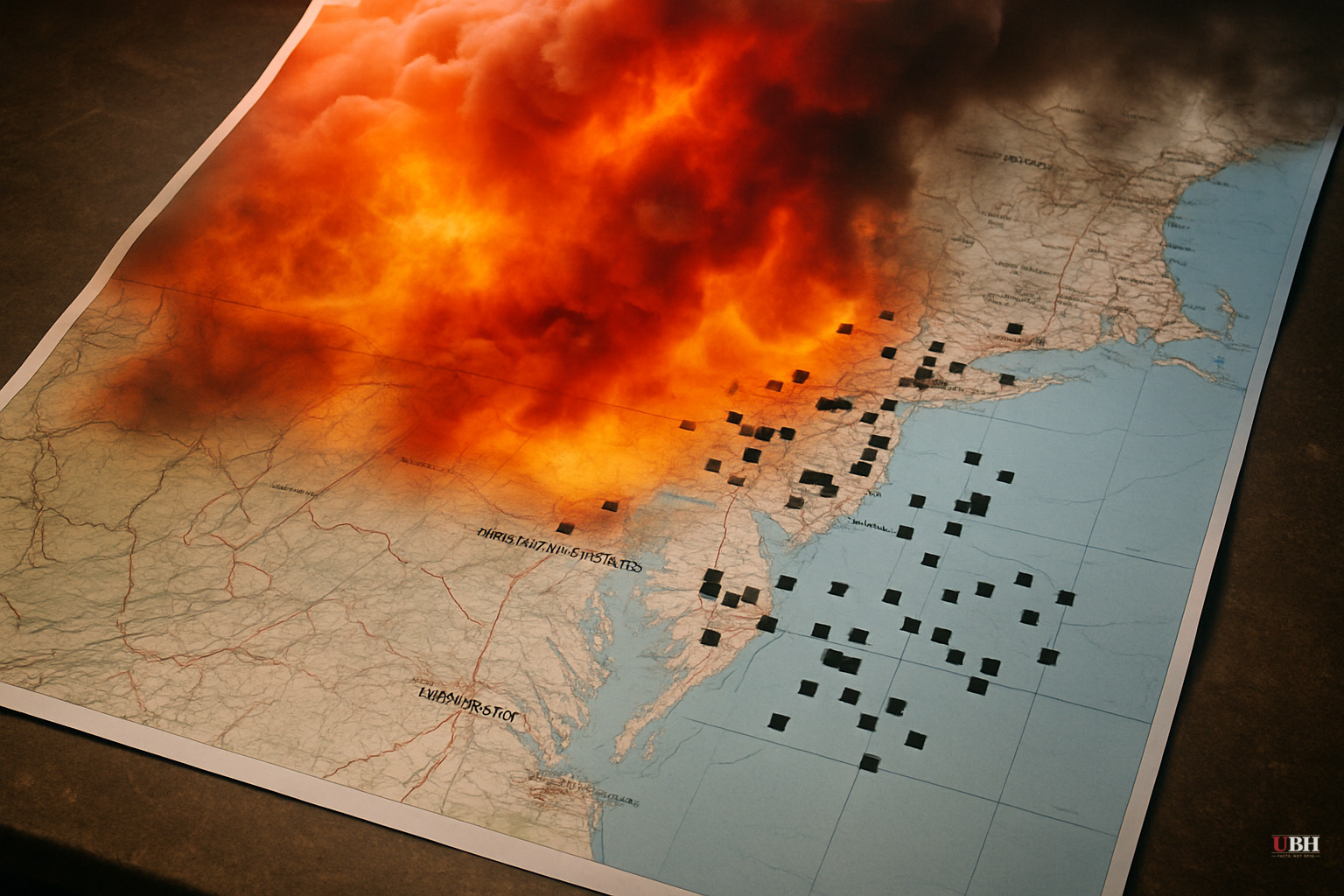
Since the heat dome settled over the eastern United States earlier this week, the crisis has compounded daily. As of 4:30 p.m. ET on July 4, 2026, tracking site PowerOutage.us reported approximately 795,000 customers without electricity nationwide, according to Newsweek. Earlier Saturday, that number had surpassed 950,000. Because utility data counts accounts rather than individuals, the actual number of people affected is considerably higher.
Michigan bore the hardest hit, with nearly 331,000 customers in the dark, per Newsweek. The Northeast and Midwest were the other major impact zones.
The Grid Under Pressure
PJM, the nation's largest power grid operator serving 67 million people across 13 states, has been running at emergency levels for the third consecutive day. PJM told its members and stakeholders that its peak instantaneous load on July 2 reached approximately 162,700 megawatts between 5 and 6 p.m., and noted that even that figure was suppressed by demand-response programs. The actual peak load, PJM said, likely surpassed its all-time record.
The grid held together largely because of Trump administration emergency orders requiring fossil-fuel plants to operate at full capacity, according to ZeroHedge. Natural gas, nuclear, and coal carried the bulk of generation. Wind and solar together contributed only a mid- to high-single-digit percentage of total power output during peak hours, according to grid tracking site GridStatus.
In New York City, Con Edison reduced voltage in Westchester County, the Bronx, and parts of Queens to prevent grid overload, and began distributing dry ice to affected customers, according to Newsweek. The Straits Times reported roughly 17,000 Con Edison customers were without power as of late afternoon July 3.
Celebrations Canceled
The National Park Service's Independence Day Parade in Washington, D.C. was canceled due to heat index forecasts of up to 115 degrees Fahrenheit, per Newsweek and the Straits Times. Philadelphia scrapped its semiquincentennial parade, which had been designed to feature 250 elements representing all 50 states. The Great American State Fair on the National Mall temporarily closed on the afternoon of July 3 before reopening. DC Fire and EMS treated 44 patients for heat-related illness, with seven requiring advanced life support, according to Newsweek.
In the West, wildfire risk prompted burn bans that grounded fireworks shows in Colorado Springs, Pueblo, and Cañon City, among other municipalities.
The National Weather Service issued heat alerts covering more than 185 million people, with heat index values forecast to exceed 110 to 115 degrees in some areas, per the Straits Times.
The Deleted Pages
Also on July 4, the Department of Energy removed approximately 6,000 web pages from its Energy Saver consumer guidance site, according to The Verge. The deleted content included the "Home Cooling Systems" page, which had advised Americans to set thermostats between 75 and 78 degrees Fahrenheit during summer days. Archived versions confirmed the page was accessible through at least late June and early July 2026, according to LatestLY. The Internet Archive preserved copies.
The deletions swept broadly: gone too were pages on water conservation, types of insulation, and the Department's Solar Decathlon challenge.
The timing followed a political flash point. New York City Mayor Zohran Mamdani posted on X on July 1 urging residents to set AC units to 78 degrees to reduce grid strain. The advice triggered immediate criticism from Republicans including Sen. Ted Cruz, former presidential candidate Nikki Haley, and Rep. Nancy Mace of South Carolina, who framed the suggestion as socialism. The Verge noted that setting thermostats to 78 degrees was, until recently, the DOE's own official guidance, and that Republican governors, including Texas Gov. Greg Abbott, have issued identical advice during past heat emergencies.
The Administration's Position
Large-scale website consolidations and content audits have been an explicit goal across federal agencies since January 2026, and the removal of some DOE pages predates this week's political controversy. It is possible the Energy Saver pages were already scheduled for deletion as part of a broader digital restructuring unrelated to Mayor Mamdani's social media post. The DOE has not stated that the deletions were a response to the political fight, and no internal directive has been made public connecting the two.
The DOE has provided no public explanation for why practical safety guidance was removed during a heat emergency that the agency's own former resources would have directly addressed. Newsweek reported contacting the DOE for comment on July 3; as of publication, no response had been issued.
What Comes Next
Forecasts show temperatures across the affected region dropping below the 30-year average of around 70 degrees next week, per ZeroHedge, which would provide temporary relief. Whether the deleted conservation pages will be restored remains unclear. The DOE has not explained when, by whom, and on what authority 6,000 safety-relevant web pages were pulled during the deadliest category of natural disaster. Extreme heat kills more Americans annually than floods, tornadoes, and hurricanes combined, according to CDC and NOAA data cited by The Verge.
Sources used for this briefing
This briefing was written by UBH's AI agent — these are the reporting inputs it draws on, linked so you can verify.


