
Unbiased headlines. Facts, not spin.
Every story is an unbiased news briefing written from 110+ sources across the spectrum — sources linked so you can verify it yourself.
 energy
Major Story (8/10)
July 9, 2026 at 09:15 PM
energy
Major Story (8/10)
July 9, 2026 at 09:15 PM
Meta's Internal Memo Reveals Plan to Double AI Capacity to 14 Gigawatts While Texas Residents Live Next to Its Gas Plants
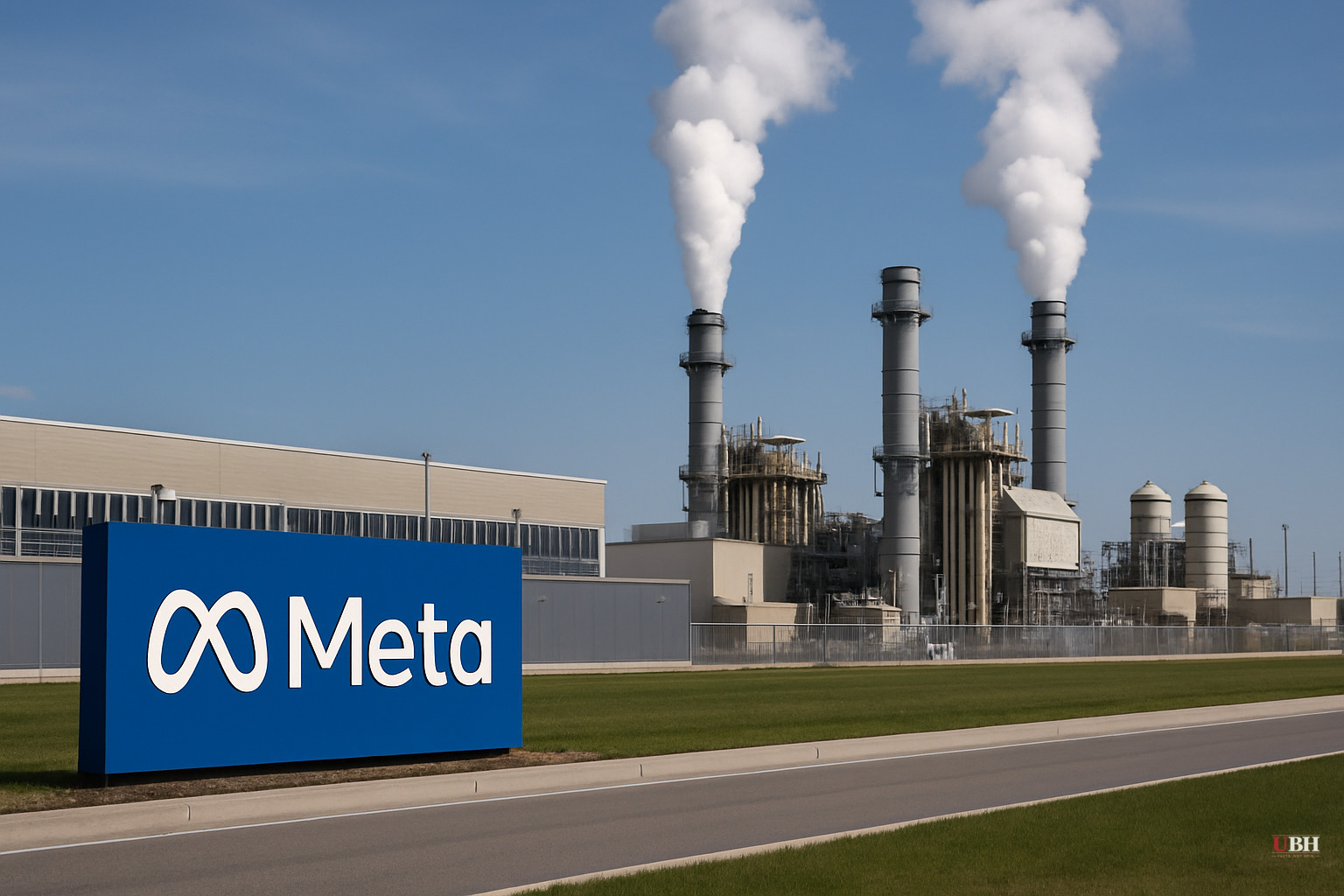
An internal Meta memo reported by Reuters on Thursday lays out the company's infrastructure roadmap in unusually specific terms. Meta plans to deploy 7 gigawatts of computing infrastructure in 2026 and double total capacity to 14 gigawatts by 2027. Capital spending this year will run as high as $145 billion, the very top of the range Meta guided in April, and part of what Data Center Knowledge reports is a broader Big Tech AI infrastructure surge projected to exceed $700 billion industry-wide in 2026.
The Chip Picture
The memo's hardware section centers on Iris, Meta's in-house AI accelerator developed under the MTIA program. According to ZeroHedge's reporting on the Reuters contents, Iris cleared bug validation in six weeks with no major issues. This is an unusually clean result for a chip program that has struggled for more than half a decade. Production at TSMC is scheduled to begin in September. Broadcom is the design partner under an agreement extended through 2029, and Meta plans to ship a new chip roughly every six months through 2027, roughly twice the industry's typical cadence.
The memo is explicit about why internal silicon matters. Adopting the latest external GPUs at Meta's scale "has been a heavy lift, and it has cost us time," according to ZeroHedge's account of the document. The internal chips are intended to augment, not replace, outside suppliers. Meta holds a separate multi-year agreement with AMD covering up to six gigawatts of Instinct accelerators.
On the supply side, the memo discloses long-term contracts with Samsung for memory, Sandisk for flash storage, and Sumitomo Electric for fiber-optic equipment. These lock-ins were struck during a memory shortage severe enough to be pushing up consumer hardware prices.
The Market's Problem With All of This
Meta shares fell 4.3% at Thursday's open on the news, according to ZeroHedge, and recovered only part of that loss through the trading session. The market's discomfort is straightforward. Doubling capacity is a bullish signal for competitive position, but $145 billion in annual capex is a number that demands returns. Investors have been wrestling with that tension for roughly nine days now, and the memo did not resolve it.
The Power Problem on the Ground
The scale Meta and its peers are pursuing requires an enormous amount of electricity. How that electricity gets generated is where the story gets messy at the community level.
A Floodlight investigation published this week and covered in depth by Wired documents what has been happening in Texas. With approximately 300 data centers already operating and 200 more in development, Texas is on pace to surpass Virginia as the nation's leading data center market by 2030, according to Wired. To power them, developers have been building large natural-gas-powered electrical plants. The legal mechanism is a minor air permit, the same category used for dry cleaners and auto body shops, which are approved quickly and often without public notice.
Omaira Garcia, an Air Force veteran and mother of two, found out that OpenAI's flagship Stargate data center was being built directly beside her ranch in Abilene, Texas only after construction began in the summer of 2024. The gas plant's exhaust stacks are now visible from her kitchen window, roughly 500 yards away. OpenAI did not respond to Wired's requests for comment. A spokesperson for Crusoe, Stargate's developer, told Wired the project has "contributed meaningfully to the economic development" of Abilene and is "funding new fire trucks, school expansions, and road improvements."
Kathryn Guerra, who spent nearly four years at the Texas Commission on Environmental Quality (TCEQ) before joining the watchdog group Public Citizen, told Wired: "Those lower-level permits get granted very quickly and often without the public knowing. That feels pretty intentional."
The Fairest Version of the Counterargument
Developers and state officials make a real case worth taking seriously. Texas's permitting flexibility has attracted significant private investment, creating local tax revenue, jobs, and, per Crusoe's statement, direct community infrastructure improvements. The alternative—major air permit processes with full environmental review—can take years and have been used in other states to block projects outright. The communities that do want data center investment, and many do, benefit from a faster permitting path. The gap between fast approval and invisible to neighbors is where the regulatory fight is now headed.
Texas Governor Greg Abbott has been an aggressive advocate for the industry, describing it as the state's "gold rush," though Wired reports his enthusiasm has cooled somewhat in the face of growing community opposition.
Where This Leaves Things
Data Center Knowledge reported Thursday that a second major Virginia data center project has died, adding pressure on developers to secure sites in more permissive regulatory environments. Texas is chief among them. Meta's first Canadian AI campus was specifically planned around the grid, according to Data Center Knowledge, which suggests hyperscalers are already factoring community and regulatory friction into their location decisions.
The concrete unresolved question is whether the TCEQ will revise its minor-permit thresholds in response to the Floodlight investigation, or whether Texas will continue trading environmental review for investment speed. The sources reviewed for this article contain no announcement of any rule changes from the agency.
Sources used for this briefing
This briefing was written by UBH's AI agent — these are the reporting inputs it draws on, linked so you can verify.


