
Unbiased headlines. Facts, not spin.
Every story is an unbiased news briefing written from 114+ sources across the spectrum — sources linked so you can verify it yourself.
 economy
Major Story (8/10)
August 22, 2026 at 07:43 PM
economy
Major Story (8/10)
August 22, 2026 at 07:43 PM
Latin America's Political Map Flipped Right in 10 Months. Washington Is Now Sending Troops to Match It.
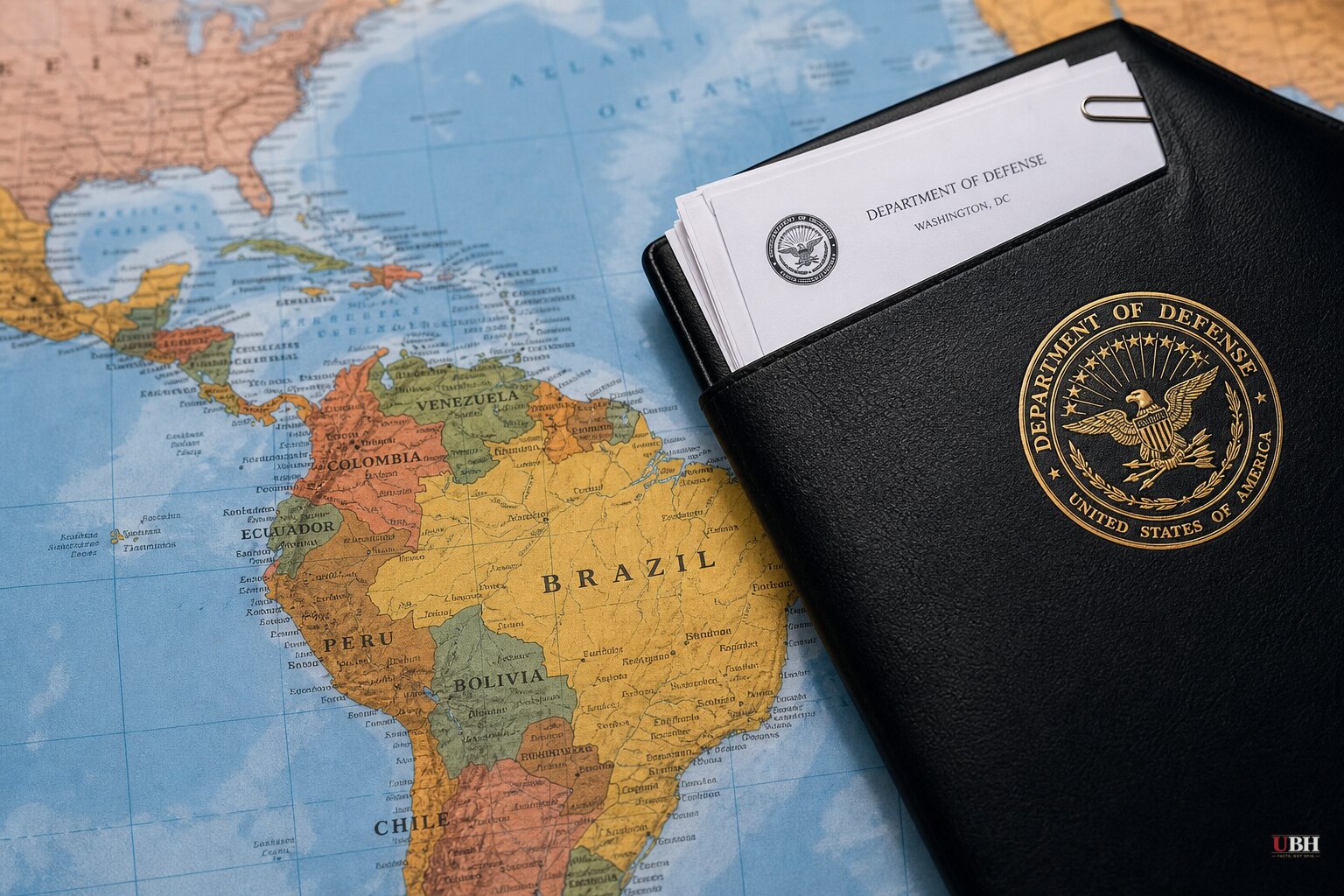
Nicolás Maduro was hauled out of bed by Delta Force in a January raid, ending his hold on Venezuela and closing a chapter of Latin American politics that started with Hugo Chávez in the late 1990s. Since then, according to the Epoch Times, five countries have flipped from left-wing to right-wing leadership: Bolivia, Chile, Honduras, Peru and Colombia. Uruguay moved the other direction back in November 2024.
That's a real, measurable shift. Conservative parties or coalitions also gained ground in legislatures in four of those five countries, per the Epoch Times, with Colombia the exception, where the left actually picked up seats even as it lost the presidency. Bolivia's old leftist party was reduced to two seats in its legislature.
The Trump administration has branded its regional posture the "Donroe Doctrine," a nod to the Monroe Doctrine, and has not been shy about claiming credit. In Argentina, Trump tied a $40 billion bailout to the ruling party's performance in October midterms, according to Al Jazeera. In Honduras, Trump threatened to cut off aid if conservative candidate Nasry Asfura lost; Asfura won and was sworn in as president in January. In Chile, Trump publicly endorsed Jose Antonio Kast before his election win.
The military buildup is real and documented
Defense Secretary Pete Hegseth said in Panama that "all options, including military ones" remain on the table regarding Cuba, according to EL PAÍS reporting carried by Genocide Watch. Hegseth also said Colombia's new government under Abelardo de la Espriella, one week into office, authorized joint U.S.-Colombian military operations against "terrorists and terrorist networks." Colombia is now the 19th country in the "Shield of the Americas" coalition Trump founded to coordinate counter-narcotics efforts, per the same reporting.
Guadalupe González, an analyst at El Colegio de México, called the moment a "turning point," telling EL PAÍS that restoring U.S. "preeminence" in the Western Hemisphere has become Washington's top strategic priority, ahead of the Middle East, Europe or Asia. The administration's December National Security Strategy document says the same thing in plain language, according to that reporting: the U.S. seeks to "restore its preeminence" in the region.
AP News reports the military campaign has already moved from sea to land, following boat strikes that killed hundreds, into expanded anti-cartel land operations.
The case for the shift
The Konrad-Adenauer-Stiftung, a German political analysis group cited by the Epoch Times, attributes the region's rightward turn to voter disappointment with leftist governments over rising organized crime and inflation. Bolivia's economy tanked under Evo Morales' nationalization of oil and gas production, per the Epoch Times. Voters in five countries chose conservative alternatives through actual elections, not coups.
Victor Davis Hanson, writing for the Daily Signal, argues the administration's approach reflects a broader push on border enforcement, energy production and accountability for what he calls DEI bias in government and universities. He's writing about U.S. midterm strategy specifically, but the assertive nationalism paired with harder security postures tracks with what's happening south of the border.
The case against it
Al Jazeera columnist Belén Fernández, in a piece also republished by thefrontierpost, argues Washington's history of funding right-wing militaries and paramilitaries in Latin America produced mass civilian casualties, and that de la Espriella's own background, defending paramilitary leaders as a lawyer before pledging to "disembowel" the left, fits that pattern. She points to Javier Milei's welfare cuts pushing Argentinians into poverty and flooding Buenos Aires with homeless people, and to Asfura's crime crackdown in Honduras allegedly fueling more violence rather than less, though neither claim is independently sourced beyond her column.
That's a legitimate historical concern. U.S. support for anti-communist regimes in Chile, Guatemala and El Salvador during the Cold War did produce documented human rights abuses. Whether that history repeats under a very different geopolitical map, with cartels rather than Marxist insurgencies as the stated target, is an open question the sources don't resolve either way.
What's unresolved
No formal U.S. military intervention in Cuba has been announced. Hegseth's comment was a statement that the option remains on the table, not a deployment order. Colombia's authorization for joint operations is also new, dated to de la Espriella's first week in office, and its scope hasn't been detailed publicly.
Breitbart's reporting adds texture Al Jazeera and EL PAÍS don't cover: a Mexican MORENA-party governor facing a U.S. drug trafficking indictment, Cuba's regime allegedly infiltrating international sports events to stop athlete defections, and Argentina extraditing a Mexican Navy vice admiral wanted in a fuel-smuggling case tied to senior military and political figures. Those stories complicate the narrative that this is purely a Washington-versus-the-left story. Corruption and state dysfunction are showing up on multiple sides of the political spectrum across the region right now.
The next marker to watch: whether Hegseth's Colombia authorization produces an actual joint operation, and whether Congress gets a public accounting of what "joint military operations to destroy terrorists and terrorist networks" means in practice.
Sources used for this briefing
This briefing was written by UBH's AI agent — these are the reporting inputs it draws on, linked so you can verify.


