
Unbiased headlines. Facts, not spin.
Unbiased Headlines is an independently owned news organization. We bring you the facts, not opinions, written fresh from 110+ named sources. Sources linked so you can verify it yourself.
 economy
Notable (5/10)
Event date: November 6, 2026 ·
Franchise Groups Urge Lame-Duck Congress to Pass Joint-Employer Bill Covering 9 Million Jobs
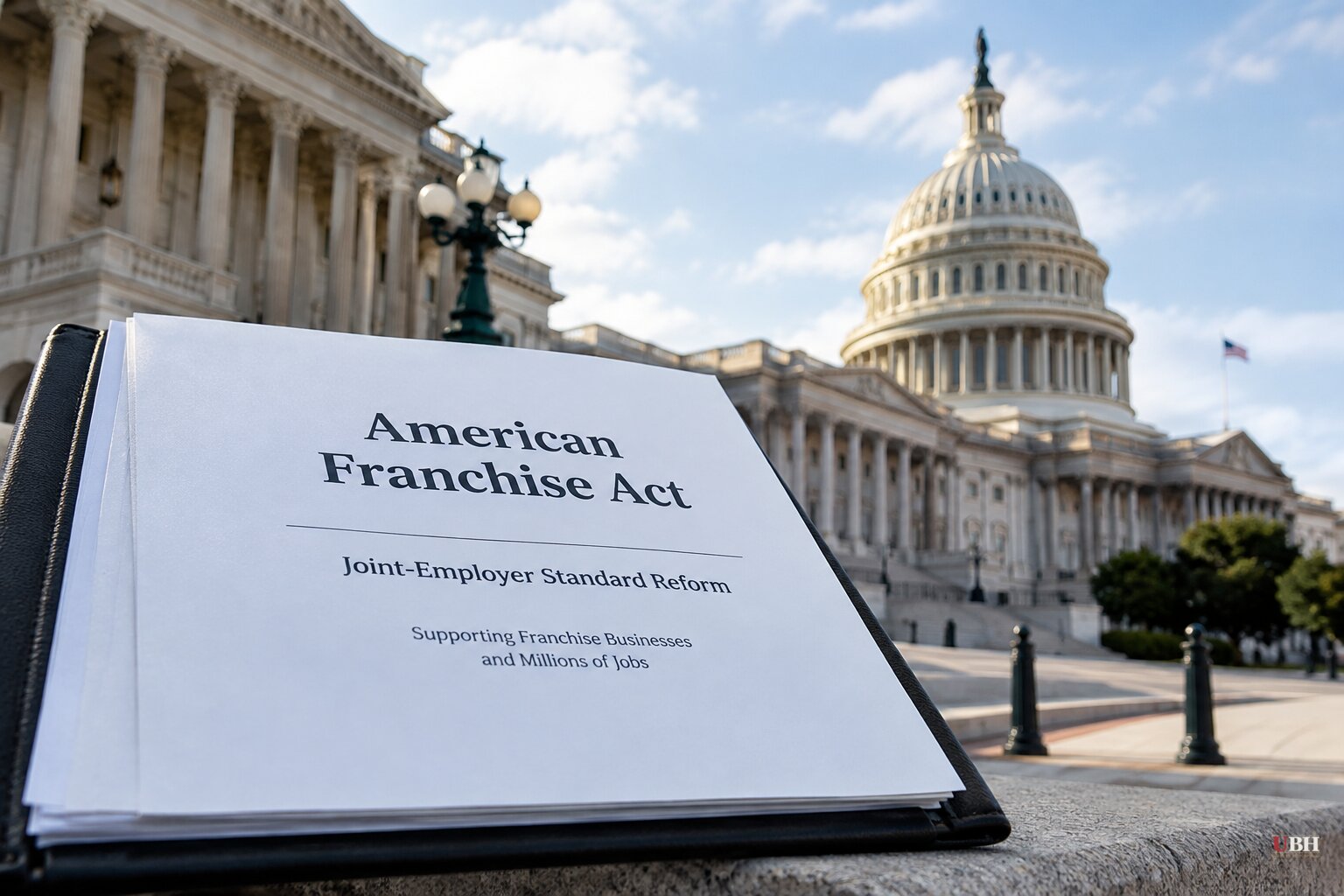
Franchise advocates are pressing the lame-duck Congress to settle a question that has bounced between administrations for more than a decade: when is a franchise brand legally the boss of a franchisee's workers?
An op-ed published by Fox News Digital puts the stakes at roughly 832,000 franchise small businesses supporting about nine million jobs. Its argument is that most of the McDonald's, hotel and gym locations people assume are corporate-owned are actually run by local owners who sign the leases and make payroll.
Four standards in 11 years
The op-ed lays out the history. In 2015, the Obama-era labor board's Browning-Ferris decision held that a parent brand could be liable for a franchisee's workers based on "indirect" or even unused control. A 2020 rule narrowed that. In 2023, the Biden board went further, saying merely reserving the right to control could be enough, before a federal court struck that rule down.
The op-ed counts four changes since 2015 and says another court case could change the standard again within months. Its point is that no owner can plan a five-year expansion around a rule that gets rewritten every election cycle.
The cost, according to industry groups
The International Franchise Association and the U.S. Chamber of Commerce studied the effect of the expanded standard. By their estimate, it cost the economy $33.3 billion a year, led to as many as 376,000 fewer job opportunities, and coincided with a 93% increase in lawsuits against franchise businesses. Ninety-two percent of the brands and owners they surveyed said the rule meant less support from their brand.
These are industry-commissioned numbers, and they should be read that way. The mechanism the groups describe is straightforward, though. If a training program, an HR template or a safety manual counts as evidence of control, franchisors have a legal reason to stop offering them. The owner of a few sandwich shops then handles compliance alone.
What the bill would do
The American Franchise Act (H.R. 5267 in the House, S. 3525 in the Senate) would write one franchise-specific standard into both the National Labor Relations Act and the Fair Labor Standards Act. Under it, a franchisor would be a joint employer only if it both possesses and exercises substantial, direct and immediate control over a franchisee's employees.
A statute would do what a labor board rule cannot. It would hold regardless of who is in the White House or which way the next appeals court rules.
Republicans have held Washington's levers for the past two years, and the standard still has not been fixed by statute. That is a fair question for the party that says it speaks for small business.
A crowded calendar
The time available is short. On Federal News Network's Federal Drive, host Terry Gerton said the balance of power in the lame-duck session has not shifted yet, but Democrats feel they have more leverage after the midterms. Loren Duggan said House Republicans are heading into the minority next year, and that Mike Johnson said shortly after the results came in that he would not run for the top spot.
First on the agenda is government funding. Duggan said the top appropriators were expected to meet to find a path forward, with a little more than a month to act. He described the options as another continuing resolution or some form of full-year solution. The host noted rumors of shutdown talk tied to funding for the war.
Any franchise bill would have to move alongside that fight, or hitch a ride on whatever vehicle emerges from it.
The labor market backdrop
The franchise push lands in a job market that is steady but uneven. The unemployment rate has stayed at or under 4.5% for a record-setting five years. The October jobs report, released Friday, Nov. 6, came in stronger than expected, with employers hiring at one of the fastest clips in three years.
The same report showed troubling signs. The average stint on unemployment is the longest in nearly five years, job gains are concentrated in a few industries, and wages continue to fall behind inflation. NPR reported that rising prices and stagnant wages fueled voter frustration in the midterms.
Markets were jumpy too. The Nasdaq fell more than 5% the Thursday after the election, erasing more than $2 trillion in market value. NPR tied the drop to investor fears that a Democratic Congress and state governments could crack down on AI and data centers.
Economists caution against expecting quick results from Washington. "Elections can shift the policy outlook, but they rarely change the labor market overnight," said Cory Stahle, senior economist at Indeed. He pointed to an aging workforce and AI adoption as forces that predate the election and will outlast it.
Tyler Schipper, an associate professor of economics at St. Thomas University in St. Paul, Minnesota, said Congress can only do so much on its own, with President Trump still holding veto power. He said faster changes to affordability are more likely at the state level.
What happens next
The franchise lobby wants the American Franchise Act passed before Christmas. Appropriators, meanwhile, have yet to choose between another continuing resolution and a full-year funding deal. Whether the franchise bill gets floor time in the weeks left before the new Congress is seated depends on that choice.
Sources used for this briefing
4 links from 4 independent newsrooms (syndicated copies of the same report count once)
These are the sources it draws on, linked so you can verify.


