
Unbiased headlines. Facts, not spin.
Unbiased Headlines is an independently owned news organization. We bring you the facts, not opinions, written fresh from 110+ named sources. Sources linked so you can verify it yourself.
 economy
Notable (6/10)
Delta Says About 70% of Sunday's Delays and Cancellations Traced to Weight-and-Balance Outage, Weather Caused the Rest
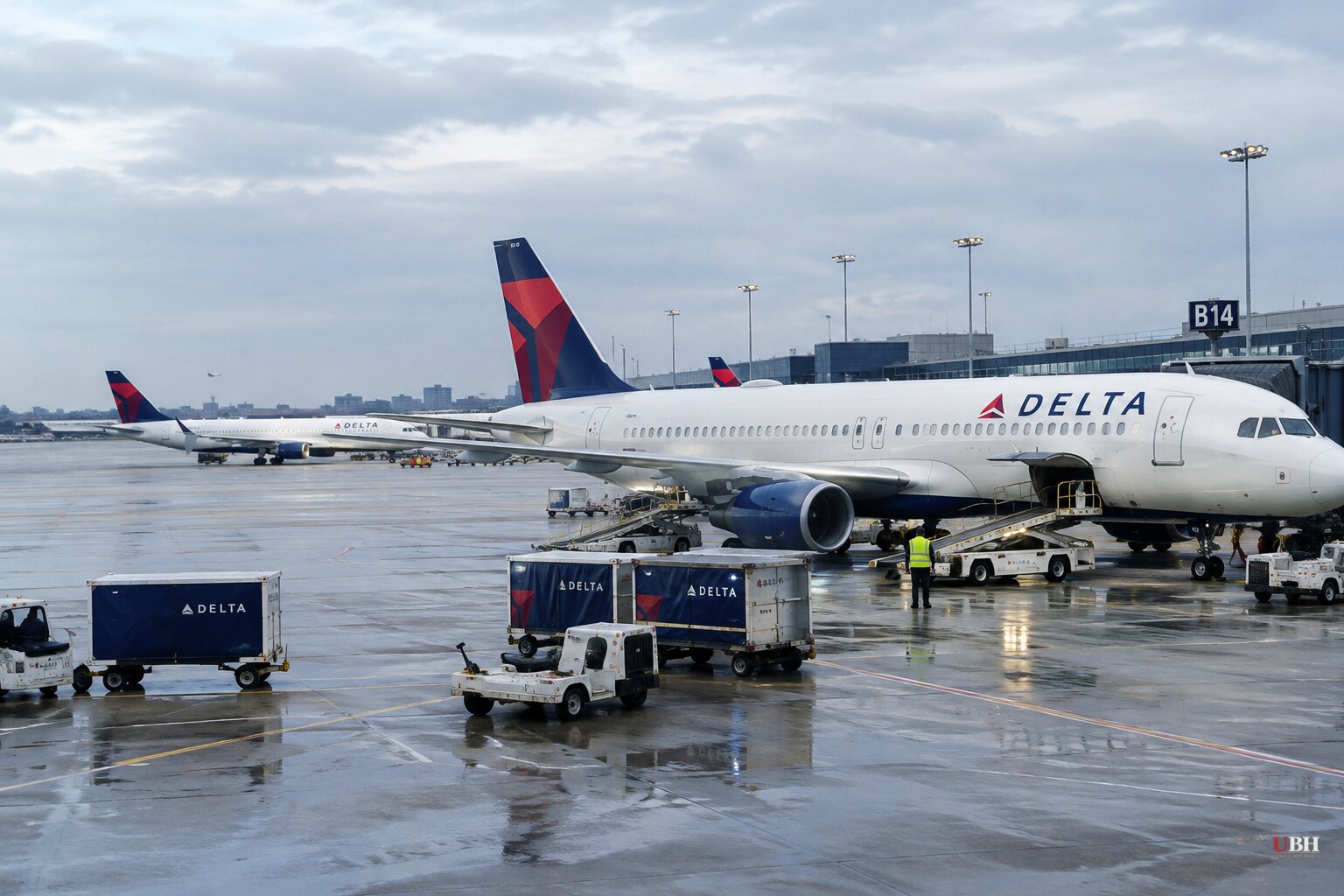
A little more than a week after the Nov. 13 nationwide FAA ground stop, Delta's weight-and-balance outage snarled Sunday travel. The open questions now are about numbers and cause, and Delta has put a figure on how much of the mess was its own software.
In a later Sunday statement, Delta said FlightAware's tallies of delays and cancellations were accurate, and that about 70% of them were connected to the automation failure. The remainder, the airline said, came from inclement weather and the air traffic programs that followed in New York and the U.S. Northeast.
Delta said approximately 5,000 Delta and Delta Connection flights were scheduled Sunday.
What the numbers show
The raw counts vary by time of day and by who is counting.
The FAA initially warned that more than 3,500 flights could be affected. That is a projection, not a tally of delayed flights. By 11 a.m. local time, FlightAware showed 681 delayed flights at Atlanta and 591 Delta flights delayed nationally. By 12:30 p.m., FlightAware showed 835 delayed at Atlanta, and Delta confirmed 725 of its flights had been postponed nationwide.
The aviation analytics firm Cirium found Delta departures began falling behind schedule at 6 a.m. By 7 a.m., 26% of Delta's flights had been canceled or had not flown. By 9 a.m., more than 40% of Delta flights out of Hartsfield-Jackson were delayed.
The FAA's ground stop on Delta flights bound for Atlanta began at 7:46 a.m. local time and covered flights from 14 of the 20 air traffic control center areas in the contiguous U.S. It was replaced just before 8:40 a.m. with a ground delay program, with average delays of 57 minutes and some reaching 111 minutes. That program was scheduled to run until about 12:50 to 12:59 p.m.
A Delta problem, not an air traffic problem
The FAA said in a post Sunday morning that Delta was working to fix its weight-and-balance automation and that the delays were "not related to any FAA air traffic systems."
This was a private airline's software, not the federal air traffic network that failed on Nov. 13.
Weight-and-balance software calculates an aircraft's weight from the airframe, fuel, passengers, bags and cargo, and how that load is distributed, which determines the center of gravity. Before any commercial aircraft can take off, crews must verify the figures fall within strict safety limits.
With automation down, Delta said its teams used "manual workarounds this morning to safely get flights departed while work continues to restore automation." Delta staff were calculating weight and balance figures manually for departing flights while technicians worked to bring the software back online.
Ripple effects and what Delta owes customers
Because Atlanta is Delta's primary hub, with nearly 1,000 departures on peak days to more than 200 destinations, the backup spread. Passengers reported delays at Newark, LaGuardia, Reagan National, Dulles, Boston, Baltimore, Miami, Minneapolis, Nashville, San Antonio and Birmingham.
Delta said it was rebooking customers on the next best itinerary and providing meals and hotel rooms where necessary. Customers with canceled flights who choose not to travel are being given refunds, the airline said. Delta also said cancellations are "as always, a last resort."
A Delta spokesperson said the airline "apologizes to customers for the delay in their travels today." By Sunday afternoon, Delta said operations had returned to normal and the automated system was restored.
The broader pressure on the system
The timing is poor. Atlanta airport officials expect more than 4 million passengers between Nov. 19 and Dec. 1, about 5% more than the same stretch last year. Hartsfield-Jackson was the world's busiest airport in 2025 with 106 million passengers.
At a Saturday press conference after the Nov. 13 ground stop, Transportation Secretary Sean Duffy and FAA Administrator Bryan Bedford pointed to the long-running effort to move air traffic control off technology dating to the 1970s and 1980s. The event itself was interrupted by a feedback hum from the microphones that held up the start for about three minutes on live television. FAA chief technology officer Rebecca Guy also appeared with them.
No one in the sources has tied Sunday's Delta failure to the FAA outage, and the FAA said its systems were not involved. These are separate failures, one federal and one corporate. Both land on the same travelers.
What is still unanswered
The sources do not say what caused Delta's weight-and-balance system to fail, or why the manual backup could not keep departures closer to schedule in the first hours Sunday. Delta has not said how many flights were ultimately canceled for the full day.
Those answers will matter as the Thanksgiving rush continues. A second failure of any kind at Atlanta during that period would hit the same hub during one of the busiest travel stretches of the year.
Sources used for this briefing
7 links from 7 independent newsrooms (syndicated copies of the same report count once)
These are the sources it draws on, linked so you can verify.


