
Unbiased headlines. Facts, not spin.
Unbiased Headlines is an independently owned news organization. We bring you the facts, not opinions, written fresh from 110+ named sources. Sources linked so you can verify it yourself.
 economy
Major Story (7/10)
COP31 Collapse: Negotiators Say Saudi Arabia Had Outsized Access, Turkish Presidency Denies Favoritism
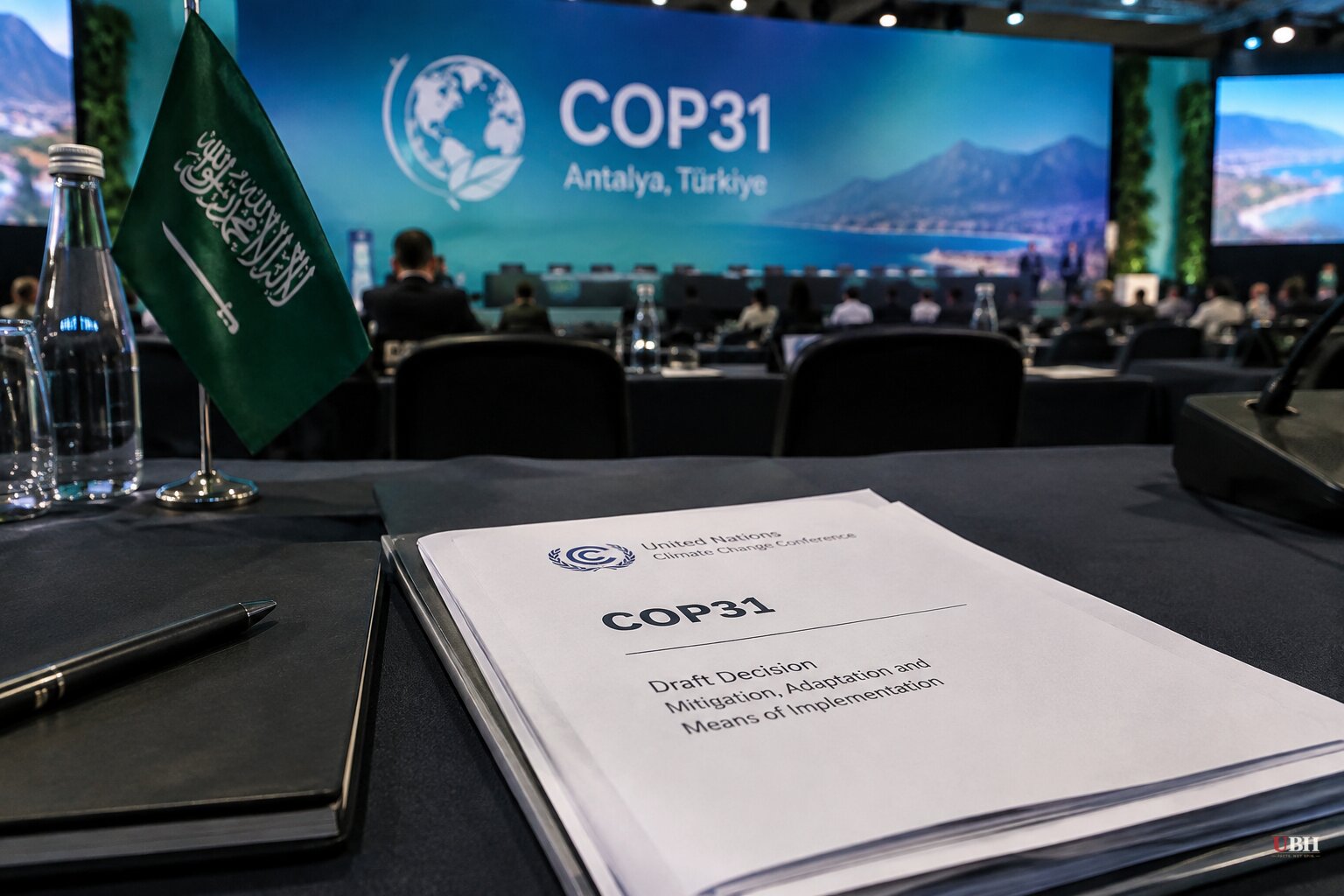
Since COP31 in Antalya ran into record overtime and closed Sunday, Nov. 22, without adopting its Antalya Pact cover decision, the fight has moved from the plenary floor to the question of who sank it.
The answers differ depending on who is asked.
Access, and who had it
Negotiators from Europe, small island states, Latin America, Asia and Africa say Saudi Arabia had regular access to the Turkish and Australian presidencies during the overtime. They say that gave Riyadh disproportionate influence. One small-island negotiator complained that a promised meeting with the two presidencies was cancelled yet again.
These negotiators say Saudi resistance to fossil fuel language was chiefly why no political agreement could be reached.
The Turkish COP presidency said in a statement that no group or country received "preferential treatment." Representatives for Saudi Arabia and Australia did not immediately comment.
Ireland's climate minister, Darragh O'Brien, who spoke for the EU, put it bluntly. "This COP, I believe, was hijacked by some oil states," he told Reuters.
Saudi Arabia's stated position is on the record. Speaking for the Arab Group, Saudi negotiator Mohammad Ayoub said, "We believe that climate change requires all solutions on the table and that countries select from these solutions depending on their national circumstances." The Saudi delegation defended the draft's references to carbon capture and storage. Saudi Arabia and other OPEC members have long said fossil fuels must remain part of the global energy mix for the foreseeable future.
NBC News reported that India joined Saudi Arabia and Russia in pushing to keep fossil fuels out of the text.
A vacuum where the US and China used to be
Several negotiators said Riyadh's hand was strengthened by the absence of active US engagement. The Trump administration has pulled the US out of international climate action. They also pointed to the lack of the close US-China coordination that helped broker compromises at earlier COPs.
"Instead of having one or two major players helping define the boundaries of the discussion, those boundaries have become less clear," Singapore Environment Minister Grace Fu said.
China called the lack of consensus a "deep disappointment."
How the text shrank
The first draft ran 94 paragraphs, according to Business Standard's reporting. It included phasing out fossil fuels, tripling adaptation finance to $120 billion and a 35 percent electrification goal by 2035. The World Socialist Web Site counts six mentions of "fossil fuel" or "fossil fuels" in that draft.
By the final version, every reference to fossil fuels was gone. Carbon capture language, a priority for fossil fuel producers, had been strengthened. The finance details had been stripped out. Electrification remained as a headline solution.
The last draft, released Sunday, opened by recalling the 2023 Dubai agreement "in its entirety," which committed countries to transition away from fossil fuels, without naming coal, oil or gas. The EU, the UK, Norway, Canada, Panama, Vanuatu and a group of least developed countries would not accept that.
The EU's own record gets challenged
Not everyone is pinning it on petrostates. Tasneem Essop, executive director of Climate Action Network International, called COP31 "the worst COP ever." She said, "Developed countries, led by the European Union, stood in the way on every major negotiating track."
Officials from the Least Developed Countries Group and the African Union said the EU entered the summit intending not to honor earlier climate finance commitments. They said that denied developing nations resources to move away from fossil fuels. Business Standard reported that the EU, the UK and Japan resisted funding commitments.
The EU rejects the framing. EU Climate Commissioner Wopke Hoekstra said in a statement that the draft "fails even to acknowledge the need to transition away from fossil fuels." He added, "This COP did not fail over climate finance."
Hoekstra also said the EU could not tolerate a deal that omitted fossil fuels while the world heads for an overshoot of 1.5°C. "We do that with a heavy heart with many other countries, but we simply cannot accept this," he said after walking out.
What was lost
This was the first COP since the UN warned that global temperatures are expected to exceed 1.5°C above pre-industrial levels. The draft acknowledged that reality and called for the overshoot to be kept small and brief. It also referred to carbon dioxide removal, which no COP final agreement had explicitly mentioned before. With no adoption, that acknowledgment goes unrecorded.
UN Secretary-General Antonio Guterres said he was "deeply disappointed that COP31 has ended without consensus on an overarching outcome." He added: "Temperatures keep shattering records. Climate extremes keep intensifying. Emissions remain far too high. And every delay makes our task harder and more costly."
Australia's Chris Bowen, who ran the negotiations, said the move away from fossil fuels is happening regardless of what UN texts say. "Unfortunately we were unable to reach agreement on a cover decision and that's very disappointing," he said.
Lavanya Rajamani, an Oxford professor of international environmental law who helped draft the Paris Agreement, said no delegation left believing it had won. "While such divergences are not new to the process, the gap has never been wider," she said. She described a "rapidly dwindling appetite" among governments for difficult and costly action.
Kurum has said no further draft will be offered. "There is nothing to do. We did all that we could," he told the closing plenary.
The unresolved question is whether a summit built on consensus among nearly 200 countries can still produce a deal when a few delegations hold a veto.
Power Shift Africa's Mohamed Adow called the collapse a "wake up call for the world."
Sources used for this briefing
8 links from 8 independent newsrooms (syndicated copies of the same report count once)
These are the sources it draws on, linked so you can verify.


