
Unbiased headlines. Facts, not spin.
Every story is an unbiased news briefing written from 110+ sources across the spectrum — sources linked so you can verify it yourself.
 energy
Major Story (8/10)
July 2, 2026 at 06:16 PM
energy
Major Story (8/10)
July 2, 2026 at 06:16 PM
Kyiv Death Toll Rises to at Least 20 After 11-Hour Russian Assault, as Ukraine's Drone Campaign Spreads Russia's Fuel Crisis Deeper into Central Asia
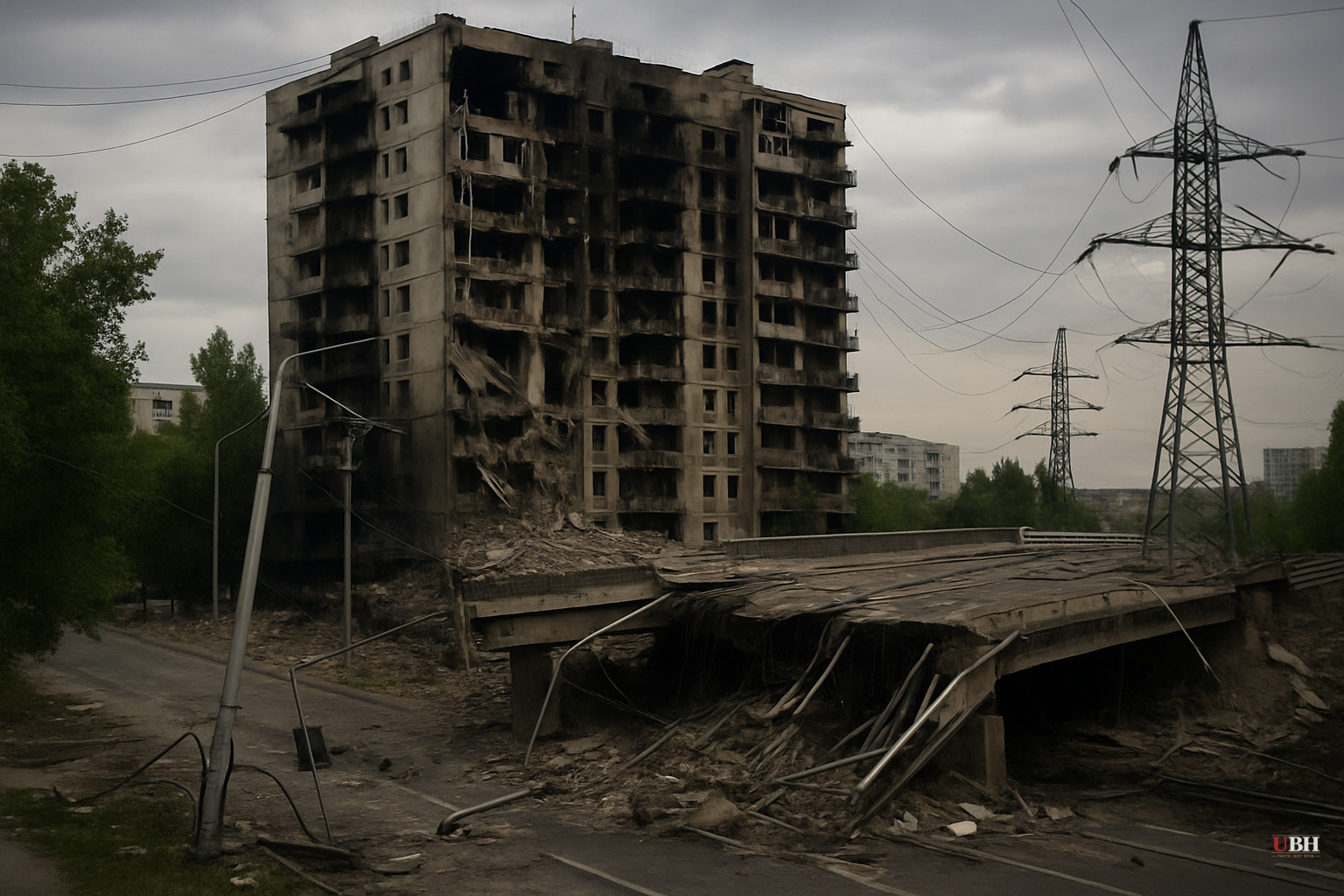
Since Russia's mass strike on Kyiv earlier this week, the confirmed death toll from the overnight July 2 bombardment has climbed to at least 20, according to ZeroHedge citing Ukrainian officials, up from the 17 reported by RFE/RL in earlier hours of the same assault.
What Happened in Kyiv
The attack ran for more than 11 hours and arrived in several waves. Russia launched more than 70 missiles, nearly half of them ballistic, along with roughly 500 attack drones, according to President Volodymyr Zelenskyy's post on X cited by OilPrice.com/RFE/RL. The first wave targeted Kyiv's historic quarter and set a hotel in the city center on fire.
Mayor Vitali Klitschko confirmed that six floors of an apartment building partially collapsed after a direct hit. At least two children were among the injured. Three dozen locations across the city sustained damage, according to AFP as cited by ZeroHedge. Several neighborhoods were evacuated.
Klitschko described it as the "most massive" attack night on the capital to date. BBC noted that while previous strikes have killed more people, this barrage deployed the largest number of weapons and struck across the widest geographic spread of Kyiv on record.
Kremlin spokesman Dmitry Peskov said Moscow intended to increase pressure on Kyiv to achieve its war aims. Russia's military framed the assault as retaliation for Ukrainian "terrorist attacks" against Russian "civilian infrastructure."
Ukrainian Foreign Minister Andriy Sybiha called the strikes "grave war crimes" and pushed back explicitly against the Russian framing: "It is immoral to justify Russian atrocities against Ukrainians by saying that Moscow acts in response to Ukraine's long-range strikes against Russia," he wrote on X.
Zelenskyy had returned to Kyiv from an official visit to Ireland the night before, after receiving intelligence that the assault was imminent.
Ukraine Hit Back the Same Night
While Kyiv burned, Ukraine's military launched more than 330 drones at targets in the Moscow and Leningrad regions overnight, according to RFE/RL via OilPrice.com. This is the broader context Kremlin officials do not advertise: this is a two-way attritional campaign, not a one-sided bombardment.
Russia's Fuel Crisis Is No Longer Just Russia's Problem
On July 1, Ukrainian drones caused substantial damage at a refinery in Ufa, in the Bashkortostan region, more than 800 miles from the Ukrainian front lines, according to OilPrice.com. A missile components assembly plant in the Penza region was also hit.
The cumulative effect of months of drone strikes on Russian energy infrastructure is now measurable. At least 55 of Russia's 83 federal regions and districts are dealing with severe fuel shortages, according to RFE/RL. Russian officials have called the situation "not so easy, but controlled" — language that, given what is happening downstream in Central Asia, does not fully hold up.
Kyrgyzstan, which gets roughly two-thirds of its gas and diesel from Russia, is already reporting shortages of high-octane auto fuel, according to the Moscow Times as cited by OilPrice.com. State regulators have imposed price controls. The government is now actively hunting for backup supply sources.
Tajikistan, dependent on Russia for virtually all its fuel, has not officially acknowledged shortages. But Asia-Plus reported that low-octane fuel prices rose about 9 percent over a three-week period spanning late May to mid-June, with diesel rising even more sharply. Officials are reportedly exploring Iranian imports as a workaround.
Uzbek Airways, the national carrier of Central Asia's most populous country, has cut back Russia-bound flights due to jet fuel scarcity, according to OilPrice.com.
Kazakhstan is in better shape. It has its own refining capacity and has reported more than a month's worth of adequate supplies, even as its Atyrau refinery undergoes maintenance expected to wrap up around July 10. Even so, Kazakh authorities announced in late June that they are exploring Chinese fuel purchases as a hedge against future supply shocks, according to Kazinform.
The Strongest Case for Moscow's Position
Russia's argument that it is responding to a sustained Ukrainian campaign against its energy and civilian infrastructure is not invented. Ukrainian drones have hit refineries deep inside Russian territory for months. Moscow's domestic fuel crisis is real, and the disruption to ordinary Russian civilians—restricted garbage collection, fuel rationing in dozens of regions—is documented. Critics of Western policy argue that arming Ukraine for long-range deep strikes on Russian territory escalates the conflict without a clear off-ramp, and that civilian suffering on the Russian side is underreported in Western coverage.
That concern does not change what happened in Kyiv. Targeting residential apartment buildings and historic neighborhoods is not the same as hitting a refinery. The laws of armed conflict draw that distinction regardless of provocation. But the feedback loop between Ukrainian deep strikes and Russian retaliation is real, and any honest account of this war has to hold both facts simultaneously.
Where This Goes Next
Zelenskyy has vowed to expand the drone offensive. If the pattern of the last several months holds—Ukrainian strikes degrading Russian refining capacity, Russia responding with mass urban bombardment—the fuel crisis in Central Asia will deepen before it eases. Tajikistan's pivot toward Iranian supply is the most immediate concrete consequence to watch: it would signal a permanent realignment of energy trade routes in the region, with Iran filling a gap that Russia can no longer reliably cover.
Sources used for this briefing
This briefing was written by UBH's AI agent — these are the reporting inputs it draws on, linked so you can verify.


