
Unbiased headlines. Facts, not spin.
Unbiased Headlines is an independently owned news organization. We bring you the facts, not opinions, written fresh from 110+ named sources. Sources linked so you can verify it yourself.
 defense
Major Story (8/10)
Iranian Attack on Bahrain Leaves Two Injured, One Critically, as Tehran Declares Islamabad Memorandum Dead
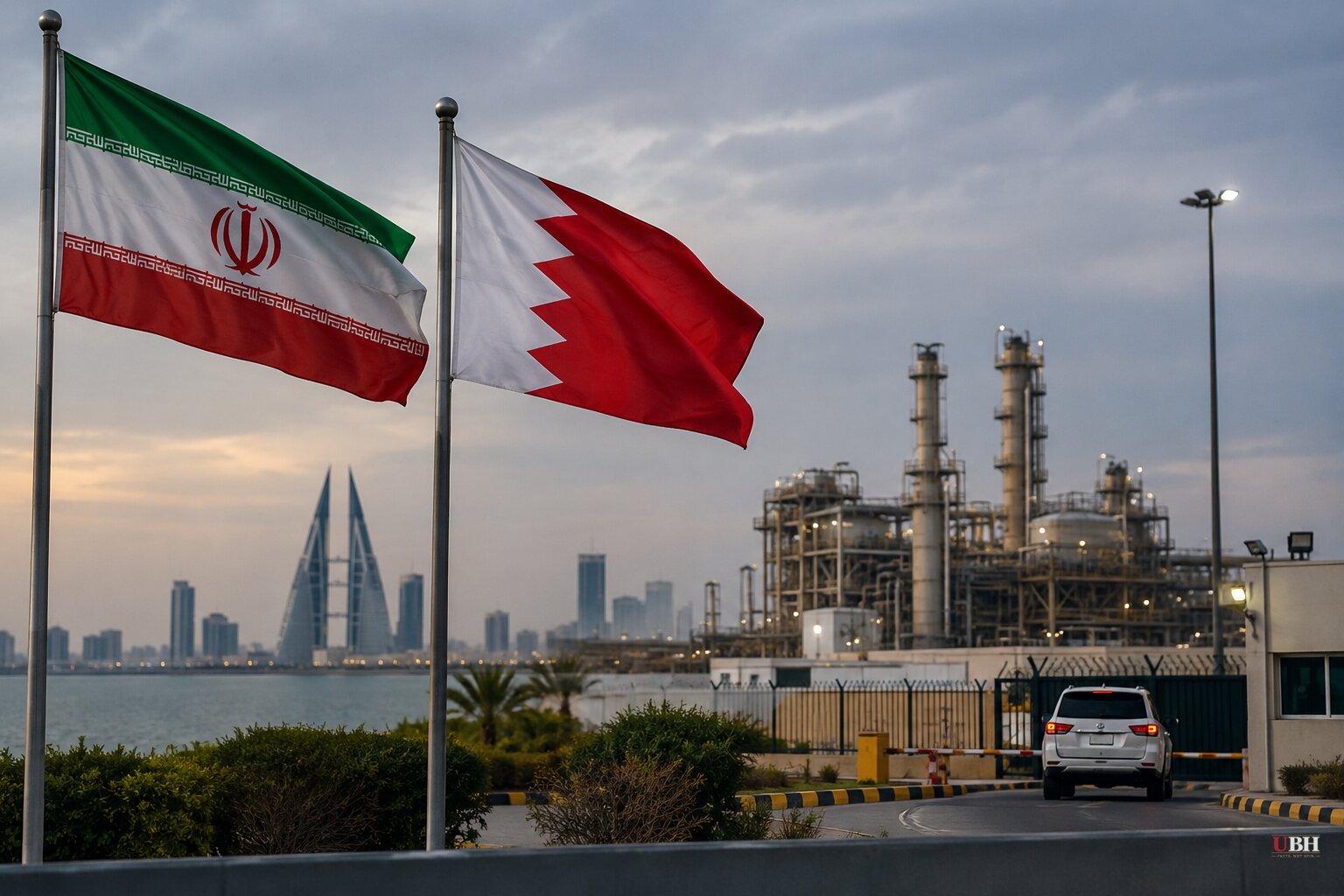
Since the U.S. and Israel opened the war with strikes on Iran on Feb. 28, the fighting has settled into a pattern of limited exchanges. The latest one left people hurt in a Gulf state that hosts the U.S. Navy's Fifth Fleet.
Bahrain's Interior Ministry said Sunday, Nov. 22, that two people were injured in Saturday's Iranian attack on a civilian industrial facility. A Bahraini citizen with a disability is in stable condition. A Pakistani resident is in critical condition. Both are in hospital.
That is a worse picture than the ministry's first statement. Late Saturday it reported a fire and material damage at the site, with no injuries. Residents told AFP they saw smoke over Sitra Island on Bahrain's east coast, which hosts several industrial facilities including a refinery run by state oil company Bapco. The ministry did not name the site.
What Iran and Bahrain each say
The Revolutionary Guard Corps says it fired missiles and drones at U.S. military facilities in Bahrain, and that the targets were Patriot air-defense sites. Bahrain's military describes "a number of treacherous Iranian aerial attacks" that its air defenses dealt with. It says falling shrapnel caused "minor material damage."
The Interior Ministry's account is that the strike hit a civilian facility and started a fire. Iran has not said it meant to hit one.
Iran's state media also claims the IRGC shot down a U.S. drone. One report said an MQ-9. A Sunday IRGC statement carried by IRNA said an MQ-1 Predator east of the Strait of Hormuz. U.S. Central Command has not responded to either claim. It did deny a separate IRGC claim to have struck and damaged an F-16 over the Gulf.
Saudi Arabia, Kuwait and Qatar all condemned the attack on Bahrain. Qatar's Foreign Ministry called it a "flagrant violation of its sovereignty and territorial integrity." The Saudi Foreign Ministry called it "heinous" and said it holds Iran responsible for the consequences.
Bahrain has been hit repeatedly this month. Iranian strikes resumed Nov. 13 after a lull that began in early September.
Diplomacy: the memorandum is dead, the commitments are not
Foreign Minister Abbas Araghchi told the Iran newspaper that the Islamabad Memorandum of Understanding, signed in June by President Trump and President Masoud Pezeshkian, "is no longer on the table and has no implementation relevance."
He left a door open. The commitments the U.S. accepted in that document, he said, and the principle that carrying them out could lead to a final agreement, "are still accepted by both sides."
Deputy Foreign Minister Kazem Gharibabadi struck a harder note, telling IRNA that legally Iran is "still in a state of war" and not in a "neither war nor peace" situation. He dismissed recent statements by Trump and U.S. officials that Washington no longer seeks a deal and views sanctions as working. Gharibabadi called that the "same failed policies." Sanctions affect Iranians' lives, he said, but the damage to global energy and financial markets and to the U.S. itself is "far heavier."
On the U.S. side, Axios reported that Trump envoys Steve Witkoff and Jared Kushner met senior Qatari officials in Berlin on Thursday to discuss mediation.
Washington's reported choice: squeeze, not strike
Israel Hayom, citing three diplomatic sources, reported Saturday that Trump's advisers laid out four options: negotiate, launch another major offensive, conduct limited strikes on nuclear and military sites, or intensify the economic campaign. According to that report, Trump favors the economic option, with backing from Secretary of State Marco Rubio, Treasury Secretary Scott Bessent and Commerce Secretary Howard Lutnick. The White House has not confirmed it.
The reported centerpiece is shutting down Iranian crude moved through Iraq, disguised as Iraqi or Kurdish oil and routed toward Syria or Turkey. Gulf governments are reportedly pledging to press Baghdad. CENTCOM announced Task Force Iron Gate two weeks ago to disrupt revenue and weapons moving across Iran's land borders and the Caspian Sea.
Trump has called another major offensive "highly unlikely." The report says a large strike risks wide Iranian retaliation against U.S. forces and Gulf infrastructure with no guarantee of a decisive result. Saturday's casualties in Bahrain show what that retaliation looks like even at low intensity.
Houthi front widens
The Saudi-led coalition fighting the Iran-backed Houthis said it destroyed a drone headed toward the Riyadh area on Sunday. Late Saturday it said it intercepted a ballistic missile aimed at Saudi Arabia's western region, which includes sensitive energy refining and export infrastructure.
In Yemen, Reuters reported that Houthi forces have advanced to within 50 miles of Aden, the seat of the internationally recognized government. The Institute for the Study of War assesses the Houthis will likely use newly captured positions on the Mokha-Aden route to push toward the city.
Oil keeps flowing, at lower volumes
Markets have not priced in much panic. Brent crude fell 3.4% last week and U.S. crude fell 5.2%, the third straight weekly drop, as traders weighed strong Middle East flows and rising U.S. inventories.
Rystad Energy estimates Middle Eastern exports averaged about 13 million barrels a day in the first two weeks of November, roughly 20% below October's 15 to 16 million. Analysts cited security concerns around Hormuz and disrupted Saudi pipeline flows to Yanbu. About 80% of pre-war volumes are still moving, with U.S. forces escorting much of the traffic.
Two tankers near Oman were struck by unidentified projectiles Saturday, according to the United Kingdom Maritime Trade Operations.
It is unclear whether Washington's reported economic strategy can get Araghchi's "commitments" back to a negotiating table before Iran's attacks on Bahrain and the Iran-backed Houthi attacks on Saudi Arabia produce a casualty count that forces a military answer. The Pakistani resident's condition is the nearest test of that.
Sources used for this briefing
8 links from 8 independent newsrooms (syndicated copies of the same report count once)
These are the sources it draws on, linked so you can verify.
More coverage: Iran


