
Unbiased headlines. Facts, not spin.
Unbiased Headlines is an independently owned news organization. We bring you the facts, not opinions, written fresh from 110+ named sources. Sources linked so you can verify it yourself.
 defense
Major Story (8/10)
Hormuz Ship Attacks Reach Highest Level of Iran War, With 31 Logged in October Alone
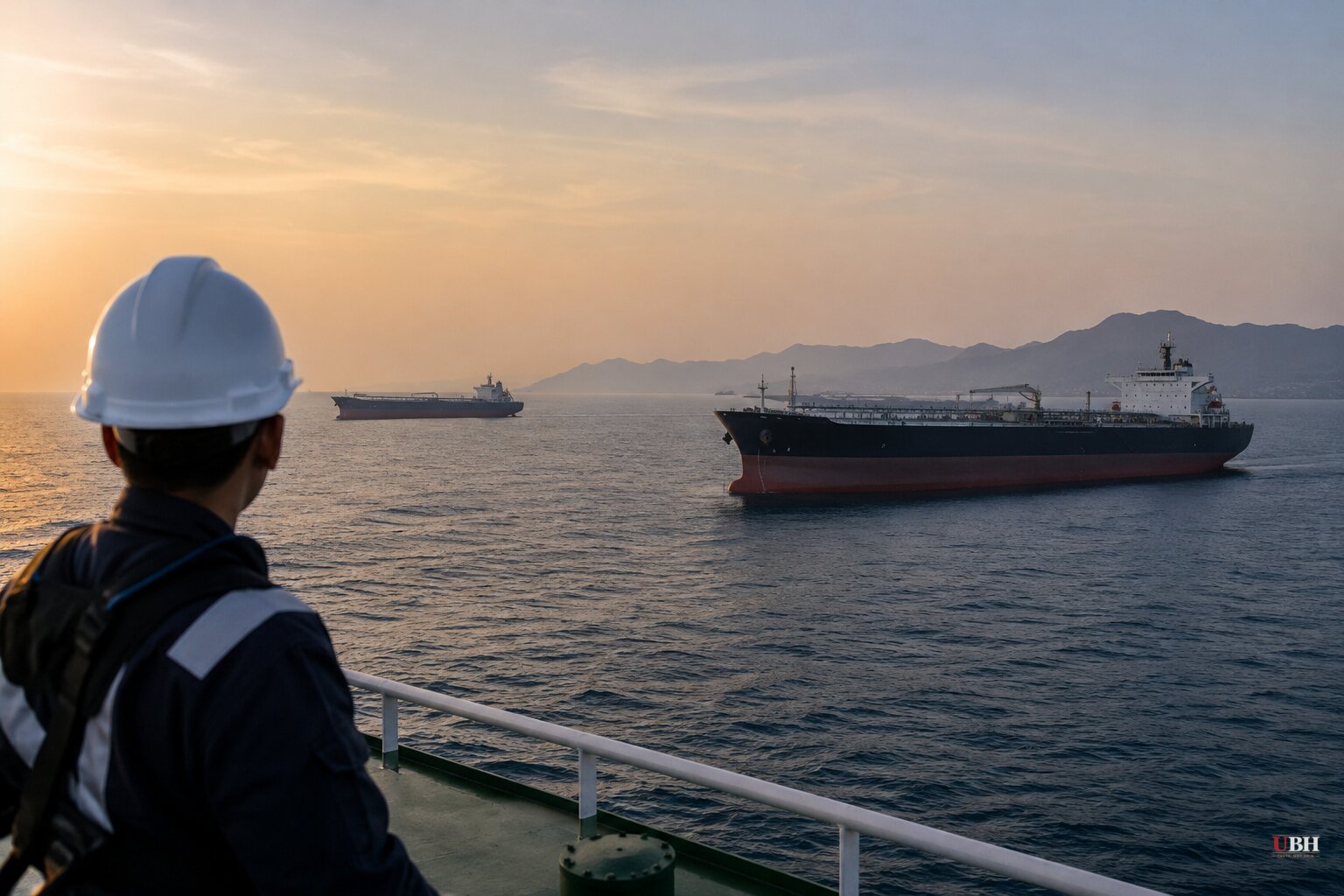
Eight months into the war, the attacks on shipping around the Strait of Hormuz are not tapering off. They are getting worse. The United Kingdom Maritime Trade Operations Centre (UKMTO) logged 31 attacks in and around the strait in October and about 19 in November as of Nov. 18. That is more than any earlier month since the war began in late February.
For comparison, UKMTO recorded 53 incidents total from March through September. That works out to roughly 10 to 15 a month across the strait and surrounding gulfs.
The International Maritime Organization, a UN agency, counts more conservatively. It confirmed 34 attacks in and around the strait in October and November so far, against roughly 50 for all of March through September. The IMO has tallied 138 attacks on vessels across the Middle East since the war started.
Khasab is the hot spot
The latest strike came Friday, Nov. 20, at about 1500 UTC. An outbound tanker was hit on its port bow by an unknown projectile eight nautical miles north of Khasab, Oman, and caught fire, according to UKMTO Warning 214-26. The company security officer reported no casualties and no environmental impact. Authorities are investigating.
Maritime security analyst Martin Kelly of Orbital Risk Intelligence counted 15 attacks and piracy-related incidents worldwide over the past seven days. That is a 50% jump from the prior week and the highest weekly total since mid-October. In the Persian Gulf, Strait of Hormuz and Gulf of Oman, he recorded seven strikes involving six vessels.
Four tankers were hit within 13 nautical miles of Khasab over three days. The LPG tanker TARA GAS was disabled by a projectile on Nov. 16, hit again the next day, set on fire and abandoned.
On Nov. 17 the tanker NAVIG8 MESSI caught fire after a strike 13 nautical miles north of Khasab. ADNOC confirmed one crew member missing and 11 injured. The vessel was reported under tow.
Kelly's assessment puts the toll from the week at two seafarers missing and 13 injured.
UKMTO's own weekly overview, covering incidents through Nov. 18, lists six verified attacks across the strait and Persian Gulf. Four were in the strait and two in the wider Gulf.
Traffic still far below normal
UKMTO counted 115 outbound and 148 inbound transits over the past seven days. The prior week had 139 outbound and 169 inbound. Combined traffic is roughly 65% below pre-conflict levels.
That is a step back from the recovery visible earlier. S&P Global Commodities at Sea reported that October vessel traffic through the strait was the highest monthly level since July.
Oil has not spiked on the escalation. Brent crude was at $95.69 a barrel on Nov. 16, after falling 2.5% the prior week. On Nov. 3 it traded near $106.61.
What the analysts say Iran wants
UKMTO positions show most attacked vessels hugging the Omani coast in the southern part of the strait. Noam Raydan, a senior fellow at the Washington Institute for Near East Policy, told ABC News that Iran's objective is to keep the Omani route, which he described as U.S.-facilitated, "a very high-risk passage and to keep the energy recovery inconsistent."
Hamidreza Azizi, senior Iran analyst at the International Crisis Group, said Washington and its regional partners have found ways to keep oil flowing. "Tehran now seems determined to make these arrangements more costly and less reliable," he said.
The projectile strikes are logged as coming from unknown sources. The attribution to Iran's strategy is the analysts' reading, not a finding by UKMTO or the IMO.
Tehran frames the standoff differently. Foreign Ministry spokesman Esmail Baghaei said on Nov. 2 that Iran would not reopen the strait unless Washington lifts the naval blockade imposed in July. Deputy Foreign Minister Kazem Gharibabadi said on Nov. 15 that Iran is legally "still in a state of war." He argued that sanctions damage the global economy, energy markets and the U.S. itself far more than they pressure Iran.
A U.S. official told The Epoch Times on Nov. 3 that the United States holds "control of the Strait of Hormuz" and that Trump "has all options available at any time."
Diplomacy and the calendar
Qatar has spent weeks trying to restore the ceasefire and restart nuclear talks. Special Envoy Steve Witkoff and Jared Kushner met Qatari Prime Minister Sheikh Mohammed bin Abdulrahman Al Thani and envoy Ali al-Thawadi in Berlin on Thursday, according to Axios, which cited two sources. Sources familiar with the talks say there has been no significant progress.
On Friday, Trump said Iran wants a deal but not one acceptable to him. He told Reuters aboard Air Force One on Thursday, "We've got time," and said he would discuss additional strikes after the start of the year.
That leaves roughly six weeks of the current pattern with no announced diplomatic breakthrough or military decision. Whether October's record is the peak or the new baseline will show up in UKMTO's November totals.
Sources used for this briefing
7 links from 6 independent newsrooms (syndicated copies of the same report count once)
These are the sources it draws on, linked so you can verify.
More coverage: Iran


