
Unbiased headlines. Facts, not spin.
Unbiased Headlines is an independently owned news organization. We bring you the facts, not opinions, written fresh from 110+ named sources. Sources linked so you can verify it yourself.
 defense
Major Story (8/10)
Iran's IRGC Claims 58th US MQ-9 Shot Down Over Hormuz as Talks Stay Stalled
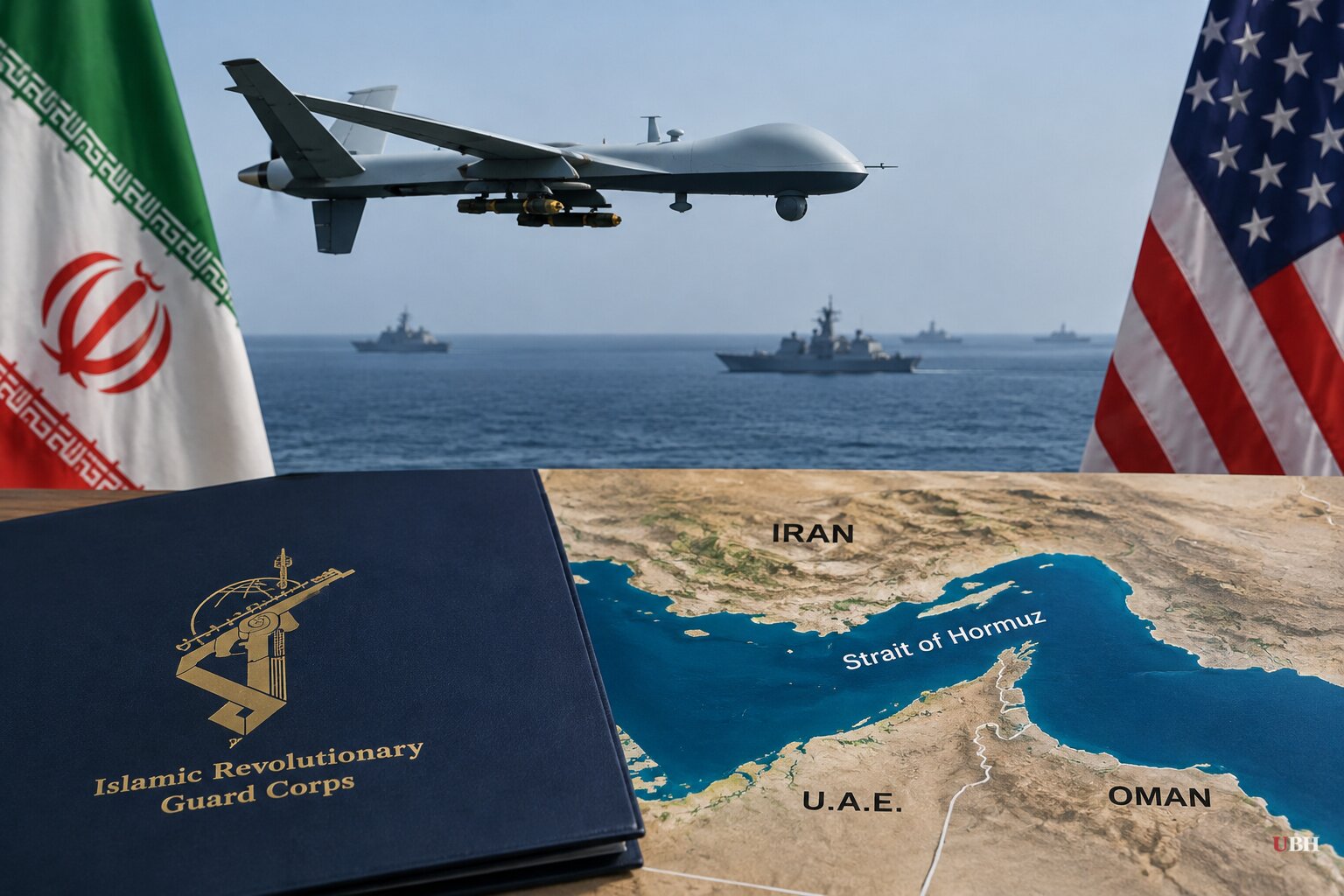
Since the US and Israel launched the war on Iran on Feb. 28, the conflict has settled into a pattern of drone shootdowns, tit-for-tat strikes and stalled diplomacy. The latest entry came Saturday, Nov. 21.
The Islamic Revolutionary Guard Corps said its Aerospace Force detected, tracked and shot down a US MQ-9 Reaper over the Strait of Hormuz using a newly deployed air defense system. The IRGC called it the 58th MQ-9 Iran has downed. Iranian state broadcaster IRIB and the Tasnim news agency carried the statement.
The IRGC gave no time, location or imagery. It is Iran's claim, and the tally is Iran's own count.
The drone toll
The Washington Post reported in August that the US had lost 45 MQ-9s in combat operations over Iran. That was about 25 percent of the fleet, at a cost of more than $1.3 billion. Iran's figure is higher, but the two numbers come from different sources and different dates.
An MQ-9 is an unarmored, slow, long-endurance aircraft. It is built for surveillance and strikes in permissive airspace, not for contested skies. Losing dozens of them is a real cost in dollars and in the intelligence they were collecting.
IRGC spokesman Brig. Gen. Hossein Mohebbi said Thursday that Iran has built at least three new air defense systems since the 12-day war, according to Press TV.
A week of strikes
The claim follows a hot week. Since Friday, Nov. 13, the IRGC has launched one-way attack drones at US facilities in Bahrain, including a radar at Sheikh Isa Air Base, which hosts the US Fifth Fleet headquarters. Breitbart counted three such operations in five days.
On Nov. 13 the IRGC said it destroyed a US early-warning radar in Bahrain. US Central Command denied it. CENTCOM said two drones were shot down, with no injuries or damage. The IRGC said it was answering an air attack on a telecommunications tower in Sirik and vowed to "respond without geographical limits" if attacked again.
On Tuesday, Nov. 17, US fighter aircraft used "precision munitions" on an IRGC missile launch site on Qeshm Island. A US official said the strike was "in response to IRGC aggression targeting U.S. personnel and assets." Ahmad Nafisi, deputy governor of Hormozgan province, said the strike damaged no residential, commercial or infrastructure sites. Iranian media reported five or six explosions, and some reports said an air-defense launcher was hit.
Iran then launched drones at Kuwait that night. Kuwait's army said its air defenses were intercepting them. Bahrain's Interior Ministry told residents to move to safe locations.
Pressure, and no deal
Washington is adding force. CENTCOM said the USS Theodore Roosevelt entered the region Monday, joining the USS George H.W. Bush and USS George Washington. That puts three carriers and roughly 53,000 troops in theater.
The naval blockade of Iranian ports continues. CENTCOM said in a Wednesday update that nearly 150 ships had been redirected and five disabled since July for trying to breach it. The US has also set up a task force to stop weapons, dual-use technology and illicit funds from crossing Iran's land borders and the Caspian Sea.
The diplomacy has not kept pace. A June memorandum of understanding was never fully implemented because of disputes over navigation and security in Hormuz. Attacks have resumed periodically since July.
Foreign Minister Abbas Araghchi said Friday that Iran's seven conditions "must be implemented for the Strait of Hormuz to reopen." They include ending the war and lifting sanctions and the blockade of Iran's southern ports. He called Iran's timetable "flexible" but made talks "conditional on the American side taking necessary confidence-building measures."
Araghchi ruled out sending Iran's 60 percent enriched uranium stockpile abroad. He said a "fair solution" was possible and that some mediator proposals were "worth examining." He called the current "no war, no peace" state undesirable, but said Iran cannot accept a deal that would "hand victory to the other side."
Mohebbi was blunter. "We do not accept a situation of neither war nor peace," he said, adding that the war would be settled on the battlefield or the US would have to accept Iran's conditions.
President Trump, speaking at the White House Friday, said Tehran wants a deal but not one acceptable to him. "We want to make a real deal, not a fake deal that they've been doing for 51 years," he said. A week earlier he had said the US does not need a deal at all. In a Truth Social post he wrote: "We've got their money, Hundreds of Billions of Dollars, and we've got their Strait!" He gave no details.
Both sides now say a deal is possible and both say the other must move first. Whether the US answers Iran's seven conditions, or Iran's air defenses keep claiming Reapers, is the next test.
With carriers arriving, drones flying toward Gulf bases and the blockade tightening, the room for a miscalculation is growing.
Sources used for this briefing
7 links from 7 independent newsrooms (syndicated copies of the same report count once)
These are the sources it draws on, linked so you can verify.
More coverage: Iran


