
Unbiased headlines. Facts, not spin.
Unbiased Headlines is an independently owned news organization. We bring you the facts, not opinions, written fresh from 110+ named sources. Sources linked so you can verify it yourself.
 defense
Major Story (7/10)
Event date: November 20, 2026 ·
Appeals Court Stay Blocks Army's Planned Detonation of Five Tons of Lead Azide in Iowa
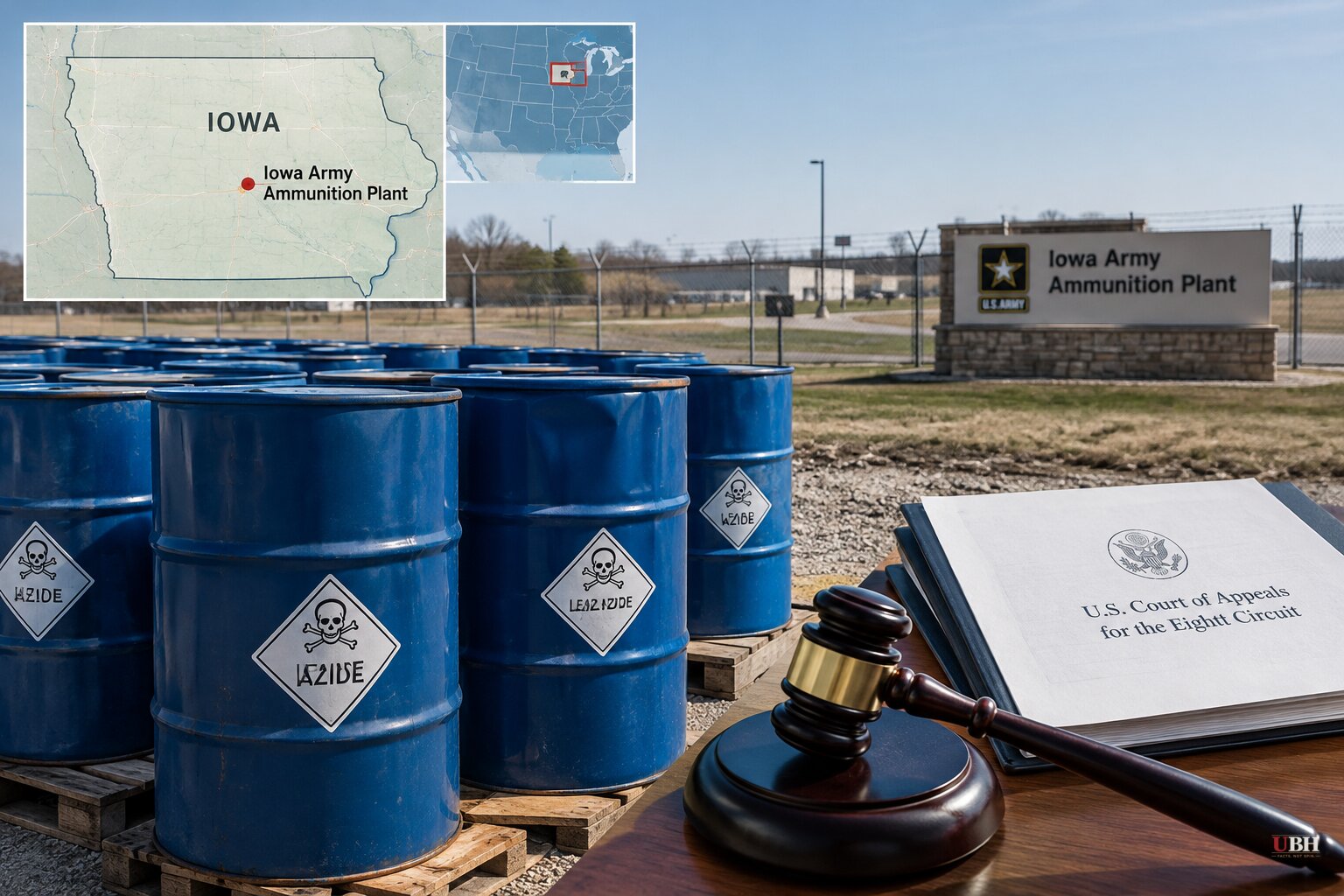
The U.S. Army cannot detonate five tons of unstable lead azide in Iowa for now. The Eighth Circuit Court of Appeals issued a one-sentence administrative stay late Thursday night, freezing the EPA emergency permit that authorized the blast.
The stay stays in place "until the emergency motion for stay is ruled upon by this court." The order sets no date. With the Army's postponed target of Monday, Nov. 23 approaching, the plan is in doubt.
What the Army wants to blow up
The Iowa Army Ammunition Plant in Middletown holds 68 barrels of lead azide, a primary explosive used to set off munitions. That is roughly 5 tons, or about 9,700 pounds according to the environmental groups' filing.
The barrels sat in earth-covered storage for more than 20 years, submerged in a water and ethanol bath meant to keep the material stable. Army public affairs specialist Justine Barati said a routine check this year found some of the water had evaporated.
The EPA said the lead azide recrystallized and became sensitive to friction and shock, creating "a risk of spontaneous explosion." The Army's position is that moving the drums is too dangerous, so the material must be destroyed where it sits.
Acting Army Secretary Adam Telle said the military determined a controlled detonation was the safest way to dispose of the material. The Army has said destroying it in place is "the only responsible option."
The permit and the plume
The EPA issued the emergency permit Nov. 13 under the Resource Conservation and Recovery Act. It runs through Feb. 11, 2027 and covers two controlled detonations.
The Army acknowledges the blasts would send up a dust plume containing lead. An Army smoke model released Tuesday projected the plume could travel about 25 miles north toward Wapello, Iowa, and spread across parts of eastern Iowa and northwest Illinois. The model warned that children under six are especially vulnerable to lead exposure.
Lead settling on farmland, yards and playground equipment is the central worry. The Army said it has done preliminary environmental sampling, set up air monitors and wet down the surrounding soil. Residents of Middletown were asked to leave from 8 a.m. to 2 p.m. under the original Friday plan, because of possible window damage.
The challenge
The Iowa Environmental Council and the Sierra Club Iowa Chapter, represented by Earthjustice, sued the EPA on Thursday. They argue the permit does not prevent releases to air, water and soil. "EPA cannot rely on conditions for sampling and clean-up as a substitute for preventing the harmful release in the first place," their attorneys wrote.
The groups also say residents got extremely short notice and that the evidence the EPA used to pick detonation over other options was never made public. In their petition they argue other alternatives were not fully considered. EPA documents show officials considered neutralizing the contents with other chemicals but concluded that handling the drums would raise the odds of a fatal accidental detonation.
Earthjustice attorney Thien Chau said the effect of the stay is plain: "The Army can't detonate under the permit while the permit is stayed." Chau said attorneys expect the court to try to decide before Monday's planned operation.
The Department of Justice said in a filing Friday that it plans to file a response opposing the emergency motion by Sunday.
Who knew what, and when
Telle has said the Army began communicating with stakeholders and the public in the impact area earlier this year. A joint statement from the Army, the EPA and the Department of Health and Human Services said officials have been planning since March and are prepared to take "the most extreme mitigation measures available."
The Army detailed its plans at a public meeting in Middletown in October, but a public advisory issued Sunday was the first time other communities, some as far away as 100 miles, became aware of the potential impact.
Gov. Kim Reynolds urged the Army to delay and thanked Telle for the decision to move the blast from Friday to Monday. Iowa Sen.-elect Josh Turek and Gov.-elect Rob Sand have also expressed concerns about the Army's plan, how it was communicated and the risk of lead exposure.
Telle said the new date was "the latest possible moment prior to a forecasted temperature drop, which would risk further destabilization of the material." He added, "Public communication is essential to public trust."
That leaves the Army holding material it calls increasingly dangerous, with a weather window it says is closing and a court order that bars the only disposal method it has approved. At least nine Iowa school districts had canceled classes for the original blast date.
What comes next
The Eighth Circuit has not announced a schedule for ruling on the emergency motion or whether it will hold a hearing. The Army did not immediately say how the stay changes its plans.
The open questions are specific. Will the court lift the stay before the cold snap the Army is worried about? And will the EPA be forced to make public the evidence behind its choice of detonation over the alternatives the groups say were not fully considered?
Sources used for this briefing
8 links from 8 independent newsrooms (syndicated copies of the same report count once)
These are the sources it draws on, linked so you can verify.


