
Unbiased headlines. Facts, not spin.
Unbiased Headlines is an independently owned news organization. We bring you the facts, not opinions, written fresh from 110+ named sources. Sources linked so you can verify it yourself.
 defense
Major Story (8/10)
Iran Rejects Trump's Chemical Weapons Claim as Netanyahu Reportedly Presses for Joint Strike Campaign
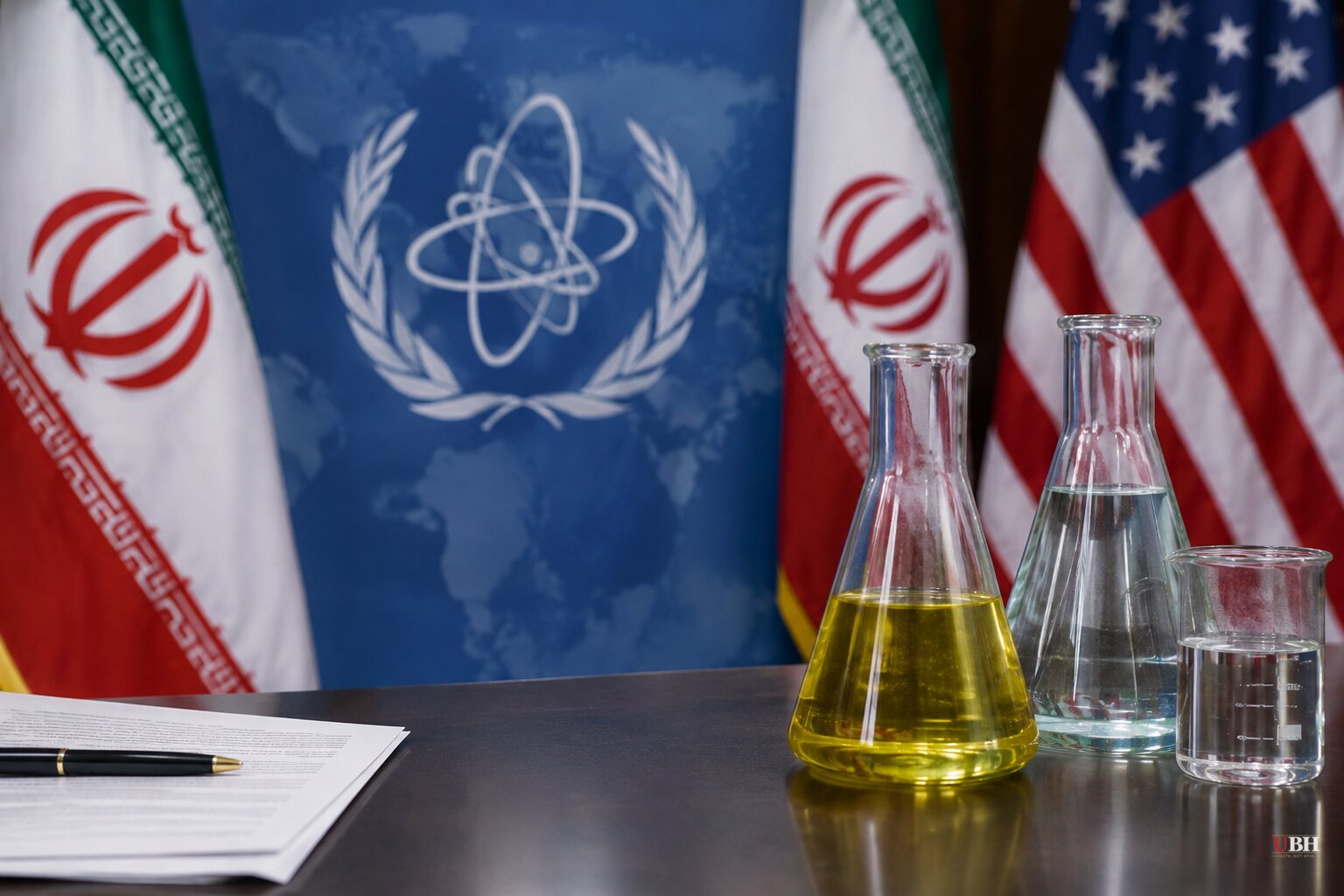
Since the war began Feb. 28, Trump has said he is "not rushing into any decision" on Iran and will "see what happens after the beginning of the year." Since then, the argument over what comes next has sharpened on three fronts: a new weapons accusation, Israeli pressure, and a diplomatic channel Tehran says is still open.
Trump's chemical and biological weapons claim
Trump has said Tehran may be working on chemical or biological weapons. "There is indication that Iran is looking at gases, looking at bio, because we've shut them out with the nuclear," he told a Fox reporter in Shenzhen, China. Iran's Foreign Ministry rejected the charge.
Spokesman Esmaeil Baqaei posted on X: "After the grand narrative of the 'Iranian nuclear threat,' U.S. officials are now claiming that there are indications Iran is developing biological or chemical weapons!" He added: "The allegations keep changing, but the underlying narrative remains disturbingly familiar." Baqaei compared the situation to Colin Powell's claims about Iraq's weapons of mass destruction.
Israel has raised the same concern. The New York Times reported that Prime Minister Benjamin Netanyahu cites it, along with Iran rebuilding missile and drone capacity, as a reason for renewed action. Breitbart reported that Mossad director Roman Gofman presented Israeli intelligence on Iranian chemical-weapons research in meetings in Washington and Miami last week with CIA Director John Ratcliffe and White House envoy Steve Witkoff.
Netanyahu's push
The Times reported that Netanyahu wants a joint U.S.-Israeli operation lasting four to seven days. Israel's Channel 13 reported that he told security officials Wednesday evening, Nov. 18, that an operation was "unavoidable."
A senior Israeli official told Ynet News that "Netanyahu is putting enormous pressure on the Americans, hoping to get to Trump and extract a green light from him." A senior Israeli military officer told Channel 13 that "there are shared and approved plans between the IDF and CENTCOM. The question is the timing."
Those accounts come from anonymous Israeli officials and Israeli media reporting.
The same day, CENTCOM commander Adm. Brad Cooper met in Tel Aviv with Israeli military chief of staff Eyal Zamir and Mossad director Roman Gofman. Cooper then traveled to Saudi Arabia, where he met Crown Prince Mohammed bin Salman and Defense Minister Prince Khalid bin Salman.
What Washington is weighing
Breitbart, citing a separate report, said the White House has asked the Pentagon and intelligence agencies to assess how Iran might retaliate against various strike scenarios. The central worry is Iranian attacks on Gulf oil and natural gas infrastructure. Gulf Arab governments have warned that renewed strikes could trigger exactly that.
According to that reporting, targets under discussion include the Pickaxe Mountain nuclear complex, military installations, bridges, power plants and Iranian leaders.
The Financial Times reported that U.S. military planners are warning American forces risk becoming overextended if the standoff runs into the new year.
Trump has sent mixed signals. In an earlier CNN interview with Jim Sciutto, he said renewed war was "highly unlikely" if talks progress, and said he has three aircraft carriers in the region, "fully locked and loaded." He said the U.S. can knock down "38 bridges" in an hour, though he does not like destroying infrastructure because "it'll take 10 years to rebuild."
Secretary of State Marco Rubio has argued that economic pressure is already achieving U.S. objectives without major combat.
Violence continues below the threshold
The stalemate is not quiet. On Wednesday, Nov. 18, Iran targeted a U.S. air base in Kuwait and carried out several attacks on Bahrain, which hosts the Navy's 5th Fleet. Those followed a U.S. fighter jet strike on a Revolutionary Guard missile site on Qeshm Island on Tuesday. That strike was retaliation for an Iranian attack on a U.S. radar installation in Bahrain.
Iran says its recent attacks responded to U.S. drone surveillance and an attack on Iranian communications towers. ADNOC said one tanker crew member was missing and 11 injured after an attack in the Strait of Hormuz on Tuesday.
Hamidreza Azizi of the International Crisis Group wrote that "the accumulation of military incidents across multiple fronts increases the risk of miscalculation and escalation beyond what either side originally intended."
Diplomacy and Yemen
Foreign Minister Abbas Araghchi said Friday, Nov. 20, that a two-day Hormuz plan is still on the table and that messages continue to pass between Tehran and Washington through mediators. He told an Iranian newspaper that Tehran still has hope in diplomacy. Qatar has mediated, and neither side has said much about the substance.
Separately, the Yemen front has flared. Houthi authorities accused Saudi forces Friday of striking a civilian boat and killing 19 people. The Saudi-led coalition said it intercepted a ballistic missile fired by the Houthis toward the country's southern region, and separately reported intercepting three ballistic missiles launched toward Riyadh.
What to watch
Trump's "after the new year" timeline is the key marker. It remains to be seen whether he acts before then, as some hawkish officials in Washington and Israel are urging, or waits for the talks Araghchi says are still alive. The Senate on Thursday rejected, 48 to 51, a House-adopted resolution that would have directed the president to remove U.S. forces from hostilities with Iran.
No strike has been authorized.
Sources used for this briefing
6 links from 6 independent newsrooms (syndicated copies of the same report count once)
These are the sources it draws on, linked so you can verify.
More coverage: Donald Trump and Iran


