
Unbiased headlines. Facts, not spin.
Unbiased Headlines is an independently owned news organization. We bring you the facts, not opinions, written fresh from 110+ named sources. Sources linked so you can verify it yourself.
 defense
Major Story (8/10)
Event date: November 19, 2026 ·
Trump Says Decision on New Iran Strikes Can Wait Until After Jan. 1: 'We've Got Time'
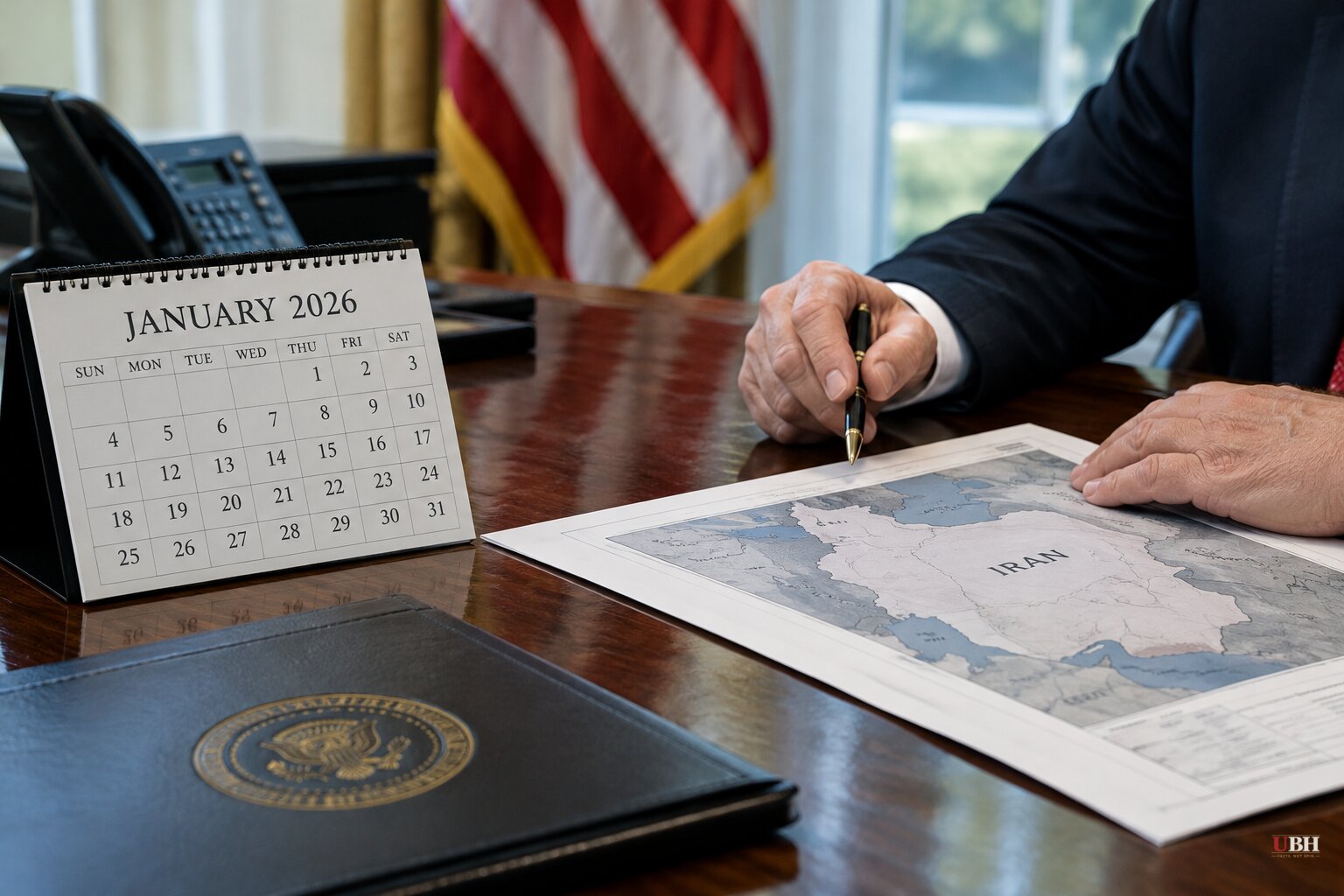
Since the U.S. and Israel struck Iran on Feb. 28, the war has outlasted an April ceasefire, a June memorandum of understanding that expired in August, and now the Nov. 3 midterms Trump had earlier pointed to as a turning point. On Thursday, Nov. 19, he moved the goalposts again.
Asked by Reuters aboard Air Force One, on the flight home from China, whether new major strikes are possible, Trump said: "Well, I'll talk to you about it after the beginning of the year." He added: "We've got time."
He repeated the timeline elsewhere. "We'll see what happens after January 1," he told Fox News. He told a reporter for Axios and Israel's News 12 that he is "not rushing into any decision" on Iran.
A timeline that keeps moving
Before the midterms, Trump repeatedly suggested Iran would be more willing to deal once the election was over. That did not happen. After Republicans lost both chambers of Congress, the administration said last week that it believes the naval blockade and economic sanctions on Iran are working.
On Nov. 9, Trump called further military action "quite unlikely" and said the U.S. was "locked and loaded" if circumstances changed. He also said Iran was "talking very politely" and that "there's a good chance that that could get ended." Oil moved on those comments: Brent crude fell 64 cents to $97.67 a barrel in Asian trading that Monday, and West Texas Intermediate dropped 35 cents to $90.51.
Ten days later, the strike options are back on the table. Trump's own words do not close the door on acting before January.
Strike options under review
Axios reported, citing unnamed sources, that the White House has asked the Pentagon and intelligence experts how Iran would respond to strike scenarios the military has prepared. Axios said any campaign would involve Israel and could hit nuclear sites such as Pickaxe Mountain, bridges, power plants, and Iranian military and civilian leaders.
The New York Times reported that Trump is weighing a new round of extensive strikes after Israel warned that Iran is rebuilding its missile and drone arsenals and advancing chemical and biological weapons programs. Netanyahu is reportedly pushing for a four- to seven-day air campaign.
The U.S. has already carried out limited strikes on Qeshm Island in the Strait of Hormuz, according to TIME.
Trump addressed the chemical and biological concern on Fox. Asked about a CNN report that Iran planned to detonate a radiological "dirty bomb" in Washington, he said "I don't think so." He added there are indications Iran is "looking at gases, looking at bio, because we've shut them out with the nuclear."
The political backdrop
The war is a central reason Republicans lost Congress, by the account of the party's own leaders. Vice President JD Vance blamed it publicly on Nov. 4. Trump said Vance "was right" and that the war is "certainly" one reason "the election didn't go our way." Reuters reported that Trump later steered Vance away from Iran diplomacy toward domestic matters.
A CNN exit poll found 87 percent of voters concerned about gas prices, 59 percent of them very concerned. On the war itself, 34 percent called it a crucial factor in their vote and another 40 percent a major factor.
Trump's defense has not changed. Asked on Nov. 4 whether losing the Senate was worth it, he said: "I do... You have no choice." He argued that Iran cannot be allowed a nuclear weapon, and that he would do it again. "I thought the oil would go up a lot more, and I did it on that basis," he said, acknowledging gasoline rose "a little bit short-term." On when the war ends, he said "whenever I want it to," but "it's gotta be done right."
On Capitol Hill, the Republican-controlled Senate again rejected a measure aimed at curbing the war on Thursday. Thursday's joint statement after Trump's summit with the Chinese and Russian leaders did not mention Iran.
What the delay may mean
Axios offered two possible readings of Trump's timeline. One is that more time lets the blockade and sanctions squeeze Tehran into concessions. The other is that Trump wants to keep enough runway to authorize military action before the new Democratic-controlled Congress takes office in January. Axios cautioned that he could change his mind at any moment.
The Iraqi front shows how fragile the status quo is. A drone strike on the Khor Mor gas field in northern Iraq on Nov. 8 started a major fire and cut about 2,800 megawatts of regional power generation, according to reports. The source of the attack was not given in the reporting.
The key window runs from now until Jan. 3. Republicans hold the Senate until then, and Trump has said "January 1" is when he will talk. Neither he nor the White House has said whether a decision would be announced before Democrats take their seats.
Sources used for this briefing
7 links from 7 independent newsrooms (syndicated copies of the same report count once)
These are the sources it draws on, linked so you can verify.
More coverage: Donald Trump and Iran


