
Unbiased headlines. Facts, not spin.
Unbiased Headlines is an independently owned news organization. We bring you the facts, not opinions, written fresh from 110+ named sources. Sources linked so you can verify it yourself.
 defense
Major Story (8/10)
Xi Tells Trump the U.S. Must 'Keep Doing the Right Thing' on Taiwan, as $14 Billion Arms Package Still Awaits Trump's Approval
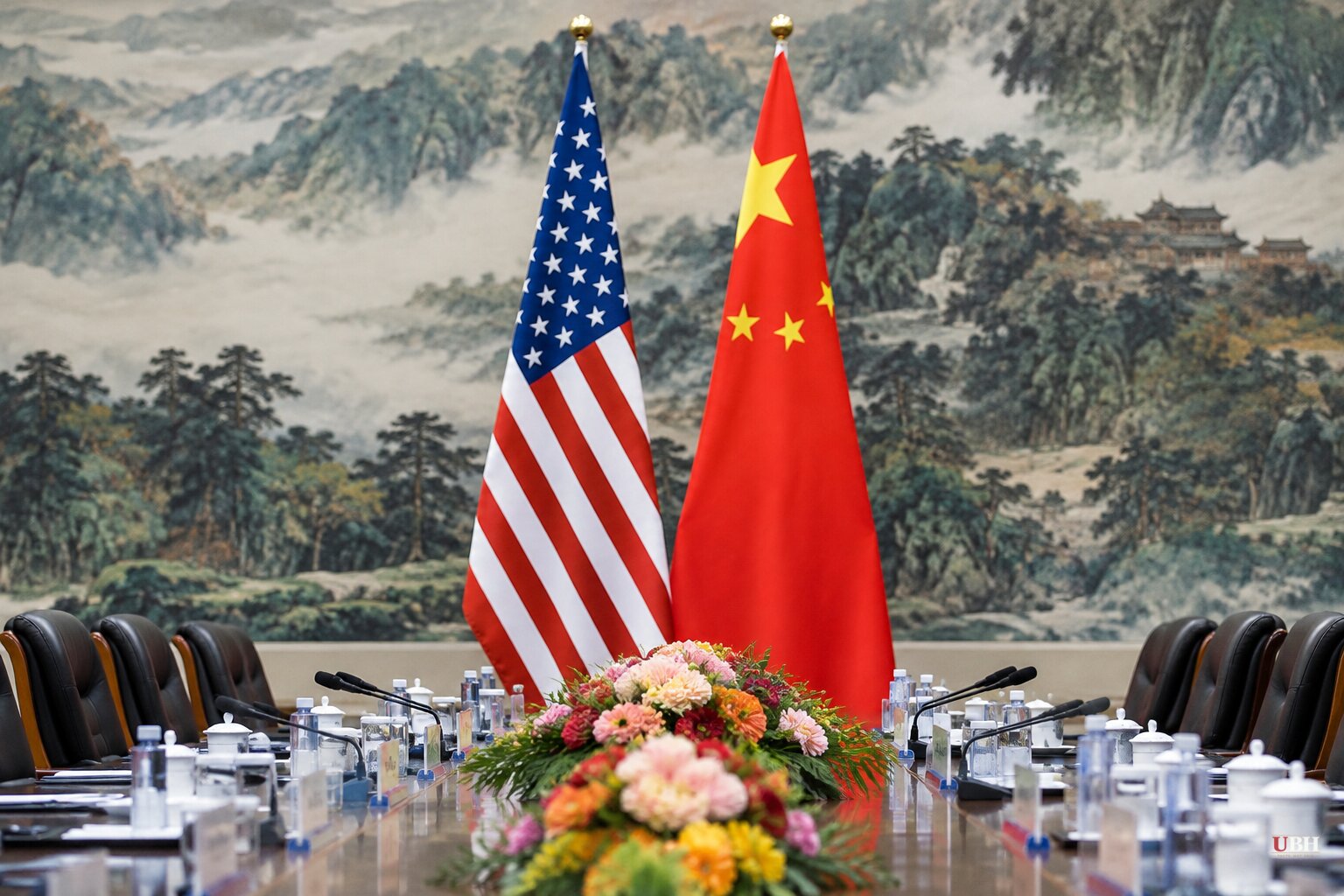
Since Trump landed in Shenzhen for the APEC summit, the headline event has been the three-way session with Putin. The bilateral with Xi on Thursday, Nov. 19, carried the more concrete business, and Taiwan was at the center of it.
Xi told Trump that "on the Taiwan issue, the United States must keep doing the right thing to avoid the emergence of great turbulence in the China-U.S. relationship," according to the Xinhua readout. He had delivered a sharper version in May, when he said the two countries could "come into conflict" if Taiwan were handled "improperly."
Xinhua also said Trump told Xi that Washington "does not support 'Taiwan independence.'" That is the Chinese account. The U.S. side had not confirmed that wording as of the Thursday readouts.
The arms package on Trump's desk
Beijing has been pressing Washington to curtail weapons sales to Taiwan. The live item is a proposed $14 billion package of American missiles, anti-drone weapons and air-defense systems.
Congress approved it in January. It has been held at the White House since then, waiting for the president's final sign-off. Trump has previously said the deal could serve as a "negotiating chip" in talks with Beijing.
Taiwan's government is watching. Deputy Foreign Minister Chen Ming-chi told reporters in Taipei that "Taiwan faces a severe situation in the Taiwan Strait," and that China, despite what he described as a declining economy, "continues investing more resources into building military capacity." He said Taipei believes "the U.S. very much understands our defense needs."
Chen also pointed to comments Secretary of State Marco Rubio made in September, reported by The Hill, that military sales to anyone require the same careful consideration.
On the same day, Taiwan's defense ministry said two Russian military aircraft flew to the island's east.
What else came out of the room
The meeting at Kylin Villa began around 1:30 p.m. local time and ran about an hour. It was the third in-person Trump-Xi meeting this year, after Beijing in May and Washington in September.
Trump opened warmly. "You're my friend, and we have a very special relationship," he said, adding that nobody else can do what the two countries can do together.
Xi called relations generally stable and said he was willing to work with Trump to steer ties on the "correct course." He said the two sides had "established a new definition of a constructive China-US relationship of strategic stability."
Chinese state media called the talks "positive and constructive." Xinhua said both sides agreed to draft an action plan for that relationship. No text of the plan has been released, and no timetable has been given.
Xi also urged both governments to coordinate on artificial intelligence safety and keep the technology "always under human control." He cited cooperation on counter-narcotics, the return of illegal immigrants and fighting telecom and online fraud as areas that could grow.
Hormuz, Ukraine and farmers
Trump said he and Xi share a "strong consensus" that oil must keep flowing through the Strait of Hormuz, where the Iran war has disrupted shipments. "Both the United States and China have an interest in ensuring that energy flows through the Strait of Hormuz," he said. He added that both countries want to stop Iran from getting a nuclear weapon.
Trump also asked Xi to do more for American farmers. He said past presidents had left the relationship "very lopsided."
On Ukraine, Trump told Xi, "We're looking to both help with respect to the war with Russia and Ukraine. I'd like to see it ended." Xi did not mention Ukraine or Iran in his public remarks.
Patricia Kim, a foreign policy fellow at the Brookings Institution, said Beijing would not want to be seen brokering a Ukraine deal given the "problematic optics" of Kyiv and European leaders being absent. She said Xi has characterized the war as "fundamentally a European problem."
Chips and export controls
The talks came as the New York Times reported that advanced Nvidia chips reached China through Southeast Asia. In the Times' account, Alibaba accessed more than $4 billion worth of them. That reporting has raised questions about how well U.S. export controls are working. The Times' figure is its own, and no U.S. agency has been quoted confirming it.
Xi, for his part, told Trump the two sides should "extend the list of cooperation and shorten the list of problems." He also asked for stronger communication on economic and trade issues. "Disagreements that cannot be resolved immediately should be constructively managed to prevent conflicts from escalating," he said.
The arms package is the clearest test. Congress has already signed off, and Beijing has now asked Trump in person to "do the right thing." Trump has not said when he will decide on the $14 billion sale, and the White House has not publicly confirmed the Taiwan wording in Xinhua's readout.
Sources used for this briefing
7 links from 6 independent newsrooms (syndicated copies of the same report count once)
These are the sources it draws on, linked so you can verify.
More coverage: Donald Trump


