
Unbiased headlines. Facts, not spin.
Unbiased Headlines is an independently owned news organization. We bring you the facts, not opinions, written fresh from 110+ named sources. Sources linked so you can verify it yourself.
 defense
Breaking / Critical (9/10)
Event date: November 17, 2026 ·
GCC Asks UN Security Council to Act as Iran Attacks on Bahrain and Kuwait Continue After US Strike on Qeshm
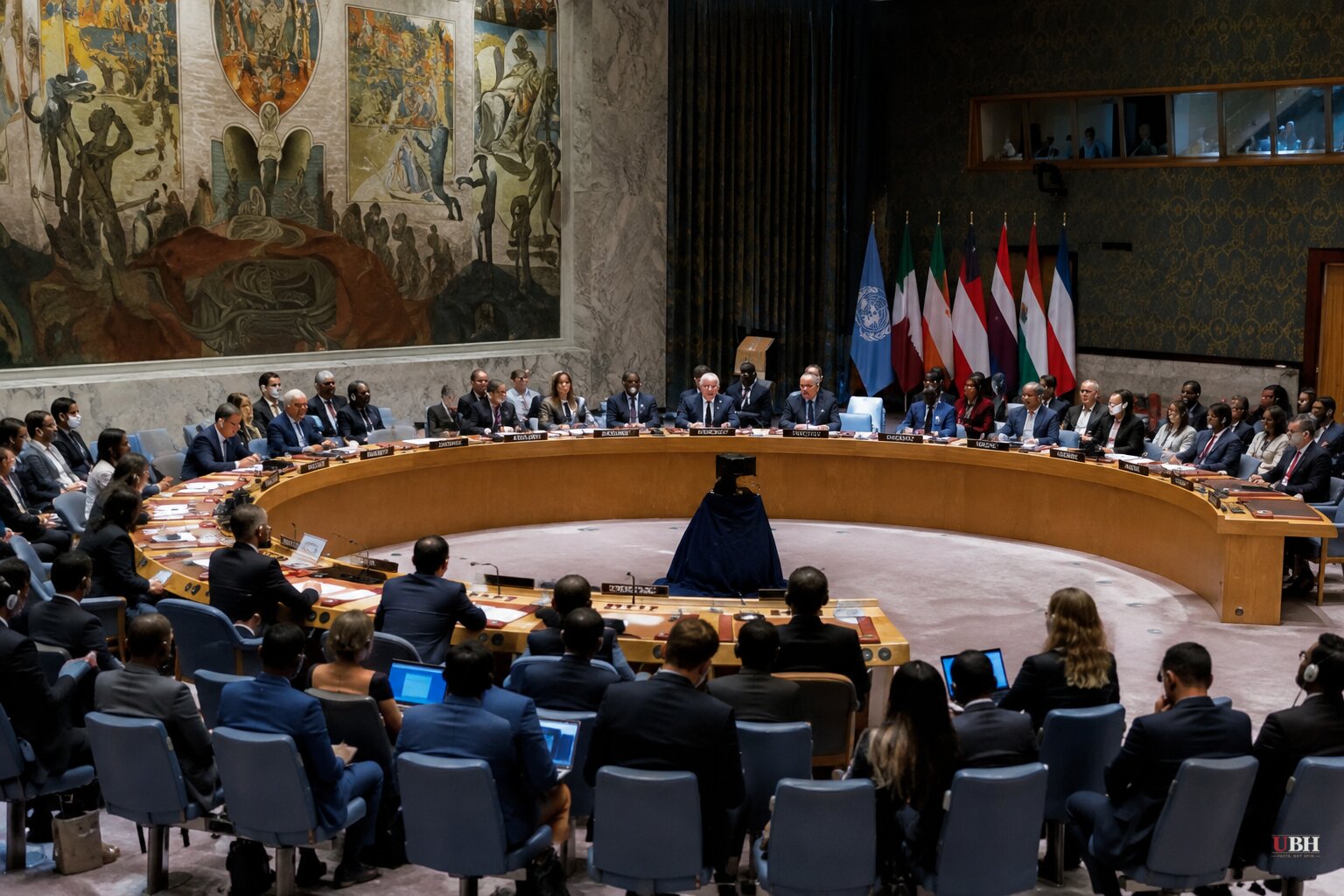
Since the war began on Feb. 28, the Gulf has cycled between heavy fire and uneasy quiet. For now, the quiet is broken and the attacks are ongoing. A US strike on Iran's Qeshm Island on Tuesday, Nov. 17, was followed by a night of counter-strikes across the region and a formal push from the Gulf Cooperation Council for the UN Security Council to step in.
What changed on the Gulf side
Bahrain's military said its air defenses intercepted "a number of treacherous Iranian attacks" on Wednesday, Nov. 18, and accused Tehran of continuing "criminal attacks." That makes four Iranian attacks on Bahrain in six days, ending a weeks-long respite.
Kuwait activated its air defenses against drones. The attacks were the first on Kuwait since early September. Kuwait's Foreign Ministry called them "a flagrant violation of its sovereignty" and said Kuwait is prepared to take "all necessary measures." It did not say what was targeted.
Iran's army said its combat and kamikaze drones went after US air defense systems and missile launchers at Ali Al-Salem air base in Kuwait. The Pentagon has not responded to that claim, and it has not been independently verified.
Saudi Arabia said it intercepted cruise missiles and drones fired by the Iran-backed Houthis. Explosions were heard in the kingdom. The Houthis have been seizing fresh territory in neighboring Yemen.
The State Department reissued security warnings for US citizens in Bahrain and Saudi Arabia, urging heightened vigilance.
The US strike that set it off
A US military official said American fighter jets hit an IRGC missile launch site on Qeshm Island with precision munitions on Tuesday. The official described it as self-defense after the Revolutionary Guards targeted a US radar at Bahrain's Isa Air Base.
Iran's army chief, Amir Hatami, promised a harsher reply. "Should the enemy make a mistake and repeat actions that have previously led them to despair, our response directed at both the enemy and their backers will undoubtedly be even more devastating and will know no geographical boundaries," he said, according to Iran's Fars news agency.
Iran's army statement framed its own strikes the same way. "Our response to any threat and aggression will be decisive, crushing, and without geographic limitations," it said, describing Ali Al-Salem as a primary gateway for American forces into the region.
Shipping and flights
ADNOC L&S, a subsidiary of Abu Dhabi's state energy company, said one of its vessels was attacked in the Strait of Hormuz on the evening of Nov. 17. Eleven crew members were injured and one remains unaccounted for. Saudi Arabia condemned the attack "in the strongest terms."
Ships moving through Hormuz have come under nearly daily Iranian fire. Tehran insists vessels use only routes it has authorized. The US has answered with a blockade of Iranian ports.
Air travel is still disrupted. According to Gulf News, flydubai and Etihad have extended cancellations to several Saudi cities.
Diplomacy under strain
Qatar, which held talks with Iranian officials on Tuesday, called the latest attacks "a dangerous escalation" and warned they undermine efforts toward a peaceful solution. It labeled Iran's strikes on Kuwait and Bahrain a "blatant breach" of international law. Saudi Arabia, Qatar and the UAE all condemned them. The GCC has asked the Security Council to act.
Before this week's fighting there were signs of movement. Dr. Ali Rashid Al Nuaimi, who chairs the defense, interior and foreign affairs committee of the UAE's Federal National Council, told Fox News Digital earlier this month that he sees "some progress" through Qatari mediation. "I am a little bit optimistic, but I don't exclude the other option," he said.
Tehran's terms haven't softened. Iran has kept seven conditions on the table before talks can proceed, including sanctions relief and an end to the American naval blockade.
Iran's Foreign Ministry spokesman, Esmaeil Baghaei, also publicly attacked IAEA chief Rafael Grossi on Thursday, Nov. 19. He argued that Israel stays outside comprehensive nuclear safeguards despite having a nuclear arsenal. Grossi had said there was no double standard because Israel is not a party to the Non-Proliferation Treaty.
Washington's next move
Politically, the war is heading to Congress. After Democrats' midterm victories this month, Chuck Schumer, who is likely to return as Senate Majority Leader when the next Congress convenes Jan. 3, has said ending the conflict is atop his list. House Democratic leader Hakeem Jeffries said: "We need to end the reckless and costly war of choice in Iran. That's been a commitment that we've made."
Daniel DePetris, a Defense Priorities fellow writing in National Review, noted that Democrats tied higher energy prices and cost of living to the war during the campaign. He said the options include another War Powers Resolution or cutting off funds.
Vice President JD Vance has said Trump will make sure Iran does not become a "forever war."
What remains open is whether the Security Council acts on the GCC request, and whether Iran follows through on Hatami's pledge of a response without "geographical boundaries." The next test comes with the Jan. 3 handover in Congress.
Sources used for this briefing
6 links from 6 independent newsrooms (syndicated copies of the same report count once)
These are the sources it draws on, linked so you can verify.
More coverage: Iran


