
Unbiased headlines. Facts, not spin.
Unbiased Headlines is an independently owned news organization. We bring you the facts, not opinions, written fresh from 110+ named sources. Sources linked so you can verify it yourself.
 defense
Major Story (7/10)
Event date: November 16, 2026 ·
Army Seeks 17 Concrete Bunkers in Israel, Saudi Arabia and Lebanon as Kuwait Whistleblower Presses Protection Questions
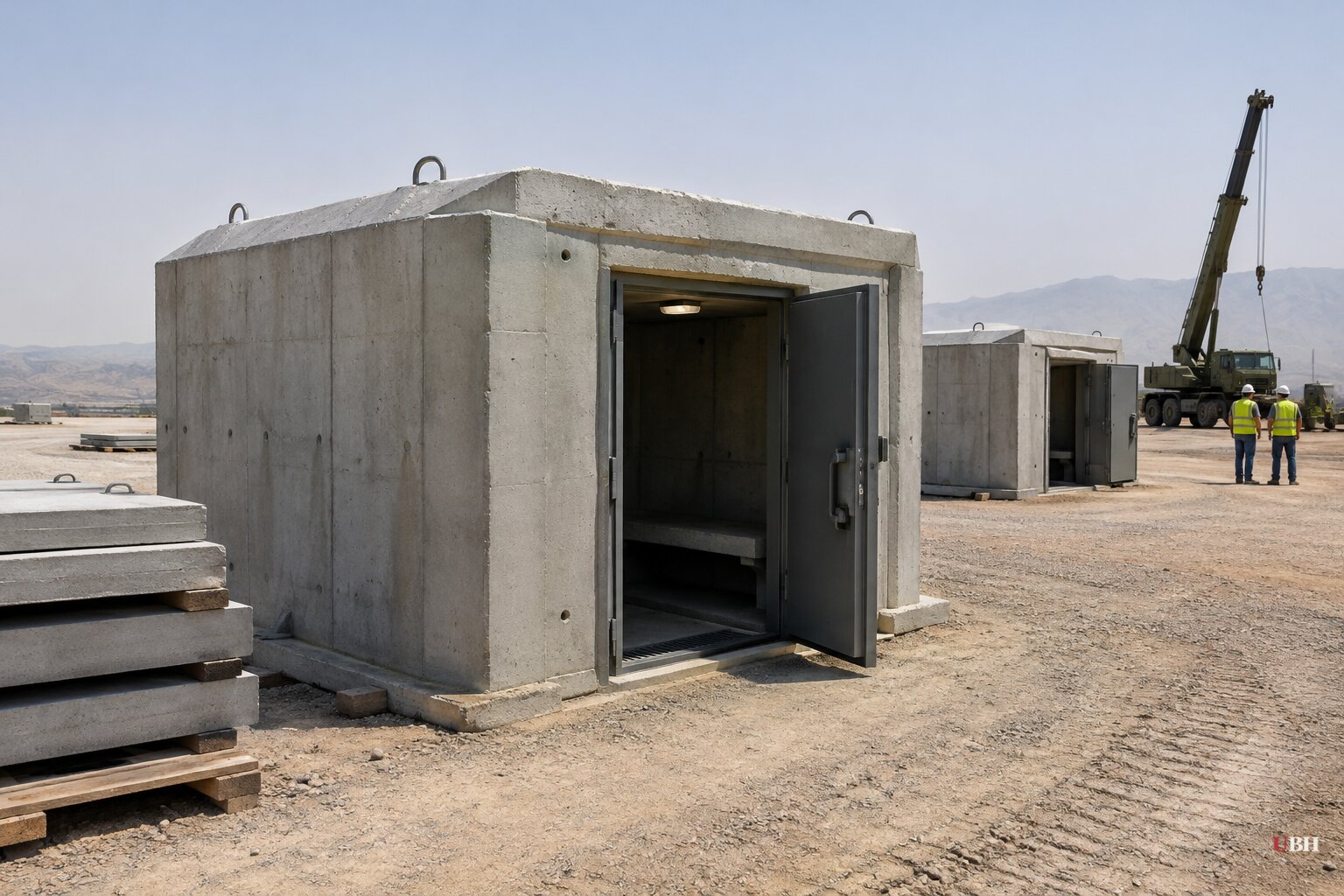
Eight and a half months into the Iran war, the Army is still putting troops in converted shipping containers and now wants them out.
An Army notice posted Friday, Nov. 13 asks industry to build 17 precast, reinforced-concrete bunkers at U.S. and coalition sites in the Middle East. Ten are planned for Israel, five for Saudi Arabia and two for Lebanon.
The Army calls it "an urgent, high-priority requirement to replace nonstandard personnel protection shelters (e.g., converted shipping containers)."
What the Army is asking for
This is a sources-sought notice, a survey of which contractors can do the job. It is not a contract award. Responses are due Nov. 25.
The Army says the follow-on solicitation is expected to give bidders just three days to quote. It cites "extreme operational urgency (soldiers currently at risk using non-standard containerized shelters)." Construction must finish within 45 days of the task order.
Each bunker is three precast concrete sections with steel entrance doors and concrete Alaska barriers shielding the entrances. Sandbags go on the exterior walls, with at least 18 inches of extra cover on the roof. The design is meant to withstand indirect fire: rockets, missiles and drones.
The notice names five primary installations: one in Israel and two each in Saudi Arabia and Lebanon. The Army is withholding base names and coordinates for security reasons. Only eligible contractors will get them once the formal solicitation is issued.
Bidders must show immediate cross-border and local mobilization capability in Saudi Arabia, Israel and Lebanon. They must say whether they are bidding on all three countries or only some.
The threat has not gone away
Iranian missile and drone attacks on U.S. installations have killed at least 23 American personnel since the war began in late February. That count includes some non-hostile deaths.
On Tuesday, Nov. 17, Iran claimed responsibility for another strike on a U.S. base in Bahrain, its third there in five days. Kuwaiti air defenses intercepted incoming drones, and Israeli forces launched new strikes in eastern and southern Lebanon.
The Pentagon sought prefabricated bunkers for the region in March, and Hegseth has called better protection for troops at Middle East bases a top priority. Eight months later, the Army is still describing container shelters as the current standard at some sites.
The Kuwait complaint
The bunker notice lands alongside new scrutiny of the March 1 strike on an Army command post at Kuwait's Port of Shuaiba. Six Army Reserve soldiers were killed, the first U.S. service members lost in the war. Dozens were wounded.
Army Maj. Stephen Ramsbottom, a survivor of the attack, submitted a whistleblower complaint last week to the House and Senate Armed Services committees. CBS first reported it, and CNN obtained a copy. He also appeared on "60 Minutes" on Sunday, Nov. 15.
Ramsbottom called the attack a "tactical failure" by "the Army, our leadership, and myself." He said, "We just did not plan this well, and this needs to be a lesson that we learn."
He says he raised the lack of protection from aerial attack in several meetings and was told: "We don't have to worry about protection." He says leaders later talked about sending a counter-drone system, but "it never arrived at Shuaiba and we don't know if it was ever even ordered to or requested."
The complaint also says the site had no physician and no fixed aid station, and only one ambulance. Ramsbottom has said the facility was fortified against "legacy threats" like mortars and car bombs but not modern drone warfare.
Those claims are Ramsbottom's. Senior Pentagon officials said after the attack that the building was fortified. A source familiar with the site told CNN it was surrounded only by concrete barriers that would stop a car bomb but not drones or missiles. That source also said no sirens warned troops to take cover.
Trump's response
Trump pushed back on the "60 Minutes" segment on Truth Social on Nov. 16. He wrote that Iran has fired between 8,000 and 9,000 one-way attack drones, and "only 2 of them got through, resulting in U.S. fatalities, both on the first day, hitting Kuwait and Saudi Arabia."
He added that of about 2,000 ballistic missiles fired, only one caused U.S. fatalities, in Jordan. "Translation: 99.99% of Iranian missiles and drones have been shot down or, in any event, not caused U.S. deaths," he wrote. He said Central Command's defensive measures "have been historically effective" and that this was "left out of the 60 Minutes 'report.'"
The two accounts are not necessarily in conflict. Trump is describing the interception rate across thousands of weapons. Ramsbottom is describing one site that, by his account, had no defense against the weapons that did get through.
The cost is the same either way. Six soldiers died at Shuaiba, and the Army is now writing a 45-day, three-day-quote procurement to fix shelters at sites in three countries.
What comes next
The first marker is Nov. 25, when contractor responses are due. After that, the Army is expected to issue the formal solicitation on its compressed timetable.
The second comes in January, when Democrats take control of Congress. They are poised to open wide-ranging investigations into the administration's handling of the Iran war. Ramsbottom's complaint is already in the hands of both Armed Services committees. The Pentagon has not publicly answered his specific allegations about counter-drone requests and medical support at Shuaiba.
Sources used for this briefing
7 links from 6 independent newsrooms (syndicated copies of the same report count once)
These are the sources it draws on, linked so you can verify.


