
Unbiased headlines. Facts, not spin.
Unbiased Headlines is an independently owned news organization. We bring you the facts, not opinions, written fresh from 110+ named sources. Sources linked so you can verify it yourself.
 defense
Major Story (8/10)
Event date: November 15, 2026 ·
Trump Calls June Iran Memorandum 'a Waste of Time' as Another Tanker Is Hit Off Khasab
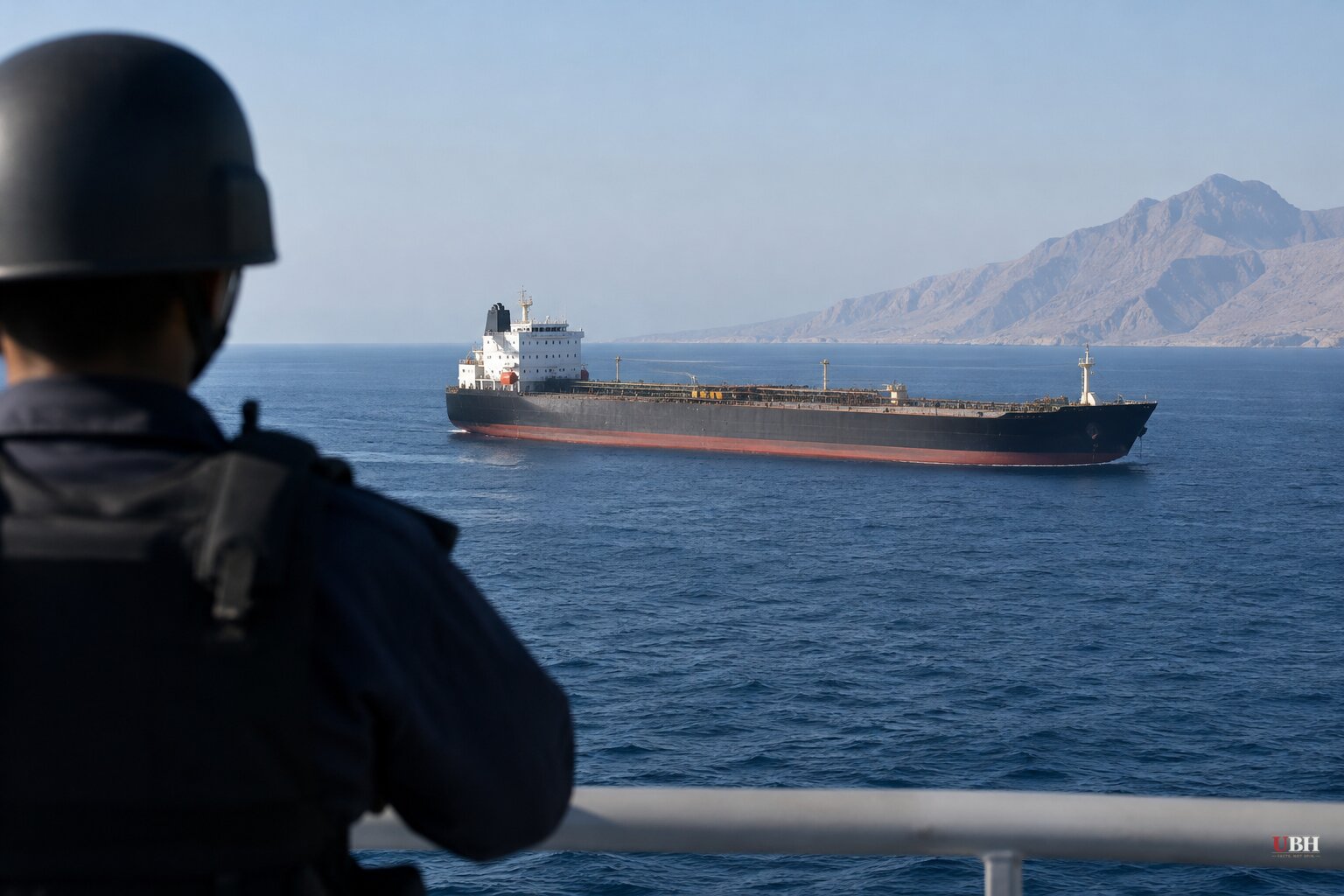
Nine months into the war, with the U.S. blockade of Iran and its escorted shipping route along Oman's coast still the main instruments of policy, the past 48 hours have brought a rhetorical break from Washington's own diplomacy and another hit on commercial shipping.
In an interview with Fox News in China on Wednesday, Nov. 18, President Trump described the June memorandum of understanding with Iran as "a waste of time." The deal was negotiated by Vice President JD Vance, and Trump signed it.
Asked whether the memorandum was why Vance had been pulled off the negotiations, Trump said Vance "is doing a very good job. No, well, he basically just left one thing out." He did not say what that was.
The Wall Street Journal reported last week that Vance had become the lead negotiator and was weighing direct talks with a senior Iranian security official. It also reported that Trump had begun to wonder whether the memorandum gave Iran time to regroup and earn more oil revenue. The next day, Trump posted on Truth Social that he had asked Vance to focus on corruption in Democrat-run cities. "We don't need a deal with Iran," he wrote. "We've got their money, Hundreds of Billions of Dollars, and we've got their Strait!"
Trump on chemical and biological weapons
Trump also said there are indications Iran is working on biological or chemical weapons because the U.S. has knocked out its nuclear capabilities. He did not cite a source or give details.
On a CNN report this week about a possible Iranian plan to detonate a dirty bomb or chemical weapon in Washington, he said people should not be worried. "We're going to have a new year coming up, and we'll see what happens after January 1," he said. "Look, if it does happen, we wipe them out."
He said the U.S. is still talking to Iran and that Tehran wants a deal, but that he wants one that lasts. He did not say what he expects to happen after January 1.
Tanker hit north of Khasab
On Wednesday an unknown projectile struck a tanker transiting outbound through the Strait of Hormuz, the U.K. Maritime Trade Operations (UKMTO) said. Local authorities placed the incident north of Khasab, Oman, and the projectile hit the engine room. UKMTO said the crew is safe and accounted for. Damage and environmental impact are unknown.
It follows a bad start to the week. On Monday, Nov. 16, Iranian state TV said three oil tankers caught fire after hitting naval mines. The Revolutionary Guard navy said mines had damaged six tankers since Sunday and that pollution had reached the strait's coastlines. Iran warned shippers that the U.S.-supported route remains dangerous. The reports gave no flags or casualty figures.
UKMTO separately reported a projectile strike and an engine-room fire on a vessel that day, with no casualties.
Force posture and the Gulf economy
A Navy official confirmed to CBS News that the USS George Washington has left the Middle East and is in the 7th Fleet. The carrier entered the region in August to replace the USS Abraham Lincoln, which had reports of low morale and food shortages.
That leaves two carriers in the region: the USS George H.W. Bush and the newly arrived USS Theodore Roosevelt. A U.S. official had said Monday that another carrier had arrived, which made three for a short time.
The cost of the standoff falls on the Gulf. The International Monetary Fund says Kuwait, Qatar and Iraq are contracting by about 16% this year and Bahrain by 11%. The U.S.-assisted route has helped Arab states export oil. It has not restored pre-war output of liquefied natural gas, fertilizer or aluminum, according to NPR's reporting, and it does not let Kuwait, Qatar or Bahrain import goods through their ports.
Oil has not spiked. Brent crude was around $95.69 a barrel in early Asian trading Monday after falling 2.5% the prior week.
Washington's political squeeze
Trump's room to maneuver has narrowed. His party lost its congressional majority in the midterms, and Vance blamed the losses on the unpopular war and the nature of U.S. relations with Israel. Netanyahu is reportedly close to being ousted after Israeli elections.
Trump said after meeting Qatar's prime minister, the mediator, that Gulf Arab allies prefer "the status quo" of economic pressure, and wrote that a U.S. attack "seems to be quite unlikely." Senior UAE diplomat Anwar Gargash told an Abu Dhabi audience the region must "prepare for a prolonged period of uncertainty."
Iran's deputy foreign minister, Kazem Gharibabadi, rejected the premise that pressure is working. "From a legal perspective, we are still in a state of war," he said Sunday, adding that sanctions damage global energy and financial markets and the U.S. itself more than they pressure Iran.
In National Review, Noah Rothman argues that the blockade and escorted transits may be "the least bad" of the remaining options. He wrote that any deal Iran would accept now would likely be a bad one for the U.S., and that the U.S. should look for ways to support the Iranian opposition.
National Review also reported that Treasury Secretary Scott Bessent, who helps oversee the Iran sanctions, was moved from his home to a military base after credible Iranian threats against his life. The Treasury Department has not been quoted on the matter in these reports.
Yemen front
The Iran-backed Houthis are also fighting Saudi Arabia, a conflict that flared in mid-July and ended a 2022 ceasefire. On Wednesday the Saudi-led coalition said it destroyed a Houthi ballistic missile launch platform in Saada and intercepted a missile aimed at southern Saudi Arabia, according to spokesman Col. Turki Al-Malki.
Houthi health officials said Monday that Saudi strikes killed three people, including a child, in Sanaa and Omran province. Riyadh had not commented. Reuters, citing sources, reported Sunday that Houthi fighters were within about 50 miles of Aden.
It is unclear what Trump meant by January 1. He tied it to the possibility of an Iranian chemical or biological attack, and he has not said whether it is a deadline for talks or for strikes.
In the meantime, tankers keep getting hit on a route the U.S. is escorting.
Sources used for this briefing
6 links from 6 independent newsrooms (syndicated copies of the same report count once)
These are the sources it draws on, linked so you can verify.
More coverage: Donald Trump and Iran


