
Unbiased headlines. Facts, not spin.
Unbiased Headlines is an independently owned news organization. We bring you the facts, not opinions, written fresh from 110+ named sources. Sources linked so you can verify it yourself.
 defense
Major Story (7/10)
Senate rejects Iran war powers resolution 51-48 as funding fight over Dec. 11 deadline looms
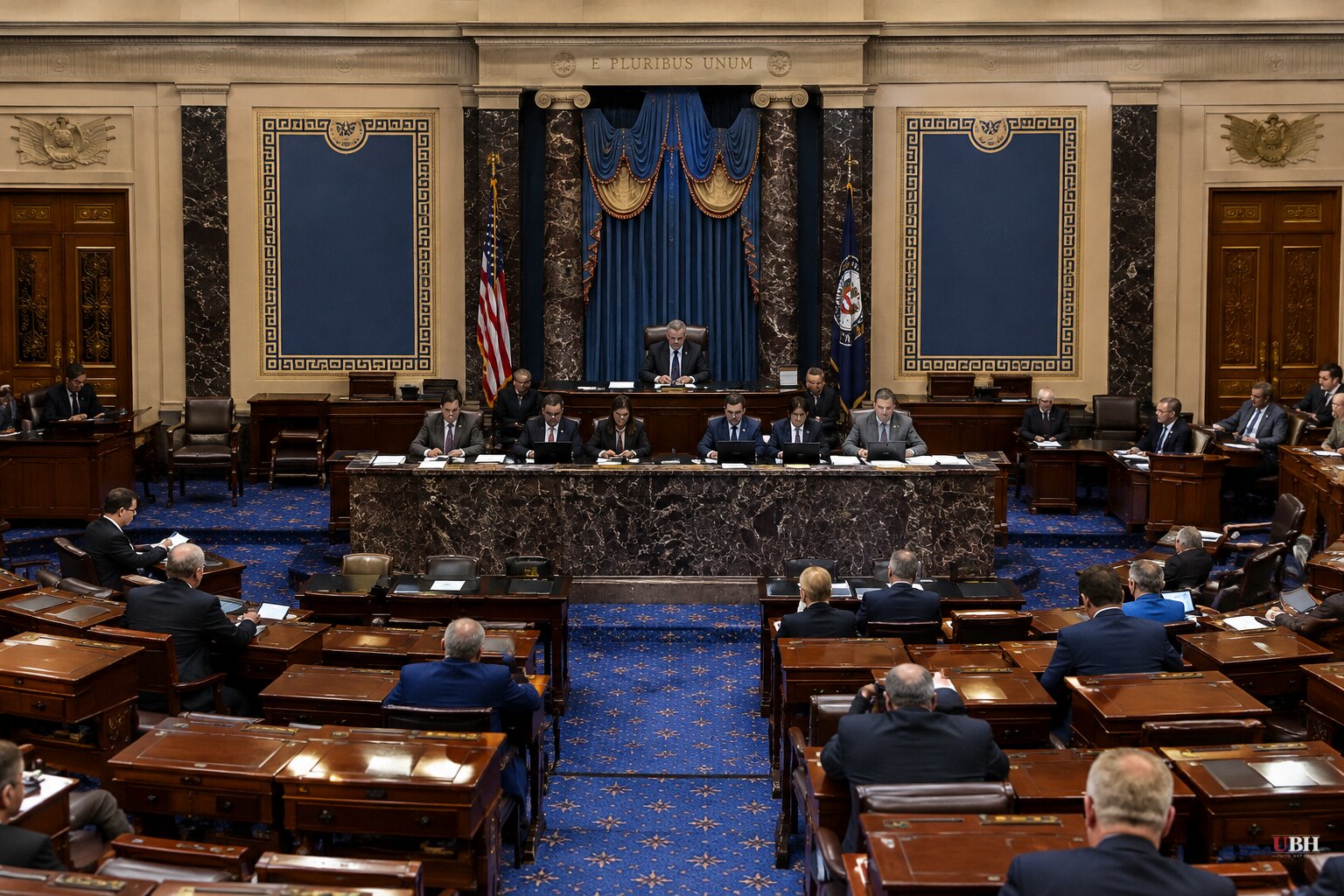
The Senate on Thursday, Nov. 19, rejected a resolution that would have directed President Donald Trump to remove U.S. forces from hostilities with Iran. The vote was 48 in favor, 51 against.
The measure, H.Con.Res. 93, was sponsored by Rep. Seth Moulton, D-Mass. The House passed it in September, 220-204. It was the first Iran war vote in either chamber since the Nov. 3 midterms, in which Republicans took sweeping losses.
How the vote broke
Three Republicans voted yes: Susan Collins of Maine, Lisa Murkowski of Alaska and Rand Paul of Kentucky. Collins lost her reelection bid earlier this month.
Sen. John Fetterman, D-Pa., was the only Democrat to vote no. Sen. Chris Murphy, D-Conn., did not vote.
Sen. Thom Tillis, R-N.C., who is retiring at the end of the year, backed an earlier effort but voted no this time. He told CBS News the resolution "doesn't go to the president, so it's just a statement from Congress. I've made that statement."
Tillis said he is pursuing other vehicles instead, tied to the funding process, to "replenish supplies, but hold Hegseth accountable." Of the defense secretary he said: "I think I've been pretty clear that I think he's a failure."
A mostly symbolic exercise
Even a yes vote would not have forced anything. Under the War Powers Resolution of 1973, a concurrent resolution does not go to the president's desk. Administrations of both parties have argued that mechanism is unconstitutional, and the White House made that argument after a similar measure passed over the summer.
The Senate adopted a war powers resolution in June, with four Republicans joining most Democrats. The next day, after Trump berated GOP senators at a closed-door lunch, Republicans reversed course. Trump ignored the measure. The Senate has held more than a dozen Iran war votes this year, and most have failed.
What each side says
Sen. Tim Kaine, D-Va., who has led the push, argued on the floor that the war's unpopularity was "made absolutely manifestly clear in the election results from Nov. 3." He called it an "illegal, catastrophic war" and tied it to higher gasoline, diesel and food prices. Republicans dispute the "illegal" label.
The AP Voter Poll, a survey of more than 100,000 voters, found about 6 in 10 said the U.S. made the "wrong decision" in taking military action against Iran. Most of those voters backed the Democratic candidate in their House race.
Republicans acknowledge the gas prices have hurt them politically, but they call the repeated votes a distraction. Sen. Tim Sheehy, R-Mont., said before the vote that the U.S. should "finish the job, protect this nation and protect our allies." The war began Feb. 28 with a joint U.S.-Israeli attack on Iran.
The money fight is next
The larger confrontation is government funding. The current deadline to fully fund the government or extend existing funding is Dec. 11.
Senate Majority Leader John Thune, R-S.D., said he is "increasingly concerned that the Democrats may try to initiate another, a third government shutdown this year." He called that "a terrible outcome for the American people."
Kaine rejected that framing. "We're gonna fund government in a robust way. We're gonna fund the defense in a robust way," he told Fox News Digital. He said that if Republicans insist on money to continue the war, "that'll be on them, not on us. We're not gonna shut government down."
Until Wednesday afternoon, Republicans were weighing a plan to pull defense money out of the regular process and push the administration's $350 billion request through budget reconciliation. After a closed-door meeting with Deputy Secretary of Defense Steve Feinberg, they decided to try a bipartisan route first.
That is taxpayer money on a very large scale, and it is headed into a three-week window with a shutdown threat attached. Democrats take a majority in both chambers when the new Congress is seated, but that is after the Dec. 11 deadline.
Whether a bipartisan defense package can get through the Senate, and whether Democrats attach Iran conditions to it, will be settled in the next three weeks.
Sources used for this briefing
7 links from 7 independent newsrooms (syndicated copies of the same report count once)
These are the sources it draws on, linked so you can verify.


