
Unbiased headlines. Facts, not spin.
Unbiased Headlines is an independently owned news organization. We bring you the facts, not opinions, written fresh from 110+ named sources. Sources linked so you can verify it yourself.
 defense
Major Story (7/10)
GAO Finds Pentagon Has No Overarching Munitions Plan as Iran War Strains Stockpiles
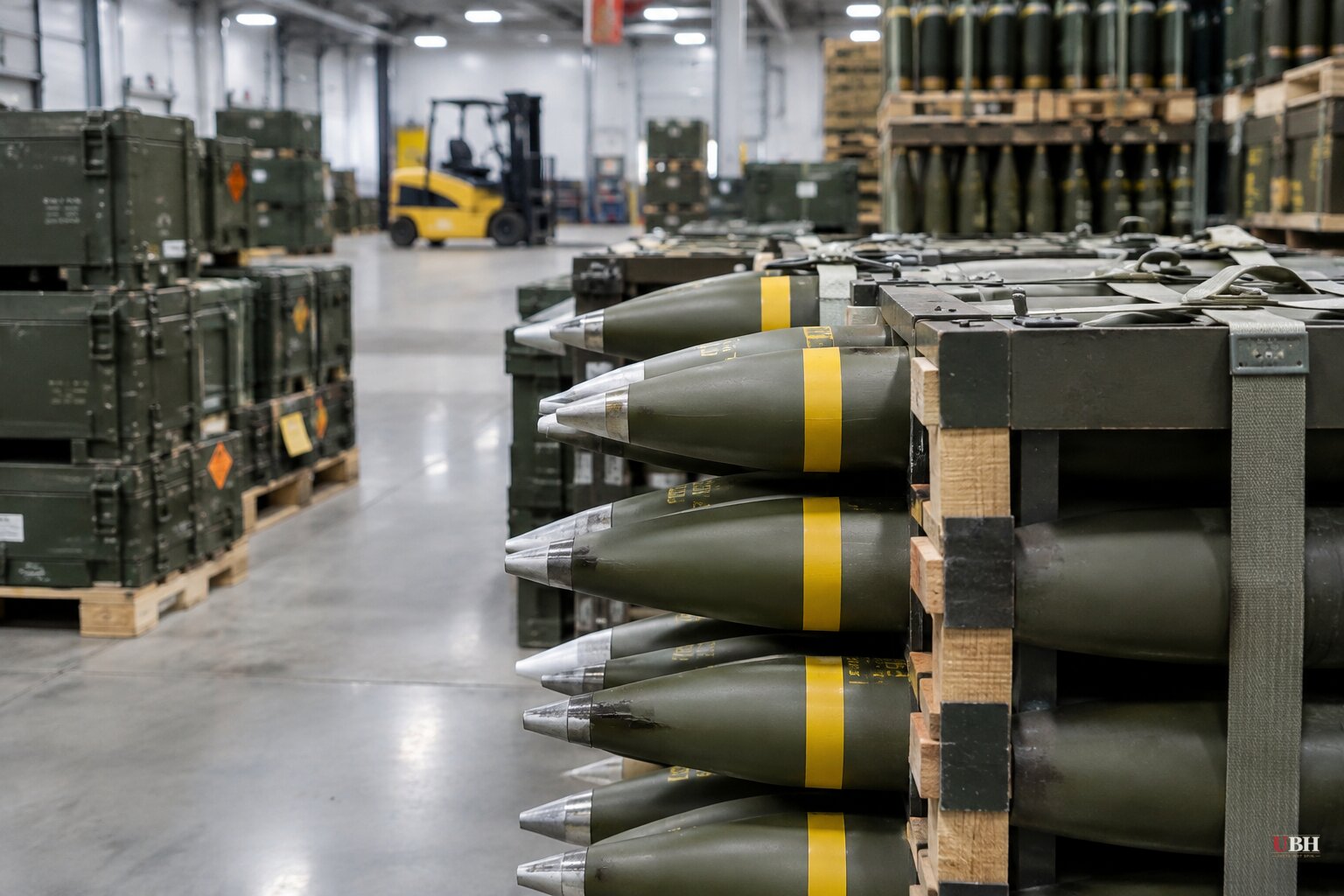
Since the U.S. opened Operation Epic Fury against Iran on Feb. 28, administration officials have insisted the military has the weapons it needs. A new federal watchdog report, released today, Nov. 19, says the Pentagon has no overarching plan to make sure that stays true.
The Government Accountability Office report, titled "DoD Munitions: Planning and Leadership Needed to Address Persistent Shortages," is an unclassified version of a classified report GAO completed in September. It does not identify which munitions are in short supply. Pentagon officials acknowledged shortages of some critical munitions to GAO analysts, the report says.
What GAO found
GAO says the Defense Department has taken steps to boost inventories but "doesn't have an overarching plan that identifies long-term goals, strategies, or ways to measure its progress."
There is also no single office with authority over munitions stockpile improvement. Service officials told GAO that without dedicated leadership, monitoring and driving progress will be difficult. Each service tracks and tries to fix its own shortages.
The department has a department-wide munitions data tool. GAO found it has not conducted regular inventory checks with the services using it.
Without a plan, GAO wrote, the department and services "can be reactive to global events rather than driven by total requirements." The analysts also warned the Pentagon could end up "investing in munitions that are projected to exceed the total munition requirement."
The Pentagon did get credit for some things. It has set up munitions working groups to find ways to raise production. GAO said the Iran war "has heightened the importance of addressing munitions stockpile and industrial base challenges."
Four recommendations
GAO recommended the Defense Department:
- Develop an overarching munitions plan tying production and funding to requirements.
- Name an office or entity and give it authority to carry out that plan.
- Set regular timelines for inventory reconciliation.
- Develop a data management plan, with the Pentagon's top digital and AI officials standardizing munitions data across the department.
In a response letter included in the report, the Defense Department generally concurred with the recommendations. The department has not said which office would lead the effort or when a plan would be finished.
The stockpile picture
The public numbers are patchy. The Washington Post reported that U.S. forces fired at least 850 Tomahawk cruise missiles in the first month of the war. Estimates put the remaining inventory at a few thousand. In August, Reuters reported that the Army had used up "virtually all" of its global stockpile of long-range missiles such as ATACMS and Precision Strike Missiles.
The Center for Strategic and International Studies, using expenditure data current as of Nov. 3, estimated that in the 39-day campaign up to the April 8 ceasefire and in later operations, the U.S. expended "between a third and two-thirds of key munition inventories."
CSIS rated Patriot, THAAD and Standard Missile interceptors as "heavily used, no substitutes." Tomahawks, JASSMs and PrSMs were rated heavily used with some substitutes. Seven of the nine categories it examined showed detrimental effects on resupply capacity.
CSIS said the U.S. can renew the fight against Iran. "Against China, there is great concern," the analysis says. It adds that rebuilding will take a multiyear commitment, and that demand from the U.S. and allies has outrun supply, lengthening timelines.
One option is falling back on munitions with ranges under 300 miles. CSIS notes those make air superiority more important, which becomes a problem against an adversary with strong air defenses.
The administration's position
Defense Secretary Pete Hegseth and other Pentagon officials have repeatedly said the military has plenty of the munitions critical to further operations against Iran, including Tomahawks. Chief Pentagon spokesperson Sean Parnell called reports of weapons shortages false after an August report on depleted stocks. He said the U.S. has "everything required to strike at the time and place of the president's choosing."
President Trump has said the U.S. has a "virtual unlimited supply" of some very powerful munitions. He has also acknowledged that supplies of others are "a little bit tighter" and said "we're watching that very closely." He did not say which weapons he meant. He has also said the leakers behind reports of depleted stocks are "being hunted down."
Acting Navy Secretary Hung Cao added a wrinkle Tuesday, Nov. 17, at his Senate Armed Services Committee confirmation hearing. Asked by Sen. Deb Fischer, R-Neb., about balancing precision weapons against cheaper mass munitions, Cao said the Navy recoded munitions classed "code echo, code foxtrot," which he said means "they're expired," and fired them.
His comparison: "I came from a poor family, right? Things like bread doesn't expire. You just rub some water on it, microwave it for 15 seconds and it's good to go." He did not say which munitions were recoded or how many.
Cao also pointed to production. "When I was in uniform, we only produced 125 Tomahawks a year. Right now we're well above 60 every month," he told senators.
Sen. Jack Reed, D-R.I., the committee's ranking member, said in his opening remarks that "the munitions expended and damage sustained from Operation Epic Fury alone will take years to recover."
Both things can be true at once. The Pentagon can have enough weapons for another round with Iran and still lack a coordinated plan for the long haul. The GAO report faults the planning and leadership, not a specific count of missiles.
But the department's own response letter accepts the findings. A government that says its shelves are full is also telling the watchdog it needs a plan, an owner and a reliable inventory count. Taxpayers are funding the replenishment either way.
The open question is who will be put in charge. The Pentagon has not named the office that would carry out the plan, or set a deadline for delivering it.
Sources used for this briefing
7 links from 7 independent newsrooms (syndicated copies of the same report count once)
These are the sources it draws on, linked so you can verify.


