
Unbiased headlines. Facts, not spin.
Unbiased Headlines is an independently owned news organization. We bring you the facts, not opinions, written fresh from 110+ named sources. Sources linked so you can verify it yourself.
 defense
Notable (6/10)
Event date: November 21, 2026 ·
UK Defence Intelligence chief says Russia does not seek war with NATO but fears a 'significant miscalculation'
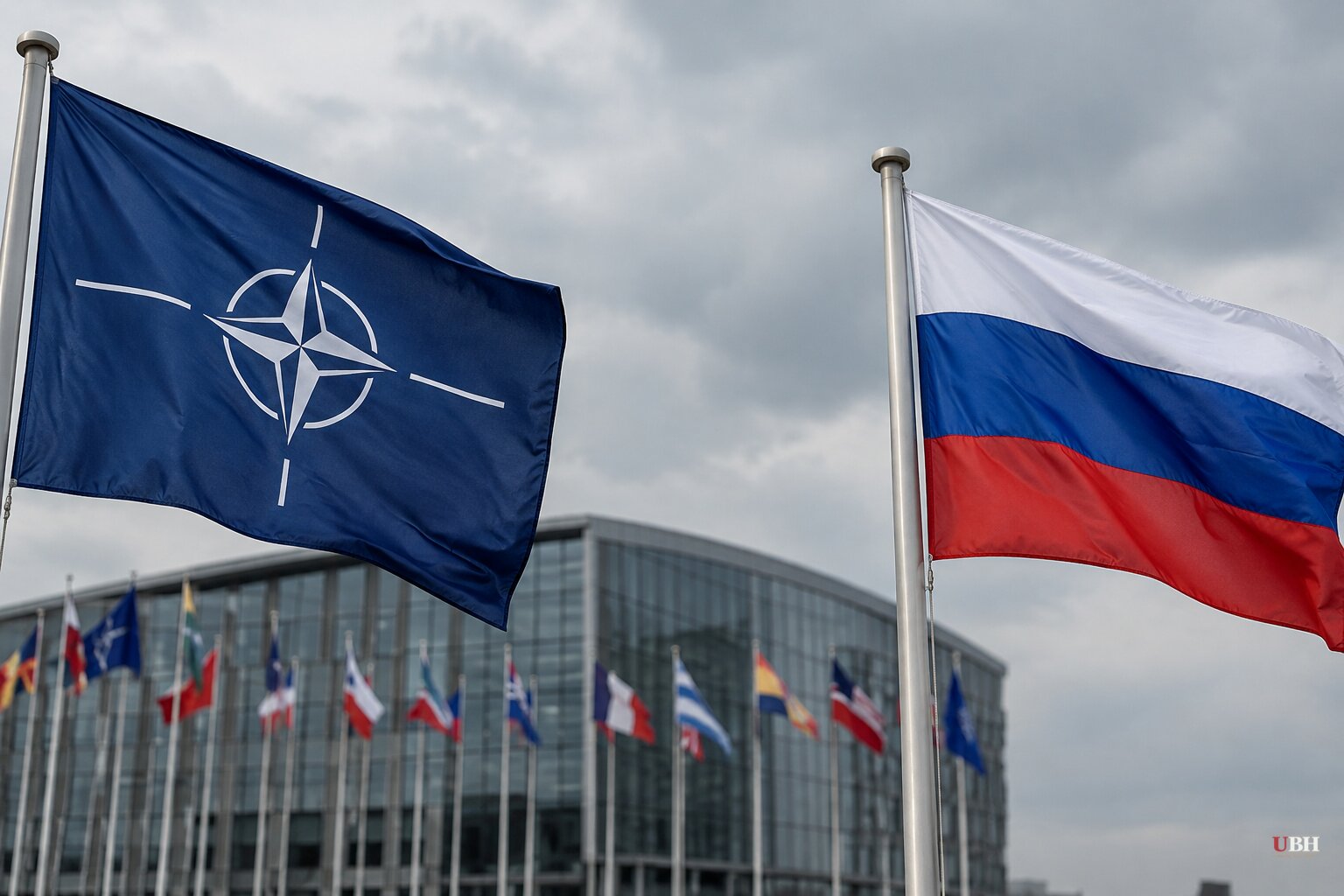
The man who runs British military intelligence has a message: Russia probably doesn't want a war with NATO, but it keeps doing things that could start one anyway.
Lt Gen Matthew Jones, Chief of Defence Intelligence since July, spoke at the Cambridge Intelligence Seminar at Corpus Christi College on Friday, Nov. 20. The Ministry of Defence published the transcript Saturday, Nov. 21.
"With some confidence I can say Russia does not actively seek war with NATO," Jones said. "However, my greatest fear is the risk of a significant miscalculation. Putin is under pressure and that is leading to a more assertive and aggressive approach as he seeks to challenge us."
He added: "There are too many recent examples of reckless Russian behaviour where, if the incident had been slightly different, the results could have been extremely serious."
The incidents Jones cited
Jones called the August drone attack at Leipzig airport in Germany, which he attributed to Russian proxies, the "most egregious recent example."
He also pointed to a spate of merchant ship sinkings in the territorial waters of NATO member Romania. Defence Intelligence is following those closely, he said.
Closer to home, he listed a Russia-backed arson attack on a Ukrainian-owned business in east London. He also cited the near shootdown of an RAF Rivet Joint surveillance aircraft over the Black Sea in September 2022, and the 2018 Salisbury Novichok attack. That attack "claimed one life but could have been so much worse." The victim was Dawn Sturgess, who came into contact with the nerve agent in a discarded perfume bottle. The intended targets were former spy Sergei Skripal and his daughter Yulia.
Jones also cited what he called an attempted attack in Estonia last weekend as an example of rising sabotage. He referred to threats at RAF Fairford, the arrest last week of an officer assigned to the NATO Allied Rapid Reaction Corps, and an arrest in Gloucestershire earlier this month. He said Defence Counter Intelligence, a unit formed this year under the Strategic Defence Review, played a considerable role in the arrest of "the US service person."
A busy week on NATO's eastern flank
The speech landed in a week when Russian missiles and a suspected drone came down in Poland. A missile landed in Polish territory on Friday, and CCTV captured the explosion. British troops were in Poland for the Koalicja 26.2 exercise at Nowa Deba, where they were photographed on Nov. 16.
Denmark also said it thwarted an attempted killing of a US-Ukrainian citizen on Danish soil. Danish authorities allege the plot was orchestrated by Russian intelligence. UK Foreign Secretary Ed Miliband said Britain stands "in solidarity with Denmark in the face of this egregious attempted assassination on NATO ally territory."
Estonia has announced it will close all its road border crossings with Russia from Dec. 1.
Russia's casualties, and Russia's answer
Jones said Russian ground forces are "fixed in Ukraine and experiencing huge casualties," often over 2,000 men a day in recent weeks, over 50,000 a month. That is his figure, delivered in a speech, and it has not been independently verified.
He was just as blunt about the other side of the ledger. The army is "adapting rapidly," he said. Russia's long-range aviation, undersea reconnaissance, cyber, special forces, military intelligence, ballistic missile and nuclear forces "all continue to pose a substantial threat."
Moscow rejects the premise. Putin has pushed back on Western pressure, saying Russia can't be intimidated and that sanctions are becoming obsolete. He has rejected claims that Russia is responsible for the deterioration of its relations with European countries.
The 2030 target
Jones tied his warning to the government's readiness push. Defence Secretary Wes Streeting has said the UK must be ready for war by 2030. He has said Russia's growing military capacity could warrant an attack within around 1,000 days, and has called preparing the country for conflict a "defining priority."
Jones was careful on that point. The 2030 goal, he said, "is not a prediction of when Britain and its allies will come under military attack, but the threats make such an approach eminently sensible."
He described Defence Intelligence's job as joining "the dots between seemingly disparate events" with "an objective, rather than an alarmist approach." He compared the work to the warning signs pieced together before Russia's 2022 invasion of Ukraine. "Our adversaries may seek surprise," he said. "Our job is to deny them that."
The UK's stated position, in his words: "We do not seek conflict or confrontation with Russia. But we will robustly defend our national security and that of our allies, when it is threatened."
The warning is not that Moscow has decided to attack. It is that sabotage, proxy strikes and stray munitions are piling up on NATO territory. Each one is a decision point for an ally, and a wrong call could escalate.
The next concrete marker is Estonia's border closure on Dec. 1. Whether Poland and its allies treat the missile that landed there Friday as an accident or an attack is still unresolved.
Sources used for this briefing
7 links from 7 independent newsrooms (syndicated copies of the same report count once)
These are the sources it draws on, linked so you can verify.


