
Unbiased headlines. Facts, not spin.
Unbiased Headlines is an independently owned news organization. We bring you the facts, not opinions, written fresh from 110+ named sources. Sources linked so you can verify it yourself.
 defense
Major Story (7/10)
Event date: November 20, 2026 ·
Bessent Says Trump and Xi Agreed Humans Must Stay Involved in Military AI Decisions; No Text or Definitions Released
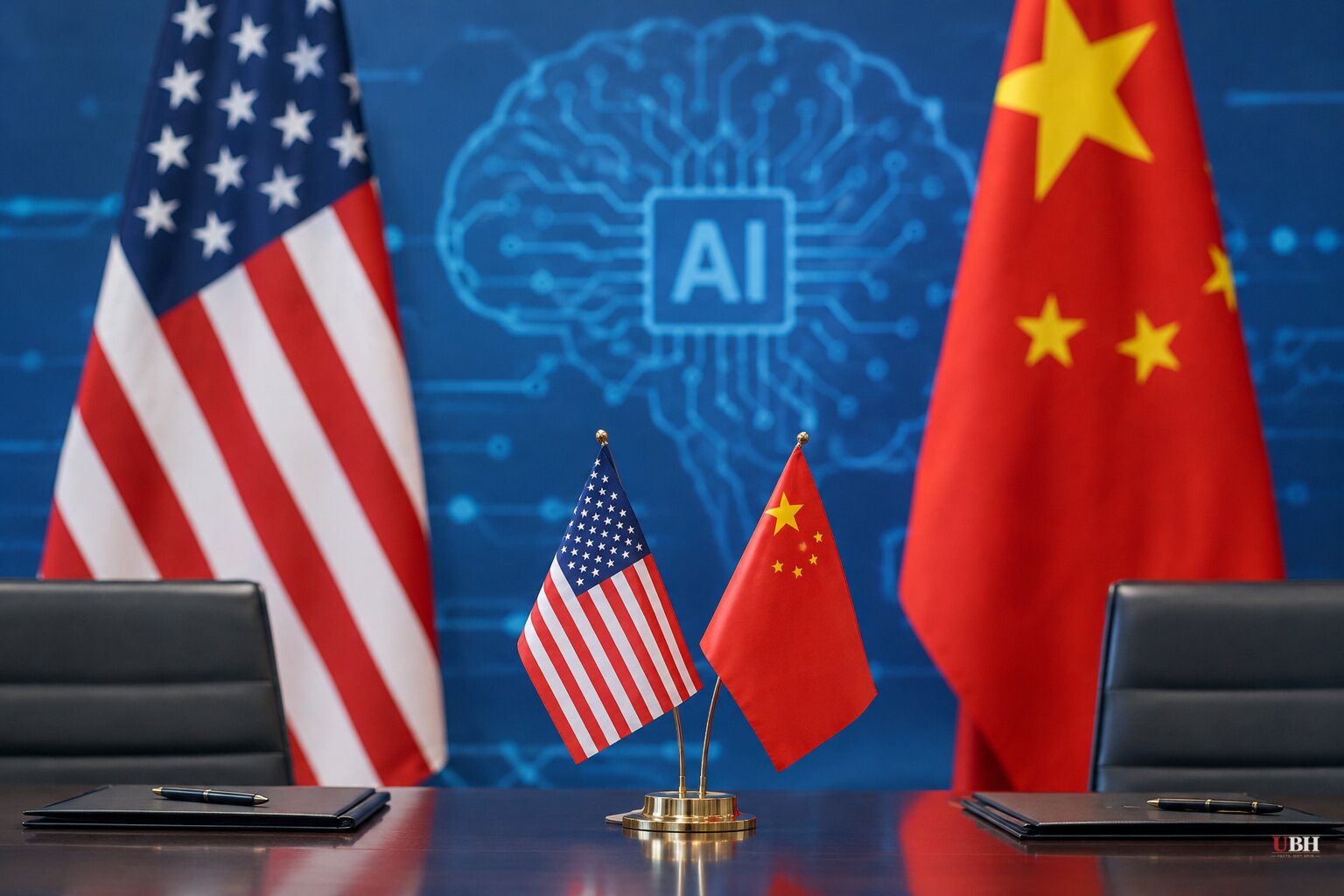
Since Trump's Nov. 19 meeting with Xi Jinping on the sidelines of the APEC summit in Shenzhen, the administration has pointed to one deliverable on military technology: a pledge to keep humans in the loop on AI. The source for it is Treasury Secretary Scott Bessent, speaking to CNBC on Friday, Nov. 20.
"President Trump and President Xi agreed that humans should always be involved in any military decisions that SI makes, and the SI should not be allowed to be autonomous for major military actions," Bessent said. "SI" is the administration's term for "super intelligence," its preferred label for AI.
He called it one of the major achievements of the Asia trip.
What Bessent said, and what he didn't
Bessent insisted the understanding is separate from the rivalry. "There's nothing to do with competition when it says that both sides agree that no major military operation should be launched without a human being involved," he said.
He did not describe a written agreement. He did not say what counts as a "major military action." He did not describe any inspection, verification or enforcement mechanism, or a start date.
The Chinese side has its own version. Xinhua's account has Xi saying the two countries should cooperate to keep AI under human control and strengthen communication. That is a looser statement than Bessent's "no major military operation without a human" framing.
Bessent also said the leaders held what he called a "very robust" discussion on containing the growth of nuclear weapons.
The hotline and the dialogue
The White House has said the two sides will set up a "Super Intelligence Dialogue" and an emergency communication channel. The details remain to be worked out.
The two governments had already agreed in September, during Xi's visit to Washington, to build a channel for AI incidents. The Shenzhen summit's main economic result was a two-month extension of the existing trade truce. It now expires Jan. 10, 2027, instead of Nov. 10. Wall Street had been discussing three to six months.
The day before the Xi meeting, Trump told APEC leaders the United States opposes any form of "globalist" regulation of AI. A bilateral understanding on military use is not a global regulatory regime, but the two positions sit side by side.
Separately, a UN review conference on lethal autonomous weapons ran in Geneva from Nov. 16 to 20.
The chip fight continues
Bessent paired the pledge with a hard line on competition. "The U.S. is ahead. We must stay ahead," he said of the AI race.
He said foreign AI models are "predominantly Chinese" and called them dangerous. He also said Chinese models are the source of AI-based cyberattacks. That is his characterization. He did not offer specifics in the interview excerpts.
On hardware, Bessent said Nvidia's H200 remains the most advanced chip China can buy with licenses. Trump took what Bessent called a "very firm line" on it. Bessent described a "paucity of orders" from China for the H200 as Beijing builds its own chip stack. He said China is "probably many years behind."
The Commerce Department moved Monday to tighten access further. The new steps cover advanced chips used by overseas data centers where Chinese entities can rent computing power. "I think we are going to see that the proper chip restrictions are in place, and the remote access has been curtailed," Bessent said.
Nvidia and the Lutnick question
Bessent said the spying allegations involving former Nvidia CEO Jensen Huang and a Chinese national he was romantically involved with did not come up in the Trump-Xi meeting. Huang resigned Nov. 12 as president and CEO of the company he co-founded in 1993. The board named CFO Colette Kress interim CEO.
Bessent also downplayed differences he had voiced with Commerce Secretary Howard Lutnick over chip restrictions after the Nvidia scandal. Administration officials, he said, are "all committed to following President Trump's instructions."
What to watch
A verbal pledge from two leaders is only as good as the process that follows it. The Super Intelligence Dialogue and the emergency channel have no announced start dates. The trade truce expires Jan. 10, 2027. That date is the next concrete test of whether the summit's talk turns into written commitments.
Sources used for this briefing
7 links from 7 independent newsrooms (syndicated copies of the same report count once)
These are the sources it draws on, linked so you can verify.


