
Unbiased headlines. Facts, not spin.
Unbiased Headlines is an independently owned news organization. We bring you the facts, not opinions, written fresh from 110+ named sources. Sources linked so you can verify it yourself.
 defense
Major Story (8/10)
Araghchi Says Iran's Nuclear Doctrine 'Has Not Changed' but Uranium Stockpile Will Serve Needs 'However Defined'
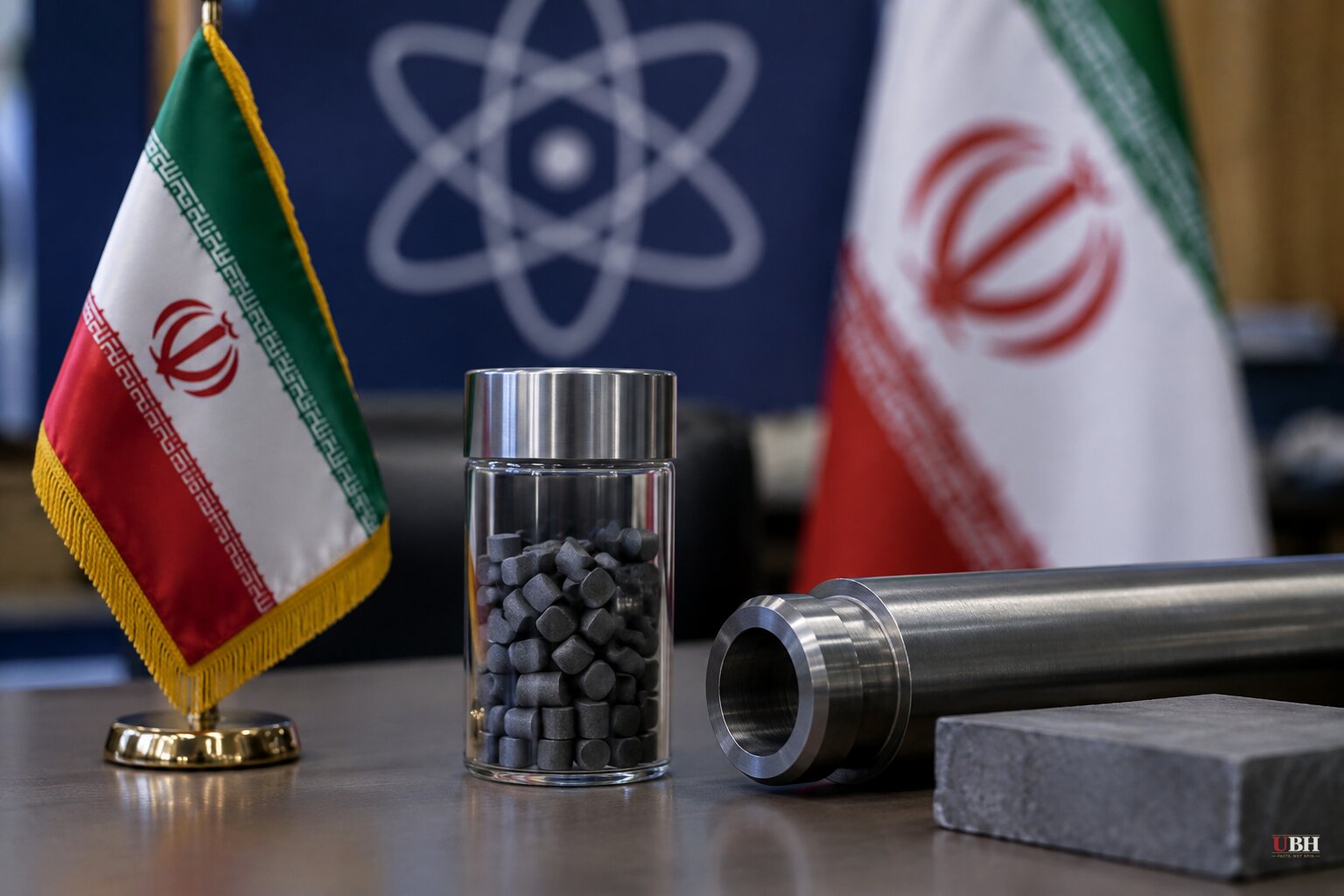
Since a U.S.-Israeli strike killed Supreme Leader Ali Khamenei on Feb. 28 and set off the regional war, Iran's nuclear program has gone from background issue to the central obstacle to ending the fighting. On Saturday, Nov. 21, Foreign Minister Abbas Araghchi said publicly what hardliners have been saying for weeks: the question of changing the doctrine is open for debate.
What Araghchi said
In interviews with Iranian media, including state outlets IRNA and Iran Daily, Araghchi said the country's enriched uranium would stay inside Iran and be "used according to our needs however those needs are defined."
He called the doctrine question a "major strategic debate" and said "there is nothing wrong with examining it seriously." People on both sides, he said, have "strong arguments."
He also said: "For now, our doctrine has not changed, and our official position remains the same." He acknowledged any formal change would carry "far-reaching consequences."
That is not a reversal. It is also not a denial.
The case for change, as Iranian officials frame it
Araghchi described the reform camp's argument this way: Iran's current approach of no nuclear weapons has "failed to protect" its nuclear facilities, which U.S. and Israeli forces attacked last year and again this year.
The Iranian newspaper Javan makes a similar case. Its analysts say strikes on strategic sites have raised doubts in Tehran about whether international agreements can guarantee security. Javan reports growing calls inside Iran to withdraw from the Nuclear Non-Proliferation Treaty and redefine deterrence. Its analysts say the West must make restraint a rational choice for Tehran, or risk a major shift in Iranian doctrine.
Some advocates of change argue it would open the way for Tehran to build a bomb as a deterrent.
Russia and China say no
Araghchi said Russia and China, both of which have strategic cooperation agreements with Iran, "are also opposed" to a change in doctrine. He did not describe what pressure, if any, they have applied.
The formal brake is the fatwa issued by the late Ali Khamenei banning weapons of mass destruction. Iranian officials still cite it. His son and successor, Mojtaba Khamenei, has not been seen in public since he took over in March. He has not issued a decree overturning his father's ruling.
The material and the access problem
The International Atomic Energy Agency estimated in 2025, before Israel's June strikes that year, that Iran held about 440 kilograms of uranium enriched to roughly 60 percent. That is short of the 90 percent needed for a weapon, but it is the level from which reaching 90 percent is much faster. Power generation needs about 3 percent.
Iran has barred IAEA inspectors from its nuclear sites. It cites security concerns and blames the agency for failing to condemn the U.S. and Israeli attacks. Last week the agency urged Iran to take "incremental steps" to let inspectors back into key facilities, calling access "critical."
Washington's position and the diplomacy
The U.S. says it needs guarantees that Iran will never develop a nuclear weapon before it agrees to a full ceasefire.
Tehran's terms point the other way. A senior Iranian official told Reuters on Thursday that Iran sent a "nuclear proposal" to the U.S. through Qatari intermediaries, conditioned on Washington meeting Iran's "seven demands." Security chief Mohsen Rezaei, speaking in Russia the same day, said: "As long as they do not execute our seven conditions, we will neither open the Strait of Hormuz nor have negotiations."
The reported demands include a halt to U.S. and Israeli military action in the region, an end to the U.S. naval blockade, lifting of all sanctions, release of frozen Iranian assets, removal of most U.S. forces from the Middle East, war reparations and guarantees against future U.S. military action.
On Tuesday, armed forces chief of staff Maj. Gen. Ali Abdollahi floated a narrower version requiring five of the seven immediately. Supreme National Security Council Deputy Secretary Ali Bagheri said Friday that Iran must see "practical actions" from the U.S. before opening "a new chapter." Bagheri blames the U.S. for disrupting the June memorandum of understanding. Breitbart's account puts the blame the other way, on Iranian attacks on civilian shipping in the Strait of Hormuz. Each side holds the other responsible.
Trump's claim on unconventional weapons
President Donald Trump told Fox News on Wednesday that there is "indication that Iran is looking at gases, looking at the bio, because we've shut them out with the nuclear." He added, "If it does happen, we wipe them out," and when asked if that was a promise, said, "Oh, I give you my word. Absolutely."
He was responding to a CNN report, citing seven U.S. officials, that U.S. intelligence indicates Iran is developing plans to target senior administration officials in Washington with a dirty bomb or chemical weapon. The officials told CNN they were still debating whether Iran could carry out the plot or would try. Two sources said the plans included specific locations and targets. Sources described the planning as an effort to give Iran options, not evidence of an imminent attack.
White House spokeswoman Lauren Bis said the U.S. is "monitoring any and all potential threats, but at this time there are no credible threats to the homeland." Trump said Americans in Washington should not be concerned and that "we'll see what happens after January 1."
What to watch
Araghchi's own words leave the door open: the doctrine is formally unchanged, the stockpile is unmonitored, and the only official who could overturn the fatwa has not spoken publicly in eight months. Whether Mojtaba Khamenei ever weighs in, and whether inspectors regain access to the key facilities the IAEA named, will show which camp in Tehran is winning.
Sources used for this briefing
7 links from 7 independent newsrooms (syndicated copies of the same report count once)
These are the sources it draws on, linked so you can verify.
More coverage: Iran


