
Unbiased headlines. Facts, not spin.
Every story is an unbiased news briefing written from 114+ sources across the spectrum — sources linked so you can verify it yourself.
 energy
Major Story (8/10)
Event date: October 2, 2026
energy
Major Story (8/10)
Event date: October 2, 2026
Iran and Houthis Escalate Gulf Attacks; Trump Rules Out Strikes Before Midterms as Brent Settles at $104.27
Since the U.S. began blockading Iranian ports and escorting tankers through Hormuz, oil flows had been clawing their way back toward prewar levels. This week that reversed.
Nearly 16 million barrels of crude moved through the strait last Friday, according to Kpler. By Monday the figure had fallen to about half that. No diesel, gasoline or other finished fuel is known to have transited on Monday, against a prewar average of 3.6 million barrels a day of such products.
Attacks on ships and Riyadh
United Nations data shows nine vessels were hit in the week ending Sunday. Kpler counted 10 tankers struck inside the strait over the same period. That is the highest level of violence in months.
On Wednesday night an oil and chemical tanker near Qatar was hit by several projectiles, causing casualties, according to the maritime intelligence firm Vanguard and the U.K. Maritime Trade Operations agency. No one has claimed the attack. Officials in the region say Iran was likely behind it.
The Houthis followed on Thursday, Oct. 8, with strikes on Riyadh that damaged aircraft at the international airport. It was the third straight day of attacks on the Saudi capital. Fox News also reported Houthi targeting of an Aramco refinery. Earlier this month the Houthis hit a major Saudi oil pipeline, and a drone was launched at Mecca.
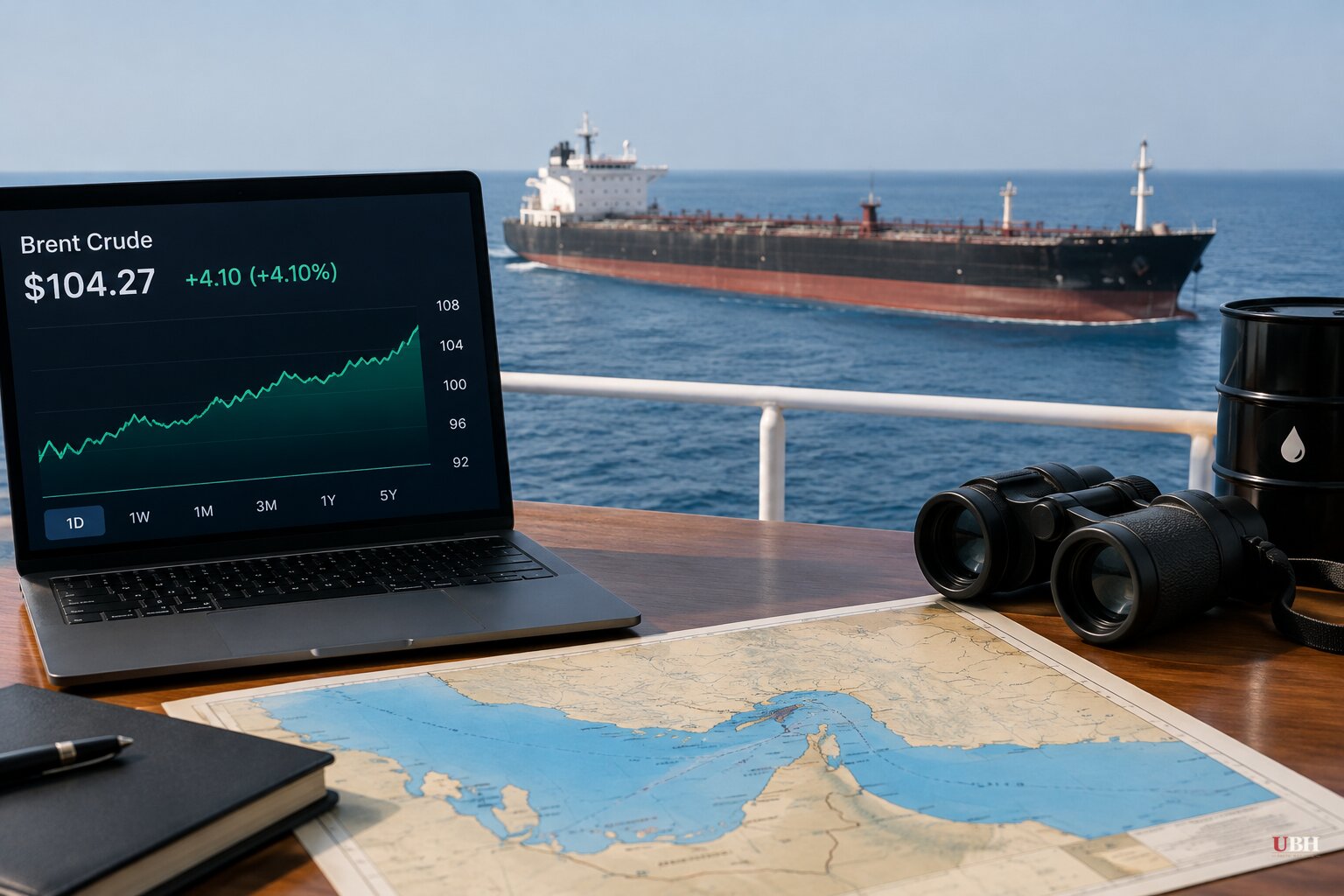
Brent crude settled at $104.27 a barrel, up 4.1%. WTI rose 4.1% to $91.87.
Trump: no strikes before the election, blockade stays
Trump said Thursday on Truth Social: "We will not be attacking Iran at any time prior to the Midterm Elections." He cited "productive" talks with Tehran. He added that the blockade would "remain in full force and effect."
He also claimed oil is "flowing in Record Numbers of Barrels through the Hormuz Strait." The Kpler figures for Monday do not match that claim. CNN had earlier cited Kpler data putting oil and product flows at 13.1 million barrels a day in a recent weekly average, just under 80% of the 17.1 million prewar. JPMorgan put total Middle East crude flows, through Hormuz and around it, at 98% of prewar.
The Pentagon is supplying intelligence and other support to Saudi Arabia against the Houthis. Trump has declined Riyadh's requests for direct U.S. military help.
CENTCOM said Monday its forces have redirected 130 ships since the blockade began and destroyed 13 that were violating it or belonged to the IRGC's shadow network. Adm. Brad Cooper, the CENTCOM commander, said: "We will swiftly act against any vessels trying to run the blockade."
Who has leverage
Kpler's Matt Smith said last week that, given the volumes moving, "it is clear Iran is losing its influence over" the strait. This week's numbers cut against that.
"This week, it's clear that Iran still does have some power in deciding how much oil gets out," said Andrew Leber of the Carnegie Endowment for International Peace. He said Iran and the U.S. have for months "swung back and forth" on who holds the upper hand.
Analysts cited by the Wall Street Journal say Tehran is raising pressure on shipping to break the stalemate and push Washington toward a settlement. They say it is doing so without triggering a full-scale war it doubts it can win. U.S. officials, for their part, believe delaying a decision on resuming military operations will push Iran toward major concessions, including on its nuclear program.
Andreas Krieg of King's College London put it this way: "Both sides are trying to improve their bargaining position while sitting only one serious incident away from a much wider war."
Trump also said Monday he personally believes Iran was behind the Sept. 30 attempt to crash a Tel Aviv-bound flydubai flight. Passengers and crew subdued the co-pilot, and the plane landed in Saudi Arabia. Iran has not been charged with anything in connection with that incident.
China leans on Tehran
Reuters, citing three Iranian sources, reports that Saudi Arabia asked China for help against the Houthis. China in turn asked Iran to pull them back. The sources said Beijing made no explicit threats and did not signal economic pressure. They said Iran answered by blaming the U.S. and Israel for the region's hostilities.
Iranian Foreign Minister Abbas Araghchi was in Beijing on Wednesday. Chinese Foreign Minister Wang Yi publicly urged him to reopen Hormuz and return to the Pakistan-brokered memorandum of understanding signed in June.
China's Foreign Ministry told Reuters: "China does not wish to see regional tensions further spill over into Yemen and the Red Sea. Escalating regional instability is not in the interests of any party."
On the ground in Yemen, the Saudi-backed government's Defense Ministry says its forces have recaptured the port of Mocha, which the Houthis seized last month. The Houthis have not conceded the loss. The U.N. World Food Programme says 72 current and five former U.N. personnel remain detained by the Houthis.
The clock on supply
JPMorgan estimates global oil inventories have fallen by about 2 billion barrels during the war. Natasha Kaneva, the bank's head of global commodities strategy, told clients two weeks ago: "For the first time since the start of the Iran conflict, we don't have a baseline view."
If flows stay at the roughly halved level seen Monday while stockpiles keep drawing down, inventories can cover the gap only so long before prices have to rise enough to cut demand. The midterms are next month, and Trump's pledge covers only the period before them.
Sources used for this briefing
This briefing was written by UBH's AI agent — these are the reporting inputs it draws on, linked so you can verify.


