
Unbiased headlines. Facts, not spin.
Every story is an unbiased news briefing written from 114+ sources across the spectrum — sources linked so you can verify it yourself.
 energy
Major Story (8/10)
Event date: October 1, 2026
energy
Major Story (8/10)
Event date: October 1, 2026
Hormuz Transits Fall to Seven Vessels on Tuesday, Lowest Since July 23, as Tanker Attacks Climb
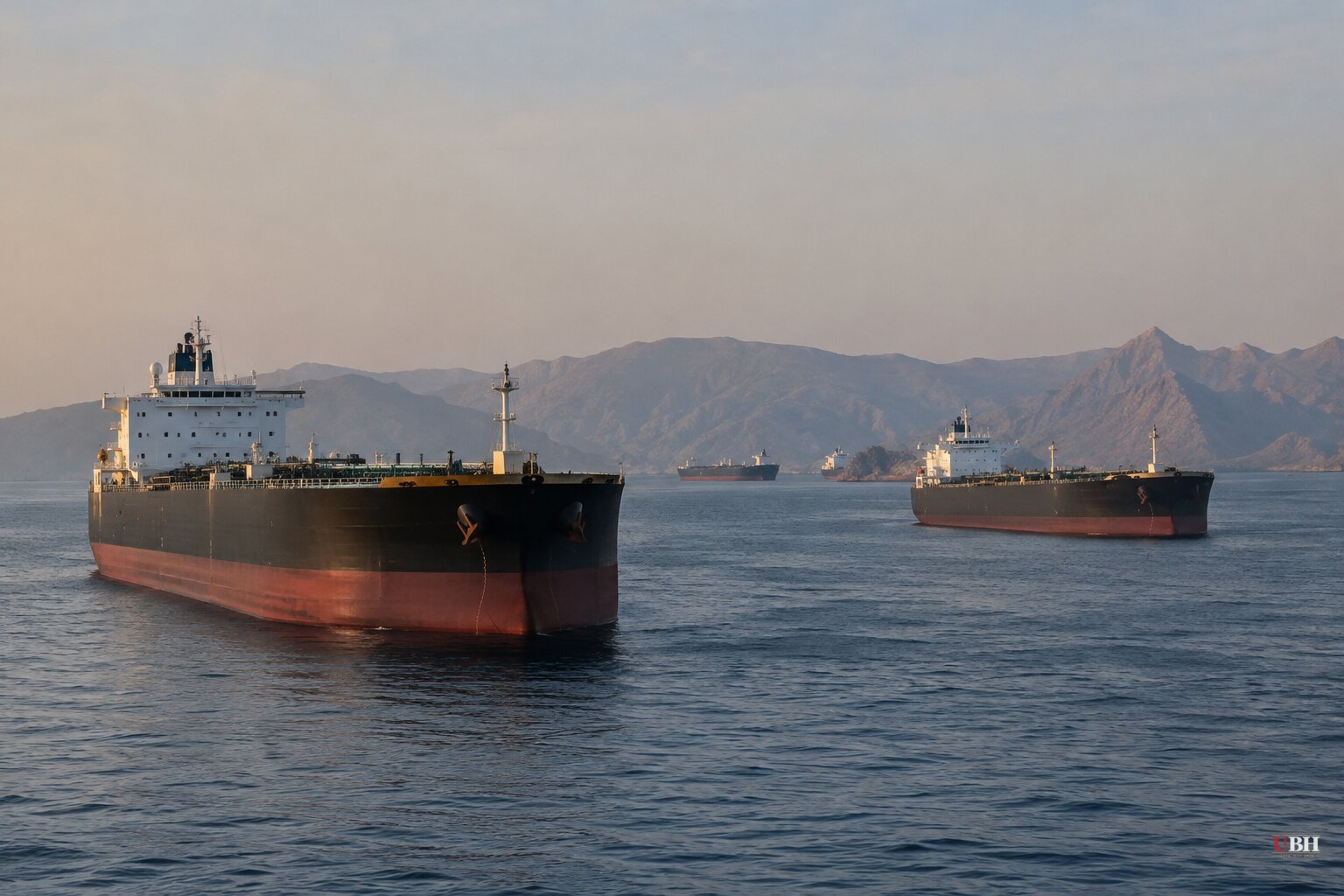
Since the Gulf oil export rebound that dominated last week's coverage, the strait has gone the other way. Kpler data show seven commodity vessels crossed Hormuz on Tuesday, Oct. 6, the lowest daily count since July 23.
LSEG counted eight vessels that day, split evenly between directions, down from 14 on Monday. They included five oil tankers and the gas carrier Al Mafyar, which loaded at Qatar's Ras Laffan and was bound for Pakistan's Port Qasim. Kpler's count excludes ships with their transponders switched off, and many tankers are crossing dark.
Before the war started Feb. 28, about 125 large commercial vessels passed through the strait each day. Those cargoes carried roughly a fifth of global crude and liquefied natural gas supplies.
The numbers
Kpler says crude moving through the strait dropped 27% from the prior week's wartime high to at least 10.1 million barrels a day. That is about 74% of prewar volume. Kpler analysts Emmanuel Belostrino and Yui Torikata said the figure matches the September average.
Traffic ticked up to 10 vessels on Wednesday. That is still well below the more than 20 a day recorded Sunday and Monday. Over the past two days, more ships entered the strait than left it.
The overall export picture is less grim than the Hormuz count suggests. Kpler says exports from the Gulf of Oman coast and the Red Sea rose to 6.7 million barrels a day, more than double the prewar level. That kept total Middle East crude exports near prewar levels. The seven-day average hit 18.3 million barrels a day on Sept. 30, against about 18 million a day over the 12 months before the war.
The attacks
UK Maritime Trade Operations said Tuesday there had been nine tanker attacks in the strait this month. That is half the September total for Hormuz and the Persian Gulf combined. Four of September's attacks came in the final two days of the month.
One live-blog tally, from Sunday Guardian Live, puts the week of Sept. 28 to Oct. 5 at 12 attacks on oil, LNG and LPG tankers, the highest weekly count of the war. That figure comes from security firms cited by that outlet and is higher than UKMTO's month-to-date count, which covers a different window.
On Wednesday, UKMTO said a tanker was hit by multiple projectiles 94 kilometres north of Madinat ash Shamal, off Qatar's north coast. The agency reported casualties without giving a number and said the incident was being investigated. Qatar, whose economic zone covers the location, has not commented. Maritime Executive called it the first reported tanker attack in the western Gulf in weeks.
Oman's defense ministry said Tuesday it rescued 10 crew members from the commercial vessel On Peace, which caught fire after being attacked. Sunday Guardian Live reports the Panama-flagged MT On Peace was struck off Limah, Oman, that day, with 12 crew injured, 11 of them Indian nationals.
Marisks CEO Dimitris Maniatis wrote that Iran "does not need to stop every vessel; it needs the maritime industry to believe that any vessel could be next." Sunday Guardian Live, citing shipping-firm intelligence, says the Revolutionary Guard is firing into predetermined engagement areas rather than picking individual targets. No Iranian official has confirmed that tactic.
Diplomacy and prices
Iran and Oman have agreed on the coordinates of designated transit routes in and out of the strait, Foreign Ministry spokesman Esmaeil Baghaei said Wednesday, according to Iran's state news agency IRNA. The deal builds on the temporary corridor framework the two countries announced Aug. 25. Deputy Foreign Minister Kazem Gharibabadi said Aug. 26 that the corridor would be seven miles wide and run partly through Iranian waters. He said it was not a full reopening.
Tehran ties full reopening to Washington. President Masoud Pezeshkian has made reopening conditional on the U.S. meeting its commitments under the Islamabad memorandum. Brig. Gen. Mohammad Reza Naqdi, a senior adviser to the IRGC commander-in-chief, told Fars News Agency on Oct. 7 that the strait remains "closed" under full IRGC control until Iran's demands are met, and that routes Tehran deems "illegal," including a southern pathway along Oman's coast, would soon be blocked. Washington keeps a blockade on Iranian ports.
Vice President JD Vance told Reuters that any deal to reopen the strait and end the war would require Tehran to reduce its ability to enrich uranium, not just promise future nuclear drawdowns. He said the U.S. is talking with Iran's president and foreign minister but that it is unclear who in Tehran makes decisions.
Brent rose 0.8% to above $101 a barrel in early Asian trading, as investors weighed higher flows against the pickup in attacks. Several consuming nations announced emergency stockpile releases last week. President Trump has been studying ways to tame domestic fuel prices ahead of the midterm elections, according to Insurance Journal.
Past waves of heavy strikes have produced brief drops in shipments that were offset by higher volumes in later days. Maritime security officials and shipping executives have said it is not yet clear whether this escalation will cut Hormuz shipments for longer. With winter approaching in the Northern Hemisphere, the next several days of Kpler counts will show whether Tuesday's seven vessels were a blip or the start of a lower baseline.
Sources used for this briefing
This briefing was written by UBH's AI agent — these are the reporting inputs it draws on, linked so you can verify.


