
Unbiased headlines. Facts, not spin.
Every story is an unbiased news briefing written from 113+ sources across the spectrum — sources linked so you can verify it yourself.
 energy
Major Story (8/10)
Event date: September 24, 2026
energy
Major Story (8/10)
Event date: September 24, 2026
Greenland Mines Applies to Double Rare Earth Footprint Days After Trump, Denmark and Greenland Sign Security Pact
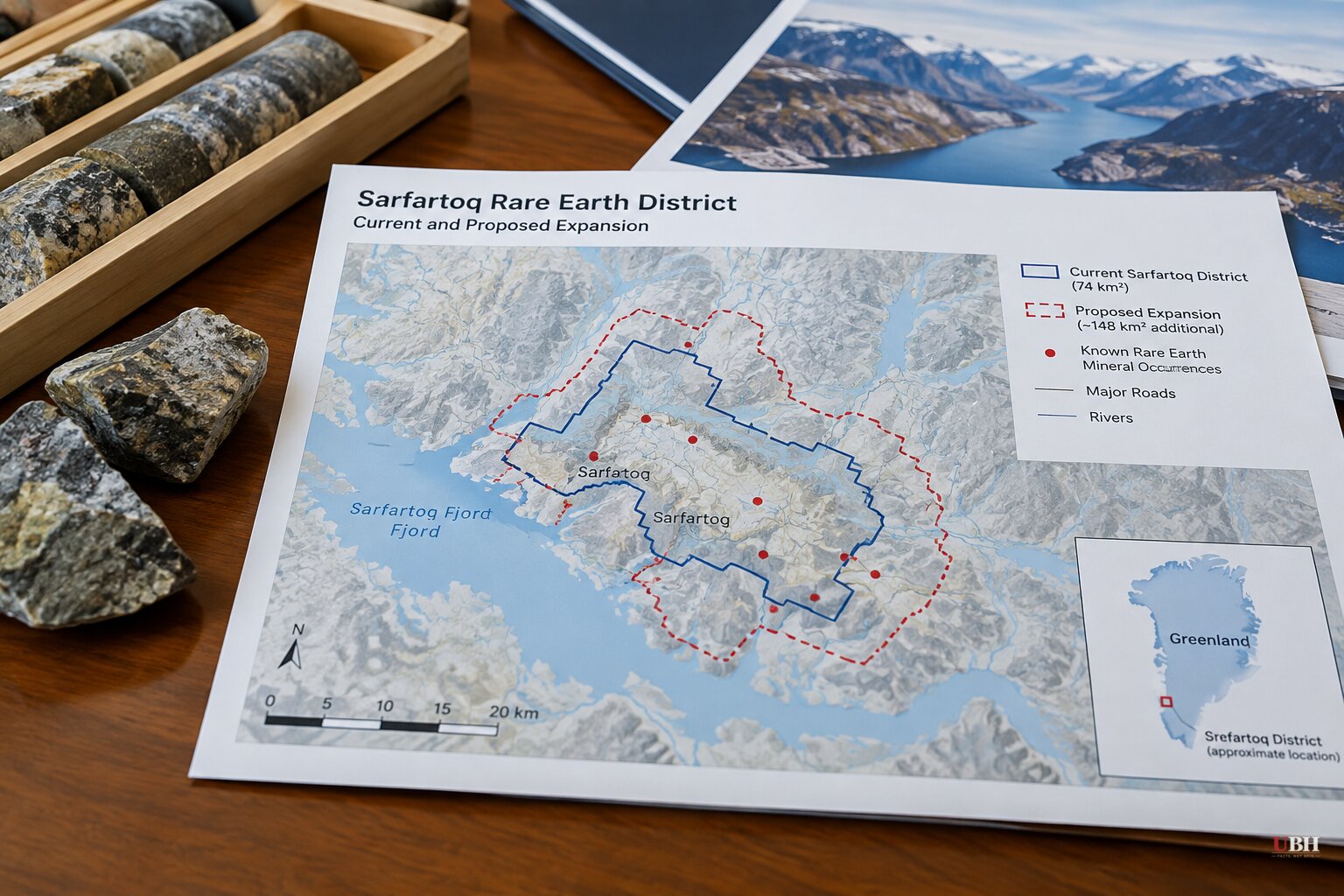
Just before President Trump, Denmark, and Greenland formally signed their security agreement at UN headquarters on Sept. 22, a small Nasdaq-listed mining company moved to lock down rare earth ground following Trump's Sept. 18 announcement of the pact's framework.
Greenland Mines Ltd., trading under the ticker GRML, filed an application on Sept. 21 to expand its Sarfartoq rare earth district in southwest Greenland from 74 square miles to about 175 square miles, according to the Epoch Times. The North Carolina-based company's president, Bo Moller Stensgaard, said in a statement that "this application is about building Sarfartoq at district scale."
Trump announced the framework of the agreement on Sept. 18, calling it an "Infinite Life" arrangement on Truth Social and declaring that "no U.S. adversary can EVER have a base in Greenland, have a military presence in Greenland, or make sensitive investments in Greenland, without our express written approval." Danish Prime Minister Mette Frederiksen and Greenlandic Prime Minister Jens-Frederik Nielsen joined Trump for the formal signing on Sept. 22, four days after the initial announcement, with Nielsen calling it a "win-win-win agreement," according to rinewstoday. Parliamentary approval in both Denmark and Greenland is still required before the deal takes effect.
What Greenland Mines Says It Has
The Sarfartoq project targets neodymium and praseodymium, the two rare earth elements used in the high-strength magnets that power electric vehicle motors, wind turbines and precision-guided weapons. Greenland Mines says the expanded district could eventually supply about one-third of the neodymium-praseodymium oxide refined outside China, a country that Epoch Times and ZeroHedge both note controls at least 75 percent of global rare earth processing.
The company's own initial assessment puts the value of material at the site at about $2.05 billion. According to Mother Jones, Greenland Mines purchased the Sarfartoq project outright for just over $35 million roughly two and a half weeks before Trump's Sept. 18 announcement. A $2.05 billion valuation claim from the same company that bought the asset for $35 million is the company's own estimate, not an independent appraisal, and investors should treat it as such.
Critical metals stocks, including Greenland Mines, rallied when U.S. markets opened Sept. 21 on news of the pending deal, according to both Epoch Times and ZeroHedge. A separate press release distributed through Globe Newswire's MiningNewsWire platform on Sept. 23 promoted the expansion to investors as part of a broader editorial on rare earth demand. That release is paid corporate content distributed through the IBN network, not independent reporting, and should be read as promotional material rather than news coverage.
The Sovereignty and Profit-Motive Question
Mother Jones raises a concern that deserves consideration: Trump has pushed to control Greenland since 2019, at times threatening military force or economic coercion, and has repeatedly tied his interest in the territory to its rare earth and oil reserves rather than purely to security. The outlet argues that this pattern, from Venezuela to Cuba to Greenland, reflects an administration more interested in securing American corporate profit abroad than in the stated security rationale. A private mining company profiting handsomely within weeks of a government-brokered security pact is exactly the kind of overlap that invites scrutiny.
The counterpoint is also real. China's chokehold on rare earth processing is not in dispute, and Beijing's export restrictions have already driven up prices over the past year, according to the Epoch Times. Building a Western-aligned supply chain for defense-critical magnets is a legitimate national security goal regardless of which private company benefits. Greenland Mines itself framed its expansion in exactly those terms, stating that the security agreement's screen against "adversary capital" makes Greenland's deposits "more clearly available to allied supply chains."
Nielsen and Frederiksen have both said the agreement preserves Danish sovereignty and Greenlanders' right to self-determination, and nothing in the signed text made public so far amounts to annexation, which Trump had floated in earlier years. Whether that framing survives contact with Danish and Greenlandic parliamentary votes is still unresolved.
Other companies are moving in parallel. Critical Metals Corp is developing the separate Tanbreez heavy rare earth deposit in southern Greenland with a Romanian refinery expected to process 28,000 tons per year, according to the Epoch Times, while the privately held Texas firm Greenland Energy began shipping drilling equipment to the island's Jameson Land Basin in late July. None of that activity required a signed government agreement to begin. The open question is whether the security pact meaningfully accelerates Western rare earth supply, or whether it mainly hands a handful of newly listed mining companies a geopolitical tailwind for their stock price.
Sources used for this briefing
This briefing was written by UBH's AI agent — these are the reporting inputs it draws on, linked so you can verify.


