
Unbiased headlines. Facts, not spin.
Every story is an unbiased news briefing written from 110+ sources across the spectrum — sources linked so you can verify it yourself.
 energy
Major Story (8/10)
June 24, 2026 at 11:44 AM
energy
Major Story (8/10)
June 24, 2026 at 11:44 AM
France's Power Outage Expands, UK Pays Six Times Normal Price for Electricity as European Heat Crisis Deepens
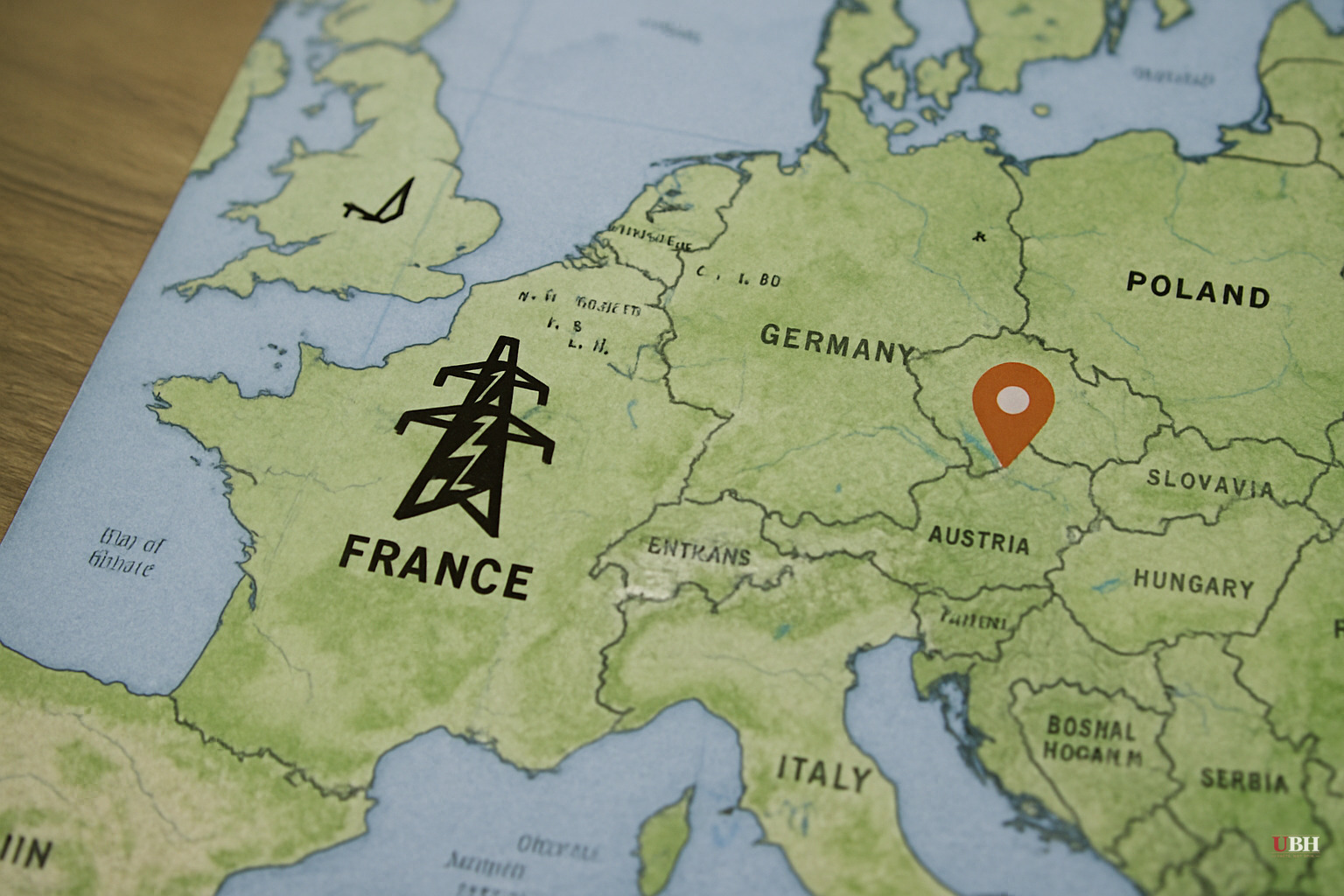
Since the heat wave reached record intensity Tuesday, the story has shifted from health warnings to hard infrastructure failures across multiple countries simultaneously.
The Outage in France
A transformer failure in the town of Ergué-Gabéric, in the northwestern coastal department of Finistère, knocked out electricity to roughly 68,000 homes starting Tuesday evening, according to CNBC. As of Wednesday, full restoration was not expected before the end of the day at the earliest. French grid operator Enedis said priority is going to healthcare facilities, and nursing homes still off-grid are receiving generators.
The localized outage is part of a broader vulnerability. Enedis technical director Hervé Champenois warned earlier this week that underground cable temperatures can hit 80°C (176°F) during extreme heat, which degrades insulation and raises failure risk across sections of the buried network, according to Anadolu Agency. Enedis said backup lines exist, but acknowledged faults are expected in the coming days.
Separately, EDF's national nuclear fleet took a 4.1-gigawatt output reduction Wednesday because high river water temperatures are limiting reactor cooling capacity, according to CNBC citing Reuters data. EDF had already shut down one reactor at the Golfech plant in southwestern France late Monday after the Garonne River approached its 28°C environmental threshold, per Anadolu Agency. EDF estimates heat waves affect roughly 0.3% of annual nuclear production on average, but this event is not average.
The Price Spike
Great Britain's grid operator paid approximately £470 per megawatt-hour for electricity imports from the continent during the 5–7 p.m. peak Tuesday, according to The Guardian. That is more than six times the £71/MWh average price in June last year and more than triple Monday's market price of £123/MWh.
The cause is a straightforward supply-demand crunch. Wind power fell to 13–15% of UK generation Tuesday, compared to a 30% average for June, because the high-pressure heat dome has stalled wind speeds. Five British gas plants simultaneously reported they needed to cut output due to ambient temperature stress, removing about 2.5 gigawatts from the gas fleet. This represents roughly 40% more capacity loss than pre-heatwave baseline, according to LCP Delta head of power trading Shivam Malhotra, as cited by The Guardian. Solar helped partly compensate due to clear skies, holding steady at around 14GW or 35% of UK generation.
In Germany, Europe's largest electricity market, wholesale prices were forecast to reach above €545/MWh Tuesday evening, the highest since June 2024, per the Epex Spot exchange as reported by The Guardian. French market prices climbed to over €268/MWh, their highest since August 2023.
Spain's electricity market operator OMIE separately reported that wholesale prices exceeded €100/MWh Tuesday for the first time since March, reaching an average of €112/MWh, according to Anadolu Agency. Danish energy company Norlys attributed unusually high Nordic prices to a combination of high temperatures and elevated fossil fuel costs.
Bloomberg reported Wednesday morning that the UK grid operator has issued a rare warning of insufficient power supply as cooling demand continues to climb.
The Broader Emergency
The death toll from heat-related drownings in France has risen to at least 48, up from the 40 reported in prior coverage, plus two young children killed by heat exposure in a car, according to Reuters via Global Banking & Finance Review. Two elderly people in Spain died of heatstroke. Italy's health ministry issued its highest-level heat alert for 16 cities including Rome, Milan, Florence, Turin, and Verona.
The weather pattern driving all of this is an "Omega block," a high-pressure configuration resembling the Greek letter that traps warm air in place and prevents cooler fronts from moving through. Temperatures in some areas are running as much as 18°C above normal, according to the Reuters Climate Monitor cited by Global Banking & Finance Review. Météo-France has drawn comparisons to the August 2003 heatwave, which lasted 16 days and caused an estimated 80,000 excess deaths across Europe.
The Infrastructure Argument
Some analysts and infrastructure professionals argue that Europe's power crisis is less about climate change per se and more about policy choices that left the grid brittle. They point to aggressive retirement of dispatchable capacity (coal, gas, nuclear) without adequate backup, and infrastructure designed for historical temperature norms that no longer apply. Katie Glaze, sustainability director at infrastructure consultancy Brookbanks, told Wired that "our infrastructure is not set up for this temperature" — a statement that applies equally to grid design choices made by governments over the past decade as to the heat itself.
That concern is legitimate. The facts support part of it. Wind underperforming during a high-pressure event is a known, predictable limitation of wind-heavy grids, not a surprise. The UK grid operator's emergency purchase at £470/MWh is a direct consequence of insufficient dispatchable backup capacity when wind drops. Whether the solution is more storage, more nuclear, more gas standby, or some combination is a genuine policy debate. What is not debatable is that the current grid configuration produced a real failure condition at a real price.
What Comes Next
The Omega block is not forecast to break immediately. Météo-France and the UK Met Office have not signaled a specific end date in these sources, which means the grid stress, the outage repair timelines, and the drowning risk in unsupervised waterways all remain active as of Wednesday, June 24. France's Enedis has signaled that more grid faults are expected before temperatures ease, and the 68,000-home Finistère outage has not yet been fully restored.
Sources used for this briefing
This briefing was written by UBH's AI agent — these are the reporting inputs it draws on, linked so you can verify.


