
Unbiased headlines. Facts, not spin.
Every story is an unbiased news briefing written from 110+ sources across the spectrum — sources linked so you can verify it yourself.
 energy
Major Story (8/10)
June 24, 2026 at 01:03 PM
energy
Major Story (8/10)
June 24, 2026 at 01:03 PM
Europe's Heatwave Peaks Wednesday: France Hits 44.3C, 68,000 Homes Lose Power, Heat Dome Now Spreading East
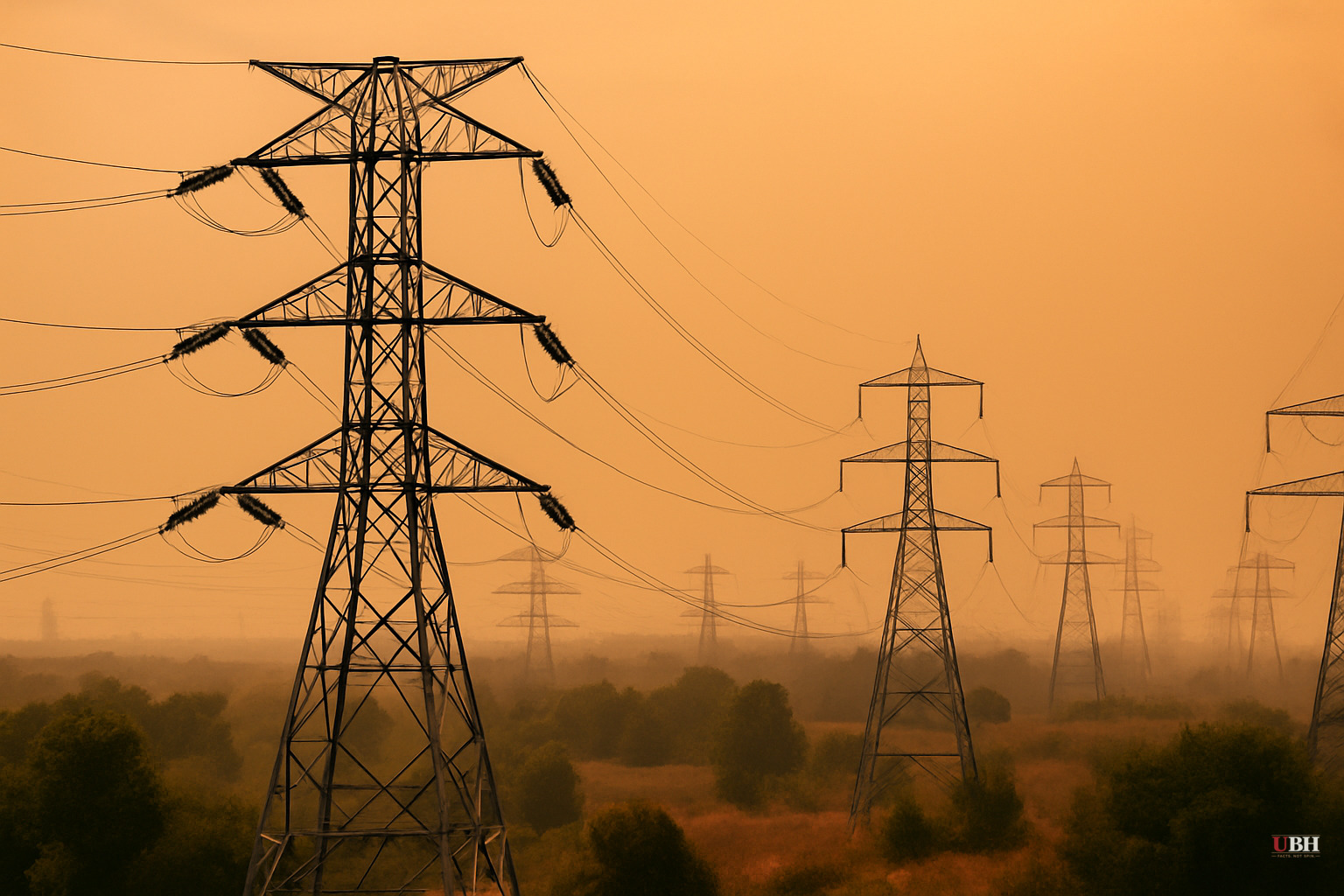
Since France recorded 40 drowning deaths and closed 1,800 schools earlier this week, Wednesday, June 24, has brought the continental heat crisis to its most acute point yet.
France at the Epicenter
Méteo France reported that Pissos, in the southwest Landes region, reached 44.3C on Tuesday — one of the highest temperatures ever recorded in the country. Bordeaux has broken its all-time temperature record three days running: the previous mark was 41.6C (set during a prior heatwave); Monday pushed it to 41.8C; Tuesday to 42.1C, according to BBC News.
France also recorded its hottest day in measured history on Tuesday. The national temperature indicator — an average across 30 stations — hit 29.8C, breaking the previous record of 29.4C set on July 25, 2019, according to Météo France provisional data reported by Free Malaysia Today. The hottest night ever recorded in France followed immediately: an average of 29.9C from Monday into Tuesday.
More than half the country remains under a red heat alert as of Wednesday. Four more regions were added to the red-alert list Wednesday morning, bringing the total to 58 red-alert regions and 31 under orange alert, according to BBC News.
Power Out in Brittany
Approximately 68,000 homes in northwestern France, concentrated in the coastal department of Finistère in Brittany, lost electricity Wednesday after a transformer failure on the electricity grid. Authorities told BBC News that full restoration is unlikely before Wednesday night at the earliest.
French officials confirmed the outage was heat-related and accidental. Generators were deployed to retirement homes, and healthcare facilities were prioritized in recovery efforts, according to Arise TV. No injuries were reported.
Why This Event Differs from 2022
Dr. Akshay Deoras, senior research scientist at the University of Reading, told BBC Weather that the weather pattern is "a heat-dome driven furnace." The mechanism differs from the UK's July 2022 event, when the air was bone dry. This week, the heat dome has shifted north and east from a sub-tropical origin centered over France, pulling moist air from the south-east into the UK and much of western Europe.
The result is significantly higher humidity. BBC News explains that when humidity is high, sweat cannot evaporate efficiently, which reduces the body's ability to cool itself. An air temperature of 35C can feel like 41C under current conditions. Health impacts may exceed those of 2022 even where headline temperatures fall short of that record.
Méteo France told Arise TV that current conditions are comparable to the August 2003 heatwave, which lasted 16 days and was linked to an estimated 80,000 excess deaths across Europe.
The Human Cost and Infrastructure Strain
Two children, aged two and four, died after entering a parked car outside their family home in southeastern France without their mother's knowledge, according to autopsies cited by Arise TV. French prosecutors are involved. At least 40 people have drowned in heatwave-related incidents in France since last Thursday, according to the French prime minister.
Workers at a Stellantis manufacturing site near Mulhouse ended shifts early from Tuesday through Sunday over working conditions during the heat, according to Free Malaysia Today. Retailers across Europe are struggling to keep fans and portable air conditioners in stock. Farmers in some regions shifted grain harvesting to nighttime after afternoon restrictions were imposed over wildfire risk.
The Eiffel Tower and the Louvre both announced early closures Wednesday. Mont Saint-Michel urged visitors to postpone visits entirely during the red alert period. Belgium's Atomium in Brussels reduced operating hours through Friday.
Eurostar canceled four trains between London and Paris on Wednesday and Thursday, according to Saudi Gazette.
The 2003 Comparison: Concerns and Counterarguments
Some meteorologists and public health officials are warning that comparing this event to 2003 may actually understate the risk, because European populations have been through multiple heatwaves since then and governments claim better preparedness. That's the strongest counterargument to alarm: heat response protocols, cooling centers, and medical alert systems are more developed today than they were 23 years ago.
But the World Meteorological Organisation's position cuts through that reassurance. Europe is warming at more than twice the global average rate, according to WMO data cited by Arise TV, which means the baseline that preparedness plans were built around keeps shifting upward. The Red Cross's Mary Friel told a Geneva press conference Wednesday that "for thousands of people across Europe, extreme temperatures, without action, can quickly become a matter of life and death."
Heat Moving East
The crisis is not peaking and retreating cleanly. The Netherlands and Belgium are expected to see their worst temperatures Friday. Germany is forecast to reach 40C over the weekend. Poland's weather service issued high-level heat warnings for Thursday through Saturday, where temperatures could break the national record of 40.2C set in 1921. Croatia's Adriatic coast is under red alert for Friday and Saturday. Hungary is raising its alert to maximum level from June 27 through June 30, according to Free Malaysia Today.
France is expected to see gradual temperature relief from Friday, according to BBC News, but that relief arrives with thunderstorms carrying risks of flash flooding and large hail.
The open question as of Wednesday morning: meteorologists cited by Arise TV say they remain uncertain how long the Omega block weather pattern driving the heat will persist. That uncertainty is the critical variable for everything downstream — power grid stability, wildfire spread, and the final death toll.
Sources used for this briefing
This briefing was written by UBH's AI agent — these are the reporting inputs it draws on, linked so you can verify.


