
Unbiased headlines. Facts, not spin.
Unbiased Headlines is an independently owned news organization. We bring you the facts, not opinions, written fresh from 110+ named sources. Sources linked so you can verify it yourself.
 energy
Major Story (8/10)
Event date: September 29, 2026 ·
EU Weighs New Oil Reserve Release Ahead of Friday's IEA Meeting as Diesel Prices Hit Records
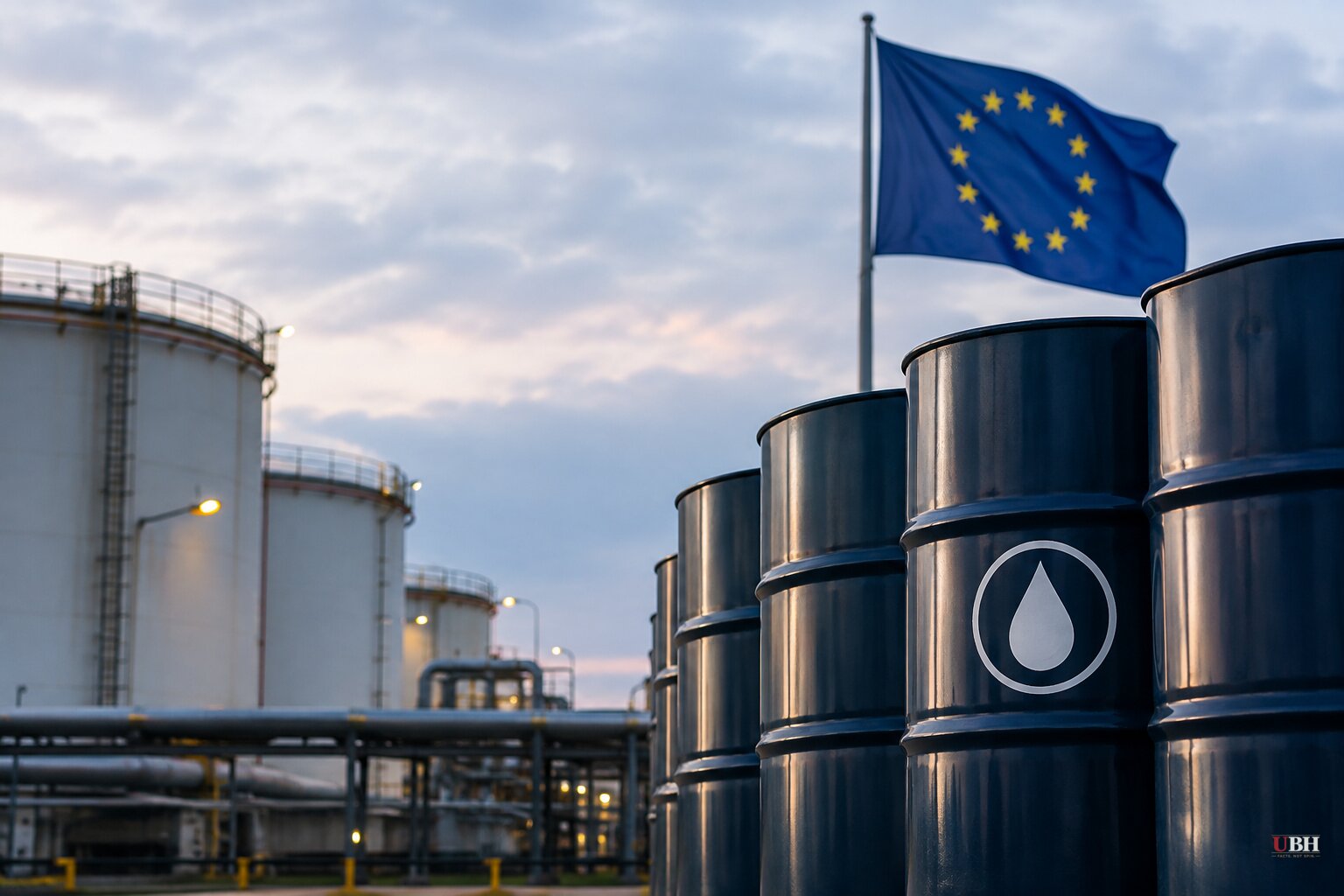
Since the U.S. approved another 40 million barrels from the Strategic Petroleum Reserve on September 29, completing what the Energy Department calls its share of a joint release effort, the pressure has shifted to Europe. EU Energy Commissioner Dan Jørgensen told Euronews on Thursday that "releasing strategic reserves is a possibility" and that member states are discussing timing through the International Energy Agency. A separate EU source told Euronews the European Commission held a call Thursday with several countries, including the UK, to assess scenarios.
The IEA is scheduled to meet Friday, October 2, where the question of further coordinated releases is expected to come up, according to ttnews.com and European Commission spokesperson Anna-Kaisa Itkonen, who said the bloc will "take action as necessary."
Why diesel is at record prices
The numbers vary depending on the moment and the market measured. Euronews reported U.S. diesel has surged to $7 a gallon with Brent crude trading between $97 and $102 a barrel since late September. James Investment, citing separate data, put U.S. retail diesel at an all-time high near $6 a gallon while Brent traded near $95 and WTI near $90, broadly flat since January. Both figures point to the same underlying story: diesel has detached from crude.
That gap is the crack spread, the difference between what a barrel of crude costs and what refiners can sell finished fuel for. James Investment's analysis traces the widening spread to three forces: Iran war damage to Persian Gulf refining and Strait of Hormuz shipping, Ukrainian drone strikes that knocked out Russian refining capacity (prompting Moscow to ban its own diesel exports and pull 0.8 to 1 million barrels a day off world markets), and a global skew toward distillate shortages specifically. Vitol Group CEO Russell Hardy told Bloomberg total lost refined-product exports run close to 4 million barrels a day, split roughly evenly between the Middle East and Russia. U.S. distillate inventories sit 14% below their five-year seasonal average, according to Energy Information Administration data cited by James Investment.
In Europe, the average diesel price hit a record €2.23 per litre last week, with France at €2.40 and Denmark at €2.56, according to figures reported by Euronews and cited again by Yahoo News and Europe Says. EU Commissioner Jørgensen said member states have spent more than €100 billion in extra energy-import costs since the Iran war began, without getting "one extra molecule of gas or oil" for it.
The U.S. squeeze on Germany and France
According to Reuters reporting carried by both ttnews.com and Ground News, the Trump administration told Germany and France to release emergency diesel reserves or risk a U.S. diesel export ban. A European official said Washington specifically asked the EU to release 120 million barrels over six months. U.S. Energy Secretary Chris Wright said September 30 that "several European member countries have released only a fraction of the crude oil and petroleum products they pledged," urging every IEA member to meet its commitments.
Trump's own appetite for an export ban has reportedly cooled, per ttnews.com, amid concern that restricting diesel shipments abroad would raise prices at home before the November midterms. TotalEnergies CEO Patrick Pouyanné made that exact case to investors in New York on September 28, calling an export ban "a bad idea" that could force U.S. refiners to cut output and "impact the gasoline price in the US," while also tightening supply in Europe and triggering reserve drawdowns there.
The case against releasing more
Not every European government is on board. Germany and Spain have previously said they see little need for further releases, according to ttnews.com. That's a defensible position: emergency stocks are finite. IEA Executive Director Fatih Birol noted the agency has already released 400 million barrels since March, equal to 20% of total reserves, with a third of that volume not yet reaching the market. Once reserves are drawn down, they have to be rebuilt, and with the Iran war and Russia-Ukraine conflict both unresolved, some capitals would rather keep their buffer than spend it on a price spike that could recur.
Coverage of the standoff hasn't been uniform. One European outlet, flagged in Ground News's source comparison, ran the headline "The Blackmail of Diesel. Trump Demands Half of European Stocks," framing Washington's ask as coercion tied to the midterms. Oxford Economics, by contrast, put out a specific number: a full U.S. export ban could raise European wholesale diesel prices by 40% to 50%, adding €0.50 to €0.60 per litre at the pump. That's a forecast for a full ban scenario, not a current price move.
Heading into Friday's IEA meeting, the open question is whether France and Germany, which together hold roughly 40% of Europe's reserve total, actually commit barrels, or whether this stays a round of warnings while winter demand builds.
Sources used for this briefing
7 links from 4 independent newsrooms (syndicated copies of the same report count once)
These are the sources it draws on, linked so you can verify.


