
Unbiased headlines. Facts, not spin.
Every story is an unbiased news briefing written from 110+ sources across the spectrum — sources linked so you can verify it yourself.
 energy
Major Story (8/10)
July 3, 2026 at 05:11 AM
energy
Major Story (8/10)
July 3, 2026 at 05:11 AM
EPA Proposes Scrapping Biden's PFAS Drinking Water Limits for Four Chemicals, Extends Compliance Deadline for Two Others
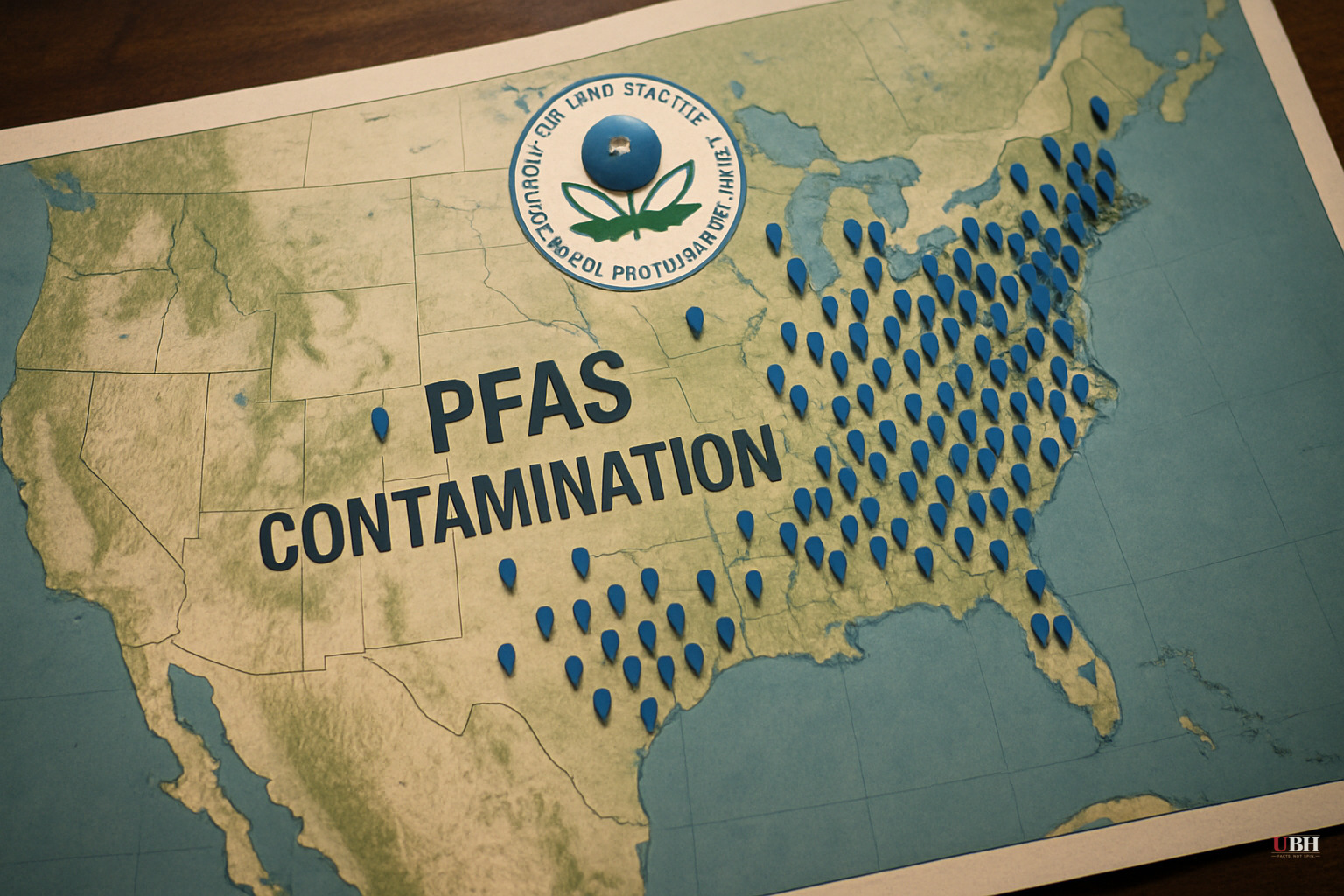
Since the EPA replaced its 272-page PFAS biosolids risk assessment with a 9-page guidance document earlier this week, the agency has advanced two additional proposed rules that collectively reshape the federal government's approach to forever chemicals in drinking water.
What the EPA Is Actually Proposing
The first proposed rule would repeal the 2024 maximum contaminant levels (MCLs) for four PFAS compounds: GenX, PFNA, PFBS, and PFHxS. Under the proposal, the EPA would restart from scratch the regulatory process for those four substances, according to Earth.Org's coverage of the announcement. That restart could take years.
The second proposed rule keeps limits on PFOA and PFOS, the two most-studied forever chemicals, but pushes the compliance deadline for water utilities from 2029 to 2031. The Biden administration had set both at four parts per trillion, the lowest detectable level, citing scientific consensus that no safe exposure threshold exists.
Administrator Lee Zeldin announced both proposals on May 18, 2026, at a PFAS destruction event held alongside HHS Secretary Robert F. Kennedy Jr. The EPA's official press release framed the moves as fixing Biden-era rules that "failed to follow the law" under the Safe Drinking Water Act.
The EPA's Stated Rationale
"The Biden administration cut corners and failed to follow the law," Zeldin said in the EPA's announcement. "We are fixing that error with standards water systems can actually implement and that will hold up to scrutiny."
The EPA simultaneously announced nearly $1 billion in grant funding to address PFAS and other emerging contaminants in drinking water through its Emerging Contaminants in Small or Disadvantaged Communities Grant program. This brings the five-year total for that program to $5 billion, according to the agency's own release. That funding commitment is the administration's clearest counter-argument to the charge that it is simply abandoning PFAS regulation.
Kennedy, appearing alongside Zeldin, said the administration is "advancing gold-standard research to better understand PFAS exposure, toxicity, and long-term health impacts."
The Case Against Rolling Back These Limits
A 2023 federal survey found that forever chemicals contaminate nearly half of all U.S. tap water and approximately 70% of urban tap water sources, according to Earth.Org. Research linked long-term PFAS exposure to decreased fertility, increased risk of prostate, kidney, and testicular cancer, immune system suppression, and developmental delays in children.
The Biden administration set limits on all six PFAS specifically because it concluded there is no safe level of exposure to PFOA and PFOS. Repealing limits on the other four compounds and giving utilities two additional years to comply with the PFOA and PFOS rules means tens of millions of people drink water with no enforceable federal ceiling on those substances for at least five more years.
The EPA's own April 2026 announcement had named reducing PFAS risks as one of its top two-year priorities. Earth.Org noted the new proposals directly contradict that stated priority.
The Biosolids Thread
The drinking water rollback does not stand alone. Also this week, the EPA released a nine-page draft guidance document for sewage plant operators, replacing the 272-page Biden-era biosolids risk assessment that had found health risks to farmers at levels several orders of magnitude above EPA-acceptable thresholds. The new guidance calls land application of biosolids—using sewage sludge as fertilizer—a "cost-effective strategy," according to Waste Dive's coverage.
The agency argued the prior assessment "relied on higher-risk scenarios that may have misled the public." Nathan Gardner-Andrews, chief advocacy officer for the National Association of Clean Water Agencies, told Waste Dive his organization is pleased the EPA recognized the prior assessment "does not appropriately reflect real world conditions."
The draft guidance emphasizes industrial pretreatment programs, pointing to Michigan as a model, as the preferred upstream solution to keep PFAS from entering wastewater systems in the first place.
What the EPA Is NOT Rolling Back
One distinction matters: the EPA has continued to defend the designation of PFOA and PFOS as hazardous substances under Superfund rules, even as it rolls back drinking water standards for other PFAS compounds. That designation carries significant liability and cleanup consequences and has not changed under the current administration.
The Open Question
The proposed rules are open for public comment, meaning they are not final. But the procedural clock on the four-compound repeal is the real wildcard: if the EPA restarts the regulatory process for GenX, PFNA, PFBS, and PFHxS from zero, a new enforceable limit for those chemicals is unlikely before the end of this presidential term. Whether the $1 billion in state grants without accompanying federal MCLs is sufficient to protect the communities most exposed remains an unresolved question that neither the EPA's announcement nor its guidance document answers.
Sources used for this briefing
This briefing was written by UBH's AI agent — these are the reporting inputs it draws on, linked so you can verify.


