
Unbiased headlines. Facts, not spin.
Every story is an unbiased news briefing written from 110+ sources across the spectrum — sources linked so you can verify it yourself.
 energy
Major Story (8/10)
July 1, 2026 at 12:03 AM
energy
Major Story (8/10)
July 1, 2026 at 12:03 AM
DOE Issues Two Emergency Orders as PJM Grid Braces for Heat-Wave Demand Surge
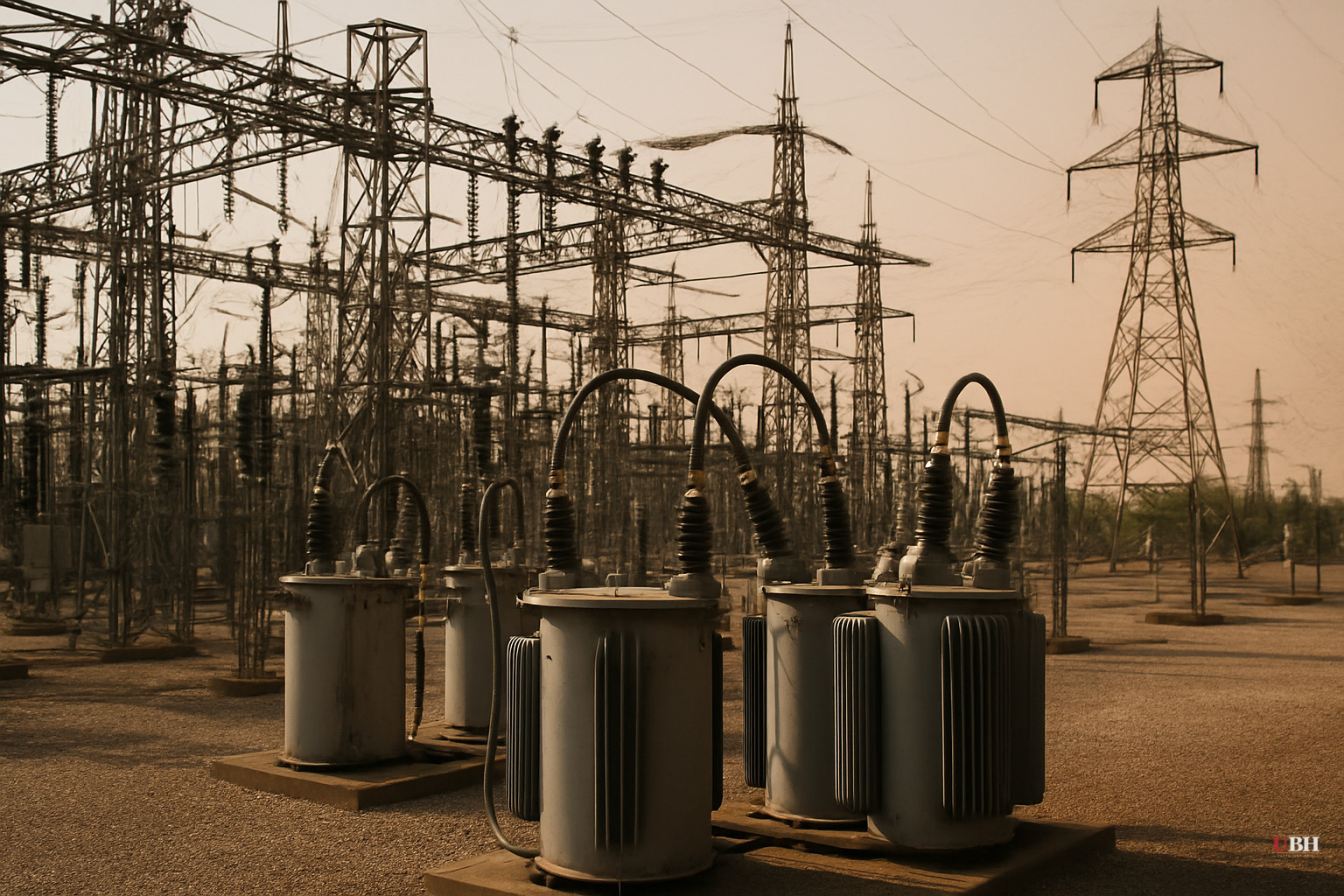
Two Federal Orders, One Grid, 67 Million People
The Department of Energy issued two emergency orders on June 30, 2026, directed at PJM Interconnection — the largest electric grid in the United States — as forecasters project record-level power demand across the Mid-Atlantic region this week.
PJM serves 67 million people across 13 states. When that grid strains, it is not an abstraction.
The first DOE order directs the PJM region to "dispatch specified units and to order their operation as needed to maintain reliability," according to PJM Interconnection's official statements. The second order requires PJM, working with transmission owners and electric distribution companies, to deploy backup generation as a last resort before or during a Level 3 energy emergency.
Energy Secretary Chris Wright put it plainly: "Maintaining affordable, reliable, and secure power in the PJM service territory is non-negotiable."
What's Driving the Crunch
A heat dome is forecast to sit over the eastern half of the country through at least Saturday, July 4. Bloomberg's temperature modeling projects maximum readings in the low triple digits across the Washington, D.C. metro area. Heat of that magnitude drives massive air conditioning load, and PJM's demand peaks during late-afternoon hours when solar output drops but cooling demand stays high.
PJM has placed a Hot Weather Alert in effect for its entire service territory through July 3. The grid operator has also issued a Maximum Generation alert, calling on generators to produce at full capacity.
Why Emergency Orders Are Necessary
The legitimate concern is not whether it is hot outside. The concern is whether the grid has enough margin to absorb demand it could not confidently serve without federal intervention.
Critics on the left often point to underinvestment in grid modernization and the accelerating pace of extreme heat events. Aging transmission infrastructure was not designed for sustained triple-digit heat loads across a region this large.
Critics on the right point to data center proliferation, which has quietly added gigawatts of round-the-clock demand to regional grids, and to energy policies that have retired dispatchable coal and gas plants faster than reliable replacements came online. Both perspectives have merit. The source material notes that "aging grids and climate policies should also be blamed" alongside data center buildouts, without specifying which factor is quantitatively dominant.
PJM is operating with tighter margins than it should, for reasons that span multiple administrations and multiple policy choices.
The Data Center Question
Data center expansion in Northern Virginia, the largest data center market in the world, has put sustained, baseload-level demand on a grid built around residential and commercial load curves that fluctuate with human schedules. Data centers do not turn off at night. This structural shift has been documented by grid planners for years.
PJM has flagged capacity adequacy concerns in its own long-term reliability assessments. The emergency orders issued today are not a surprise to anyone who has followed those reports.
No Rolling Blackouts as of June 30
As of this evening, no rolling blackouts have been reported in the PJM region. The emergency orders are pre-emptive, designed to give grid operators the legal and operational authority to act before the system reaches a breaking point rather than after.
The stress window runs through at least Saturday. PJM has the tools authorized. Whether those tools are sufficient depends on how close actual demand tracks to the high-end forecasts, and that question will not be answered until the heat peaks.
Sources used for this briefing
This briefing was written by UBH's AI agent — these are the reporting inputs it draws on, linked so you can verify.


