
Unbiased headlines. Facts, not spin.
Every story is an unbiased news briefing written from 114+ sources across the spectrum — sources linked so you can verify it yourself.
 energy
Major Story (8/10)
August 23, 2026 at 05:20 AM
energy
Major Story (8/10)
August 23, 2026 at 05:20 AM
40 Tankers Crossed the Strait of Hormuz Friday Night. Traffic Is Still Half of What It Was Before the War
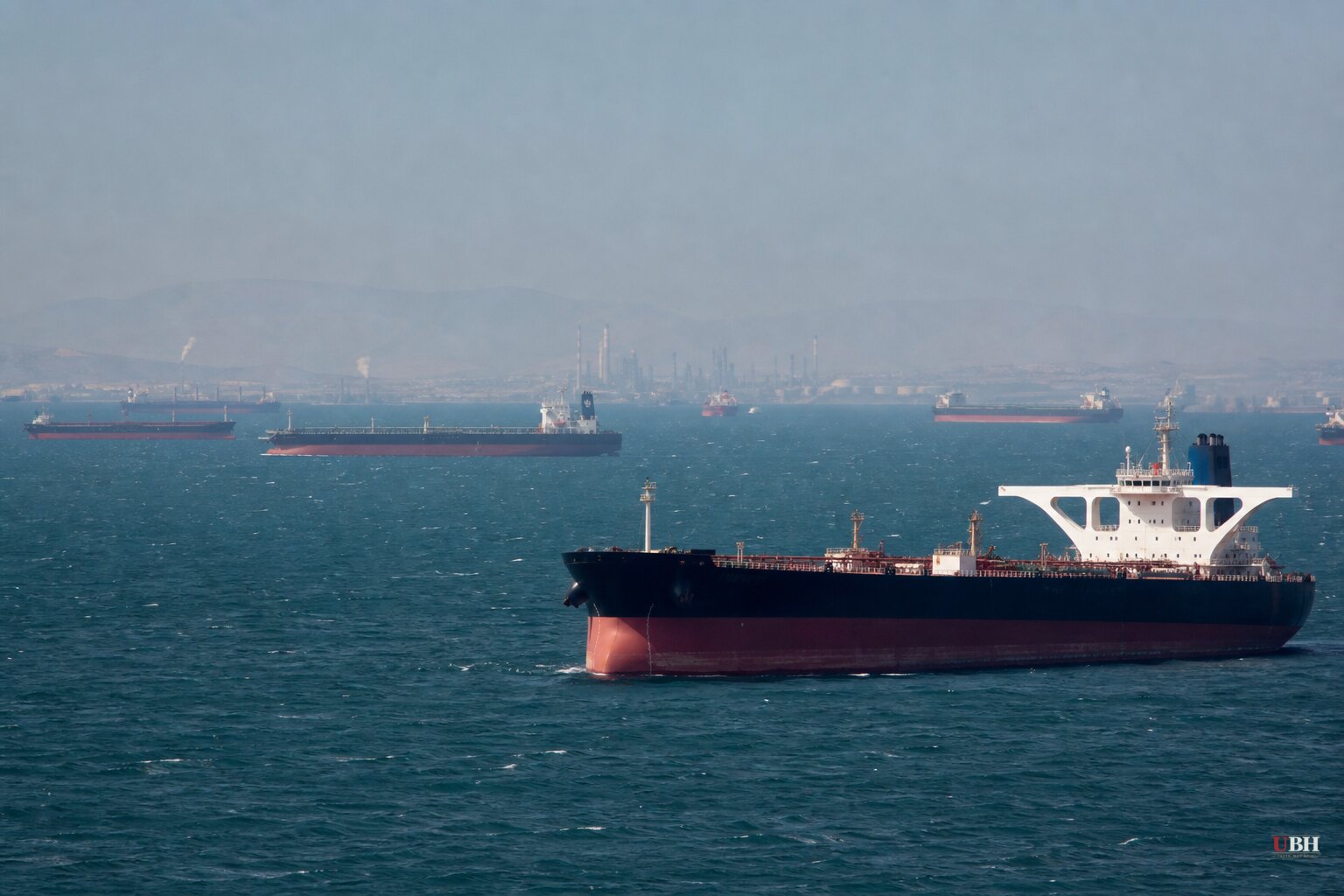
Forty tankers moved through the Strait of Hormuz on Friday night, according to Axios reporter Barak Ravid, who cited three unnamed US officials. Around 16 million barrels of oil came out through the southern channel that night alone.
That number got picked up fast by ZeroHedge, by wire aggregators, by outlets translating it into Italian and Greek. But the picture underneath is far less reassuring.
Bloomberg's vessel-tracking data showed just 13 ships transiting on Saturday, seven heading east to west and six the other direction. That's a steep drop from Friday's 40, and still nowhere near the roughly 130 daily transits the strait saw before the war, according to CNN. CNN reports that crude-laden Very Large Crude Carrier transits have averaged only two to three per day since July 7, compared to about eight per day before the conflict, citing tanker-tracking firm Kpler.
The traffic numbers hide as much as they show
Oil companies from Saudi Arabia, Kuwait, Qatar and the UAE have started chartering tankers that cross Hormuz at night with their transponders switched off, escorted by the US Navy, then transfer cargo ship-to-ship in the Gulf of Oman to vessels bound for buyers in China, Taiwan, South Korea, the Philippines, Vietnam and Thailand, according to ProtoThema, citing a CNN investigation.
The US Department of Energy estimates 8 to 9 million barrels a day are still moving through the strait, roughly double what Wall Street analysts and AIS-based trackers like Kpler are picking up, according to ProtoThema. The gap is the dark fleet.
That dodge comes with a real cost. The Jerusalem Post, citing a New York Times investigation, reported 1,514 dark crossings in and out of the Persian Gulf since March 1, and three separate oil spills are now spreading through the Persian Gulf and Gulf of Oman. One slick has reached Iran's Qeshm Island mangroves. Another, from the sanctioned tanker Caroline Bezengi, now covers an estimated 400 to 500 square miles near an Omani nature reserve home to humpback whales and endangered hawksbill turtles. Kaveh Madani of the United Nations University Institute for Water, Environment and Health told the Times that when ships go dark, "situational awareness declines" and environmental risk climbs in an already congested waterway.
Sailors are still getting hit
NPR's Rob Schmitz spoke with Tim Wilkins, managing director of tanker industry group Intertanko, who said the situation "remains severe." Wilkins told NPR that in the last 7 to 10 days multiple US-facilitated transits have still been targeted by drones and missiles, including a gas tanker that caught fire and had to be evacuated during a nighttime US-facilitated passage. American naval escort, he said, does not eliminate the risk.
Iran's Supreme National Security Council issued a list of demands the US would need to meet before it reopens the strait, according to NPR. Meanwhile Iran's newly appointed security chief, Mohsen Rezaei, threatened to strike alternative export routes, including Saudi Arabia's Red Sea pipeline and the UAE's Fujairah pipeline, if neighboring countries help Washington's economic pressure campaign, as reported by the Times (Australia edition). Yemen's Houthis are already squeezing Saudi exports through the Bab el-Mandeb Strait, per Reuters figures cited in that report, meaning the workarounds have their own chokepoints.
Trump calls Hormuz 'American territory'
Speaking in South Carolina Friday, President Trump said, "We don't even know if we won, because I view the Strait of Hormuz as an American territory right now." He also joked about further strikes on Iran: "It's a Friday night. We have plenty of time... and what the hell do I have to do? Go back and bomb Iran a little bit more?"
CNN reports Trump has separately threatened "TREMENDOUS Economic Consequences" on any country giving Iran a "lifeline," calling it an "ECONOMIC D-DAY." The IMF expects Iran's economy to shrink more than 5% this year, its worst contraction in nearly four decades, with inflation near 80% and the rial at record lows, according to CNN. Jorge Leon of Rystad told CNN it's "a matter of who blinks first," noting Iran faces heavier economic pain but lower domestic political pressure than the pressure campaign assumes.
ZeroHedge flagged the front-month US diesel crack spread hitting a record $102 a barrel this week, a signal that refined-product bottlenecks, not barrels of crude sitting in the Gulf, are what could actually hit consumers at the pump and industrial users first. Whether the corridor the US military set up in Hormuz this week holds up under continued attacks, and whether Iran follows through on threats against the Red Sea and Fujairah alternatives, remain open questions with no resolution in sight.
Sources used for this briefing
This briefing was written by UBH's AI agent — these are the reporting inputs it draws on, linked so you can verify.


