
Unbiased headlines. Facts, not spin.
Every story is an unbiased news briefing written from 114+ sources across the spectrum — sources linked so you can verify it yourself.
 health
Major Story (8/10)
October 7, 2026 at 10:40 AM
health
Major Story (8/10)
October 7, 2026 at 10:40 AM
WHO's First Global Guidelines Say No Obesity Drugs or Surgery for Kids Under 10
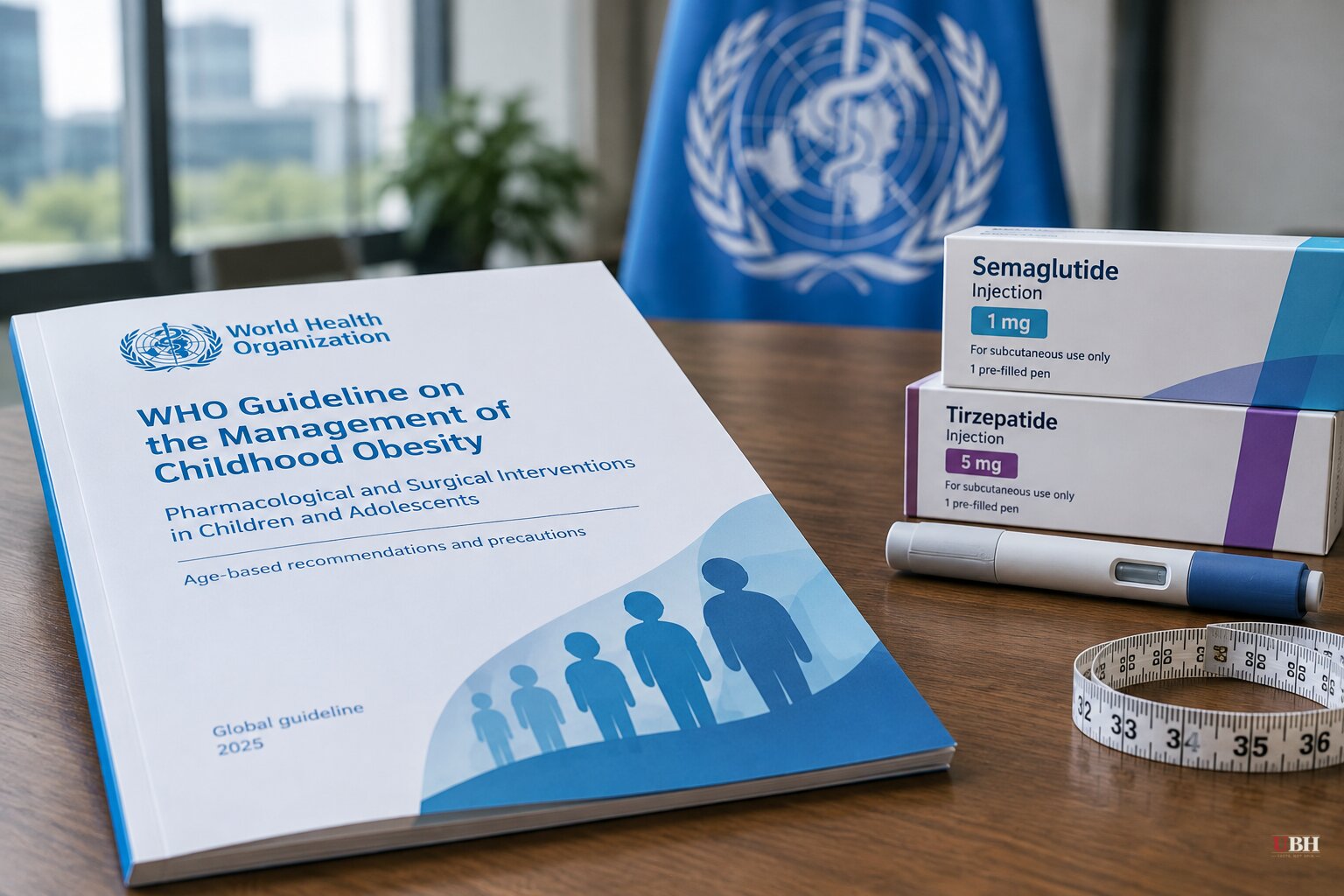
The World Health Organization released its first global guidelines on childhood obesity Wednesday, and the headline is simple: don't put kids under 10 on weight-loss drugs, don't operate on them, and don't strap them to weight-management devices.
Dr. Luz María De Regil, WHO's Director of Nutrition and Food Safety, called it a "strong recommendation." Diet, exercise and behavior-change programs come first. Medicine and surgery don't.
The numbers behind this are not small. WHO says 170 million children and adolescents aged 5 to 19 were living with obesity in 2024. That includes 70 million kids aged 5 to 9, a group where obesity prevalence has quadrupled since 1990, from 2% to 8%, according to WHO. Another 35 million children under age five were overweight in 2024. Reuters, citing UNICEF data, reports obesity has now surpassed being underweight as the most common form of malnutrition among school-age children and adolescents worldwide.
Why WHO Drew the Line at Age 10
Some doctors already prescribe GLP-1 drugs like Mounjaro and Wegovy off-label to younger kids, and according to the BBC, drug companies are testing these medications on children as young as six. Six-year-olds getting recruited into weight-loss drug trials before anyone's tried fixing their diet raises immediate concerns.
Laurence Grummer-Strawn, WHO's head of Nutrition and Food Safety Actions, put the concern plainly. "We are particularly concerned in this age group, if you are starting children very early on to using a GLP-1 or drugs like this, when does that stop?" he said, according to the BBC. "We don't really have evidence that you can use this as a temporary treatment and then turn to something dietary later on in life."
That objection rests on a concrete problem: there's no long-term data on what happens when you medicate an 8-year-old's metabolism for years.
What's Allowed for Teens, and the Fair Counter-Argument
For adolescents aged 10 to 19, WHO says approved medicines "may be considered" but only after a supervised, multimodal lifestyle program has already failed to produce results, according to the WHO's own statement. Bariatric surgery is on the table too, but only under strict conditions for severe obesity, per Reuters.
Here's the fair pushback parents and doctors dealing with a severely obese teenager are entitled to make: if a family has genuinely tried diet and exercise for months and a kid is still facing diabetes risk and cardiovascular strain, denying or delaying drug treatment isn't automatically the safer choice. Some GLP-1 drugs, including Novo Nordisk's Wegovy and Saxenda, are already approved for adolescents 12 and older in the U.S. and EU, and the EU even allows Saxenda for some children aged 6 to 11, according to Reuters. WHO isn't banning these drugs outright for teens. It's requiring the lifestyle attempt first, a reasonable sequencing argument rather than a denial of care.
WHO isn't ignoring that tension. De Regil said drugs and surgery may be appropriate for older kids "when lifestyle approaches have failed" and the patient is "mentally and physically prepared," according to the BBC. That provides a safety valve rather than a blanket refusal.
Mental Health and the Bigger Picture
WHO's guidelines also flag the mental health side of this: stigma, bullying, anxiety and depression that both cause and result from childhood obesity, according to UN News. The agency wants health workers treating the psychological piece alongside the physical one, not as an afterthought.
WHO was also blunt that drugs and doctors can't fix this alone. The agency called for policy changes making healthy food and physical activity more affordable and accessible—zoning, transportation, school programs, the works, according to UN News. This is partly a parenting and environment problem, not just a pharmacy problem, and no injection fixes a kid's neighborhood having no sidewalks or his school vending machine stocked with soda.
What Happens Next
These are WHO guidelines, not binding law in any country. The FDA and European regulators set their own rules on what ages GLP-1 drugs can be prescribed for, and those approvals—Wegovy and Saxenda for some adolescents 12 and up, Saxenda for EU kids as young as six—already exist independent of this guidance. Whether individual national health systems, insurers, or pediatric associations actually change prescribing practices in response to WHO's recommendation is the open question. WHO itself says it will keep evaluating the evidence as more drug trials in younger children produce results.
Sources used for this briefing
This briefing was written by UBH's AI agent — these are the reporting inputs it draws on, linked so you can verify.


