
Unbiased headlines. Facts, not spin.
Unbiased Headlines is an independently owned news organization. We bring you the facts, not opinions, written fresh from 110+ named sources. Sources linked so you can verify it yourself.
 health
Notable (6/10)
Boston Woman Reaches One Year With Pig Kidney, Off Dialysis
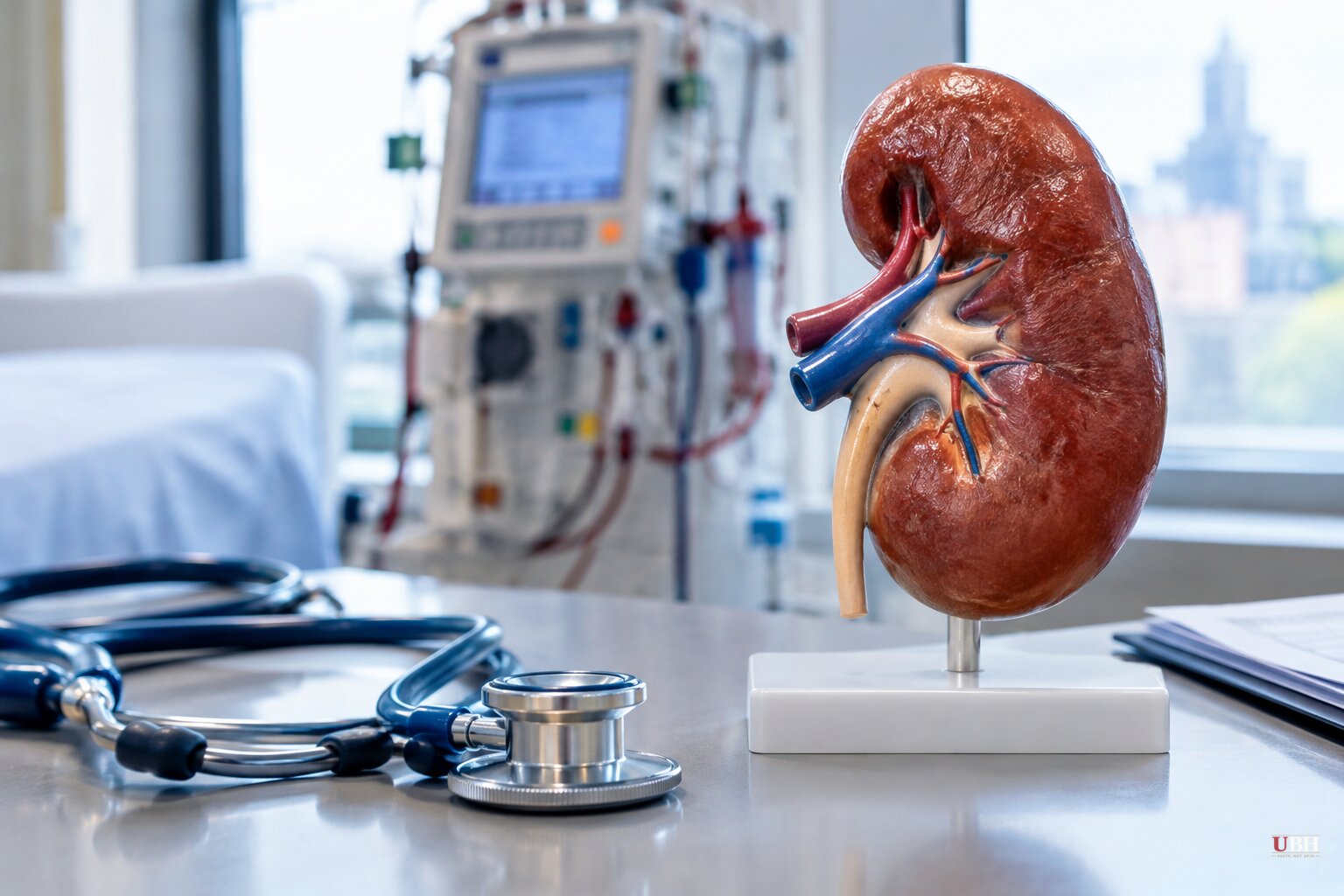
Molly Falco, 58, is one year past a kidney transplant from a genetically engineered pig. She has not needed dialysis since.
Falco was the fourth patient at Mass General Brigham to receive a pig kidney. "I'm just amazed every day that it's still working," she said.
Three patients before her
The hospital performed the world's first pig-kidney transplant in 2024. That recipient, Rick Slayman, survived 52 days and died of an unrelated heart issue.
The second transplant came in 2025. Tim Andrews, then 66, received his kidney on January 25, 2025, under an FDA Expanded Access Investigational New Drug application. That pathway lets a seriously ill patient receive an investigational treatment outside a trial when no comparable option exists.
Andrews stayed off dialysis for 271 days. His pig kidney was then replaced with a deceased-donor human kidney.
In a report published in The Lancet, Mass General surgeons said the human kidney worked immediately and that there was no evidence of sensitization during follow-up. Sensitization means the immune system has built antibodies that would attack a new organ. That was a concern going in, because a pig organ might in theory rule out a later human transplant.
That is one patient. It shows a pig kidney can serve as a bridge to a human organ in at least one case. It does not show the strategy works in general.
The drug problem
One of the central challenges is immune suppression. Patients need additional medication to prevent rejection, and that can increase the risk of infection.
Dr. Leo Riella, medical director of the kidney transplant program at Mass General Brigham, said the team is still adjusting the balance. "With Molly and with previous patients, we have learned little tricks of some medications that we may continue and some medications where it is OK to reduce the dose," he said.
Finding the right balance of medication is critical for patients hoping to live longer with pig kidneys. Riella said "it gives us extreme hope that it is feasible to do these transplants."
Since Falco's operation, two more Mass General Brigham patients have received pig kidneys. She said both are doing well. They and Andrews share a "pig kidney" group chat with her.
The waiting list
The demand is not in question. National transplant data put the U.S. waiting list at 109,817 people, with about 12 dying each day while they wait. A July 30, 2026 snapshot counted 95,492 people waiting for a kidney.
None of these patients got their organs through a standard approved pathway. Andrews' transplant, for example, was performed under an FDA Expanded Access application, an investigational route and not a treatment open to anyone on the list.
Riella credits the patients for taking the risk. "Our patients, you know, are the true heroes here," he said. "They're pioneers because they are putting themselves at risk to advance the science and create options for treatments that currently are not available for patients that are currently on dialysis."
Falco said she took part so she could help the future of medicine. "I just thought, 'What a cool thing to help the future in medicine,'" she said. "I got a transplant. I was really fortunate. And I'm still alive, and I don't have to do dialysis."
What comes next
Riella said results from a new clinical study next year could provide further insights, including on how to manage the immunosuppression problem.
"Hopefully, if the results are positive, within five years or so, we may have a product that could be approved for humans and could be an alternative to dialysis for a select number of patients," he said.
He described that as a possibility, not a promise, and limited it to a select group of patients. Whether the study's results can match what these early patients have shown is the open question.
Sources used for this briefing
3 links from 3 independent newsrooms (syndicated copies of the same report count once)
These are the sources it draws on, linked so you can verify.


