
Unbiased headlines. Facts, not spin.
Unbiased Headlines is an independently owned news organization. We bring you the facts, not opinions, written fresh from 110+ named sources. Sources linked so you can verify it yourself.
 health
Notable (6/10)
Event date: November 4, 2026 ·
Health Premiums Keep Rising: ACA Silver Plans Up 13% for 2027, Employer Plans Projected Up 8% to 10%
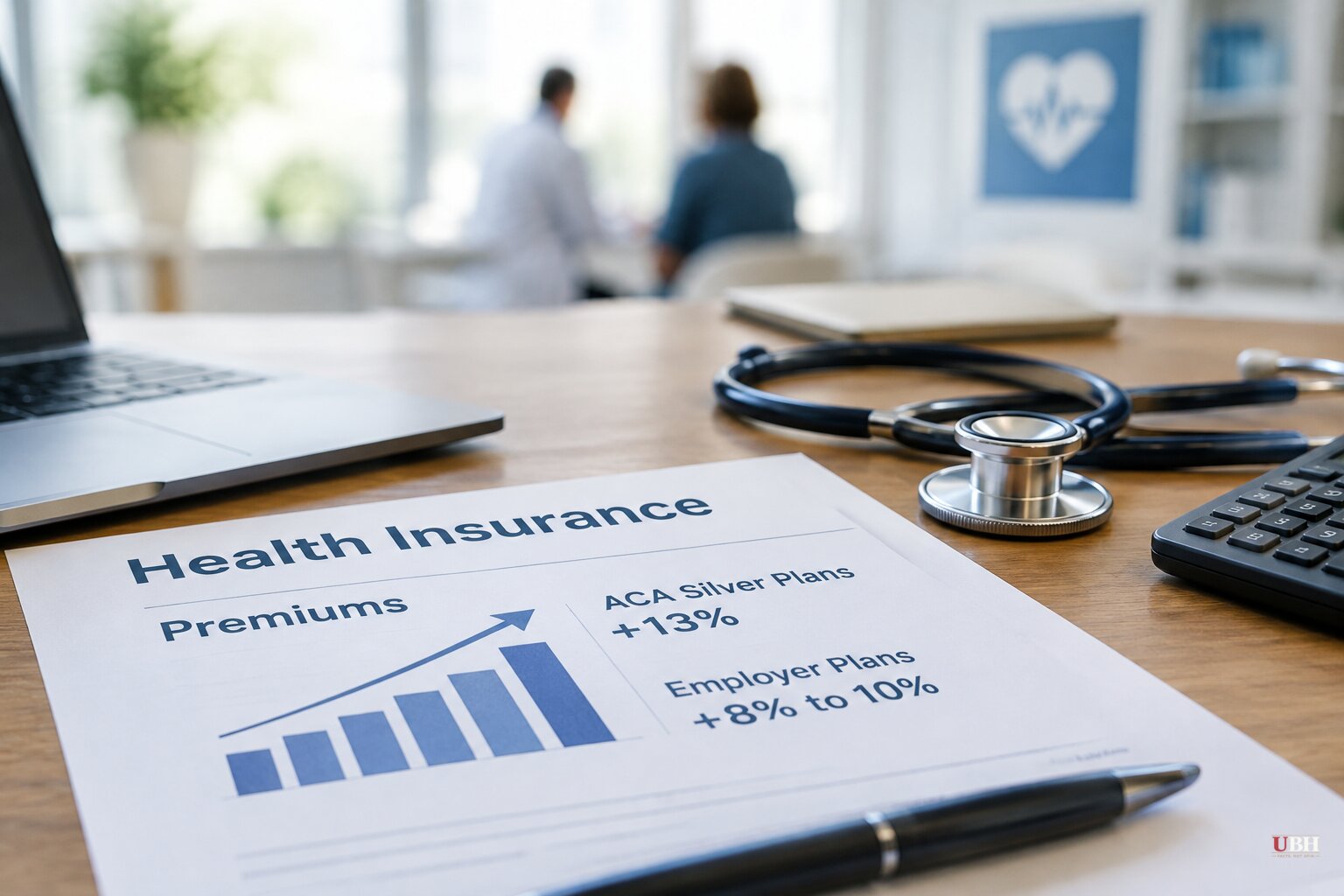
Health insurance is getting more expensive on every front, and open enrollment, which began Nov. 1, is where people are finding out.
The average benchmark Silver plan on the ACA marketplace is up 13% for 2027, according to KFF. That follows a 25% average increase last year. Before subsidies, an average 40-year-old will pay $703 a month for a benchmark Silver plan, up from $497 in 2025.
Employer coverage is climbing too. Premiums for people who get insurance through work are rising around 8% to 10%, about the same as last year. PBS News cited analysts projecting an increase of up to 9.5% in 2027, though experts told the network the final costs may come in lower than projected.
What employer coverage costs now
In 2026, the average family plan through an employer costs $28,303, up 5% from 2025, according to a KFF analysis. A single worker's plan averages $9,804, also up 5%. Workers contribute about $7,470 a year toward family coverage, 9% more than last year.
The pinch shows up in paychecks. John R. Puri of National Review notes that average private-sector wages and salaries rose 3.1% over the past twelve months, while benefit costs rose 3.9%. He puts inflation closer to 4% and argues that employer health spending is money workers would otherwise receive as cash, even when they never see it.
KFF also found that 44% of large firms offering benefits raised employee contributions as insurance costs rose. About 157 million Americans get coverage through work.
The ACA subsidy cliff
The enhanced federal premium tax credits expired at the end of 2025. Joseph Dieleman, a health economist at the Institute for Health Metrics and Evaluation, says subsidized enrollees saw their premium payments more than double in 2026 to keep the same plan.
Sabrina Corlette of Georgetown University's Center on Health Insurance Reforms points to Congress and President Trump, who ended the enhanced subsidies and approved big Medicaid cuts. "So many people who have coverage through the ACA marketplaces or through Medicaid are experiencing or will soon experience much higher costs," she said.
The Epoch Times reports that enrollment is expected to fall as the credits lapse and the Trump administration acts to remove duplicate, ineligible and nonexistent enrollees. The same report says taxpayers will cover most of the double-digit increases projected for 2027.
People above 400% of the federal poverty level, roughly $64,000 per person, get no subsidy at all. KFF vice president Cynthia Cox says they "may or may not be able to afford to continue to keep their coverage into next year." Many have already downshifted. Federal data show Silver enrollment fell from 56% of ACA enrollees in 2025 to 43% in 2026, while Bronze rose from 30% to 40%.
At least 11 states, including California, Colorado, Connecticut, Maryland, Massachusetts and New Jersey, are paying insurers extra money to lower enrollees' monthly premiums.
Why prices keep climbing
The economists interviewed agree on one point: this is mostly about what providers charge, not what insurers keep.
Zack Cooper of Yale found that health spending accounted for 91% of average premium growth between 2011 and 2024. Insurer markups fell from about 19% in 2011 to nearly 15% in 2024.
Meredith Rosenthal of Harvard's T.H. Chan School says providers set their own prices with little regulation, and market competition "mostly does not work very well." She notes that an MRI in the private market costs about double what Medicare pays. Cooper adds that a lack of antitrust enforcement plays a role, and that tariffs and high energy prices raise provider costs.
Use of care is also growing. Harvard's Anna Sinaiko says health spending has grown at over 7% for the past two years, against inflation around 3%. She cites more intensive care: GLP-1 drugs and CAR T-cell therapy, which she calls life-changing and very expensive, along with a rising number of elective knee replacements.
Billing practices play a role as well. Corlette and Sinaiko both say AI scribes capture more diagnoses during visits, which raises the claims doctors submit. Sinaiko says doctors are paid more for sicker patients, so costs rise "even though the underlying health of the patients is not changing."
Puri also blames a government arbitration system meant to stop surprise billing, which he says has funneled tens of billions of dollars from insurers to doctors.
Dieleman adds a risk-pool problem on the individual market. When healthier people drop coverage, the remaining pool is sicker, insurers charge more, and more people buy cheaper high-deductible plans.
The policy fight
Puri says Democrats' answer is to have the government pick up the bill, which shifts costs to taxpayers and the national debt rather than lowering them. He says real restraint would require moving away from third-party payers, and that conservatives need to revive their own reform ideas.
Voters are watching. In a Gallup poll released in late October, half of registered voters called health care extremely important to their vote, up 40% since 2018. The midterms were Nov. 3.
The next test is the 2027 employer renewal cycle. Puri says employer premium growth is already the fastest since the early 2000s and expected to accelerate further, while PBS's analysts say the final increase may come in below the 9.5% projection.
Sources used for this briefing
6 links from 6 independent newsrooms (syndicated copies of the same report count once)
These are the sources it draws on, linked so you can verify.


